Anúncios
There is a reason neutral winter outfits never go out of style — and it goes deeper than simple fashion convention.
While trends cycle through with varying degrees of longevity — bold colors that feel essential one season and dated the next, oversized logos that announce themselves loudly and then quietly disappear, statement prints that demand attention briefly before exhausting it — neutral looks remain one of the most consistent and reliable expressions of timeless elegance in the entire fashion calendar. They create calm, refinement, and visual harmony in a way that feels genuinely effortless rather than performed. There’s no trend to follow, no specific moment to belong to. A well-built neutral winter outfit simply looks right, year after year, in a way that more fashion-forward choices rarely sustain.
Anúncios
Winter amplifies the beauty of neutrals more than any other season — and the reason is directly connected to what cold weather dressing involves. Layering naturally adds texture and dimension to an outfit, which means the look doesn’t need bright or competing colors to feel interesting or alive. Wool, knitwear, leather, denim, suede, and structured coats each contribute visual depth that softer seasonal fabrics can’t replicate. In that context, neutral palettes don’t feel flat or limiting — they feel rich, because the textures themselves are doing the work that color would need to do in a simpler outfit.
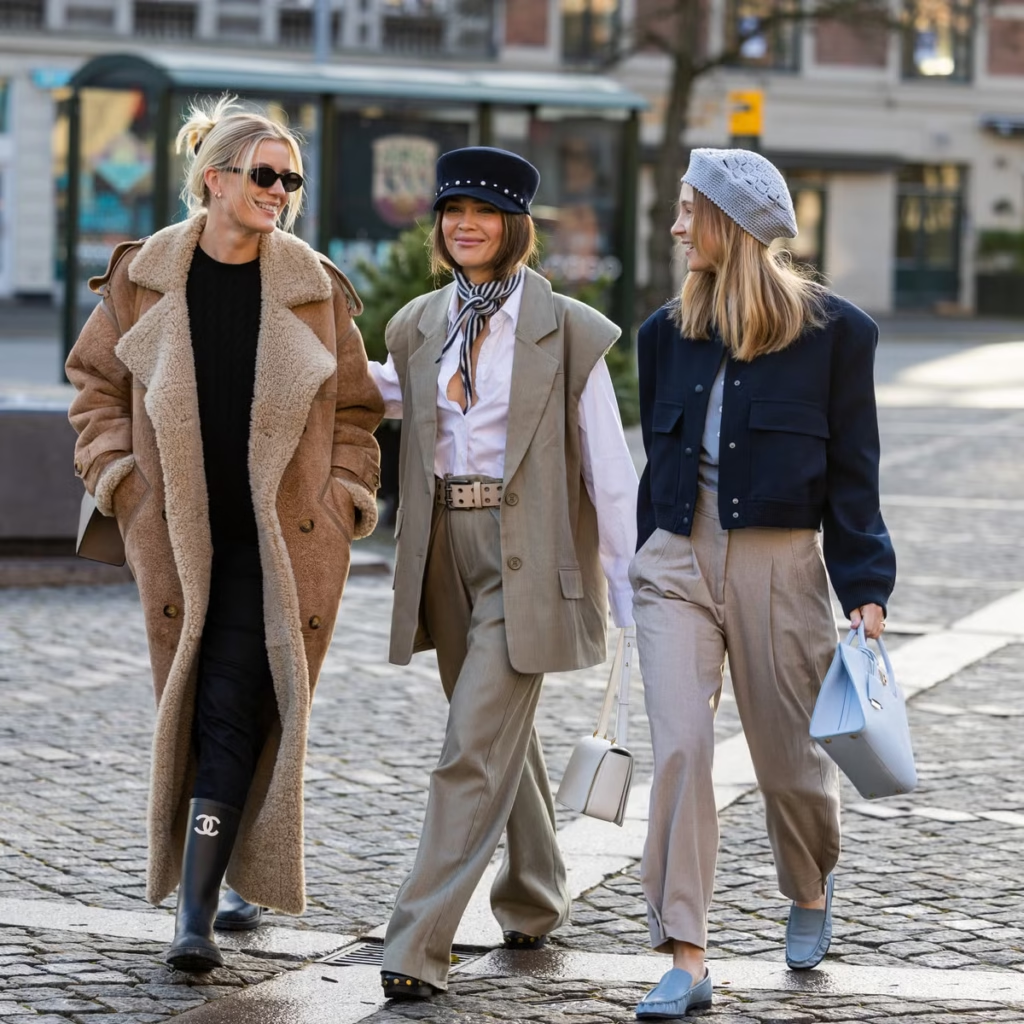
A beige coat over a cream knit and dark trousers can feel considerably more luxurious than an outfit built around louder, more attention-seeking pieces. This is the essence of quiet sophistication: an approach to dressing that communicates control, taste, and genuine confidence rather than reaching for immediate attention. Neutral winter fashion leaves an impression rather than demanding one — and that distinction is precisely what makes it so enduringly powerful.
Anúncios
Why Neutrals Perform So Well in Winter
Understanding why neutrals work in winter requires understanding what the season actually does to the visual language of clothing.
In summer, color often carries the emotional mood of an outfit. A bright yellow dress communicates joy. A bold red creates energy. The colors are the point, and the silhouette and texture exist to support them. Winter reverses this relationship entirely. When texture and silhouette take over as the primary sources of visual interest — as they inevitably do in cold-weather dressing — color stops needing to be the focal point and can step back into a supporting role.
Shades like black, gray, camel, cream, taupe, charcoal, and deep navy allow the layers themselves to become the subject of the look. The specific shape of the coat. The particular texture of the knit. The clean line of the boot against the trouser hem. The way a scarf drapes and moves. All of these details become far more visible and far more interesting when color competition is removed from the equation. The outfit feels edited — as though every element was chosen with purpose — which is the quality that luxury winter fashion consistently pursues and that neutrals deliver almost automatically.
Black: The Foundation That Never Fails
If there’s one winter neutral that delivers sophistication with complete reliability, it’s black — and its endurance across every decade of fashion history reflects something real about what the color achieves in cold-weather dressing.
Black creates a slimming visual effect and strong vertical lines that make the silhouette appear longer and more defined. It coordinates with itself and with virtually everything else in a winter wardrobe without requiring any particular thought. And it creates an immediate impression of refinement that other neutrals approach from different angles but rarely replicate exactly.
An all-black winter outfit remains one of the most reliable formulas in fashion for these reasons. A black turtleneck with black trousers, a black wool coat, and black leather boots creates a monochrome silhouette that the eye reads as one uninterrupted line — elongating the body and producing a look that feels considerably more expensive and intentional than its individual components might suggest. The key to preventing this combination from feeling flat is texture variation: black wool coat against ribbed black knit against smooth black leather creates three distinct surfaces within the same color, and the contrast between those surfaces generates the visual richness that keeps the look alive rather than monotone.
Without that texture play, all-black risks collapsing into something that looks like an absence of effort. With it, the look becomes one of the most powerful and versatile expressions of winter elegance available.
Camel and Beige: The Language of Quiet Luxury
Camel has become one of the most immediately recognizable signals of quiet luxury in contemporary fashion — and its performance in winter dressing explains exactly why that association has taken hold.
Few shades feel as inherently warm and elevated as a well-chosen camel. It reflects winter light in a way that creates softness and luminosity rather than the drama of darker tones, and it pairs effortlessly with a wide range of surrounding colors: black for strong contrast and modernity, cream for a softer tonal look, charcoal gray for a more urban and refined aesthetic. A camel wool coat worn over black basics — a simple turtleneck and straight trousers — is one of the strongest winter combinations available because it achieves the precise balance between warmth and sophistication that the season rewards.
Beige and cream work on the same principle but with a gentler, lighter energy. These tones create a softer winter aesthetic that suits people who prefer understated elegance over dramatic contrast — an approach that often reads as even more considered than its bolder alternatives precisely because it’s asking less of the viewer. The look doesn’t announce itself. It simply is, with total confidence.
Gray: More Powerful Than It Appears
Gray is consistently underestimated as a winter neutral — and consistently overdelivers when it’s used with intention and tonal intelligence.
The mistake people make with gray is treating it as a single shade rather than a family of related tones that can be layered and contrasted in ways that create remarkable depth. A light gray fine knit worn under a charcoal coat with slightly darker charcoal trousers creates a beautifully refined tonal composition where the subtle shifts between shades become the entire focus. There’s no obvious contrast to read, no strong color statement to process. The elegance comes from the precision of the tonal relationships — and that precision reads as genuine sophistication.
Gray performs particularly well in professional and urban contexts precisely because it communicates intellectual restraint and considered taste rather than emotional or dramatic intent. It’s the neutral of understatement, and in winter — when the clothes themselves are already doing significant work through texture and layering — understatement consistently produces stronger results than statement-making.
White and Cream in Winter
Many people instinctively avoid lighter shades in winter, treating them as impractical or seasonally inappropriate. This is a mistake — and the winter looks built around cream, ivory, and white are often among the most genuinely elegant the season produces.
Cream knitwear, ivory coats, and white tailored trousers create a luxury editorial aesthetic that darker winter palettes can’t replicate. The key is contrast and texture: cream worn alongside camel creates a warm, tonal luxury combination where the different shades within the same warm family create depth without competition. White trousers paired with a cream sweater and a camel coat produces a look that feels premium and polished in a way that seems effortless but reflects deliberate tonal thinking.
Winter whites look strongest when combined with warmer neutrals — camel, taupe, or warm beige — that prevent the cooler undertones from feeling stark or clinical. The warmth of those surrounding colors makes the white feel intentional and seasonal rather than simply pale, which is the distinction that separates a winter white look that works from one that doesn’t.
Monochrome as the Ultimate Neutral Formula
Within neutral winter dressing, monochrome styling represents the most refined and elevated application of the approach — and the most consistently powerful results come from building an outfit entirely within a single color family.
All black. All gray. All cream. Tonal beige from head to foot. Each of these creates a visual cohesion that reads as highly intentional and immediately sophisticated. The reason monochrome neutral outfits appear so consistently premium is that they remove every potential source of visual distraction, allowing the quality of the individual pieces — their fit, their fabric, their silhouette — to become the subject of the look rather than the color coordination.
This is one of the most important and practical insights in winter styling: monochrome neutrals make affordable clothing look significantly more expensive. The coherence of the palette does elevating work that the price of the individual pieces can’t always achieve on their own. A well-fitted cream knit, cream trousers, and a camel coat in a coordinated tonal palette will consistently outperform a more expensive but visually incoherent combination.
The Role of Texture in Neutral Dressing
If color restraint is the first principle of neutral winter dressing, texture variation is the second — and the two work together to create the depth and richness that makes a tonal outfit feel genuinely premium rather than simply quiet.
Without texture contrast, neutral outfits risk collapsing into something flat and visually uninteresting — the visual equivalent of a sentence with no variation in rhythm or emphasis. The most effective winter texture combinations bring together surfaces that feel fundamentally different from each other: wool with leather, knit with denim, suede with structured coat fabric, satin with ribbed knitwear. Each pairing creates a tension between the surfaces that keeps the eye moving and the outfit alive.
A cream knit sweater worn under a wool coat with leather boots demonstrates this principle clearly. The palette stays consistent — all within the warm neutral family — but the soft knit against the structured coat against the smooth leather creates three entirely distinct surface experiences within the same visual story. The result feels rich and considered even though the color choices were kept deliberately simple. Texture is what transforms neutral dressing from restraint into luxury.
Women’s Neutral Winter Formulas
For women, the strongest neutral winter combinations tend to play with the relationship between silhouette and texture rather than relying on color to create interest.
A cream knit dress under a camel coat with knee-high boots creates one of the most elegant and complete winter looks available — the tonal warmth of the cream and camel, the structural contrast between the soft dress and the longer coat, and the definition that the knee-high boots add to the overall silhouette all work together to produce a result that feels effortlessly polished. A black turtleneck with beige tailored trousers and black ankle boots achieves a different kind of sophistication — the contrast between the dark top and the lighter trouser creates definition while staying entirely within the neutral family. A gray oversized sweater with white trousers and a camel scarf offers a softer, more relaxed interpretation that still carries genuine elegance through its tonal intelligence.
Men’s Neutral Winter Dressing
Men’s wardrobes benefit enormously from neutral winter palettes, and the reasons are partly aesthetic and partly practical. Aesthetically, neutral tones create a maturity and refinement that more colorful or trend-dependent choices rarely sustain over time. Practically, they coordinate with each other so readily that building a functional, versatile winter wardrobe becomes considerably easier and more economical.
A black turtleneck with a charcoal coat and Chelsea boots creates immediate sophistication through the precision of its tonal relationships. A cream knit with dark denim and a camel coat achieves a warmer, more relaxed version of the same intelligence. A gray sweater with black trousers and a wool overcoat produces a look that feels both urban and refined — suitable for a professional environment, a city lunch, or an evening plan without requiring any adjustment between them. The versatility that neutral men’s winter dressing provides is one of its most underappreciated practical qualities.
Keeping Accessories Within the Palette
Accessories in neutral winter dressing carry the same responsibility as every other element: they should support and reinforce the tonal story rather than introducing competing colors that disrupt the cohesion the outfit has worked to establish.
A black leather bag, a camel scarf, gray gloves, black leather boots, and a silver or gold watch all function beautifully within neutral winter palettes because they share the fundamental quality of restraint. They add detail and completeness without adding noise. When the accessories are in genuine conversation with the clothing palette — when the warmth of the camel scarf echoes the warmth of the coat, or when the black leather bag reinforces the sharpness of the black boots — the overall look gains a completeness that makes it feel genuinely considered from head to toe.
Why Neutral Winter Dressing Never Feels Dated
The most important quality of neutral winter dressing is also the simplest: it is genuinely timeless in a way that most fashion approaches are not.
Trends evolve quickly and often mercilessly. What felt essential and current in one season can feel dated and slightly embarrassing in the next. Neutral winter outfits don’t participate in that cycle. A well-chosen black coat today will look equally elegant in five years. A camel and cream combination built with good proportions and quality fabrics will feel as considered and refined a decade from now as it does this winter. The investment in neutral pieces is an investment in something that compounds rather than depreciates — each season, the pieces feel as relevant as they did when they were first chosen.
This is why neutral winter wardrobes represent some of the strongest long-term value available in fashion. The pieces don’t need to be replaced because they fell out of trend. They need to be replaced only when they wear out — which, with quality materials and proper care, takes considerably longer than fashion cycles do.
In the end, neutral winter dressing is one of the few styling approaches that delivers on every level simultaneously: it looks elegant, it feels effortless, it performs across different contexts, and it remains relevant indefinitely. And in fashion, where so much is temporary, that combination of qualities is genuinely rare — which is exactly why timelessness remains one of the highest forms of elegance the season has to offer.