AI-Powered Entertainment Messaging: Future Social Interactions
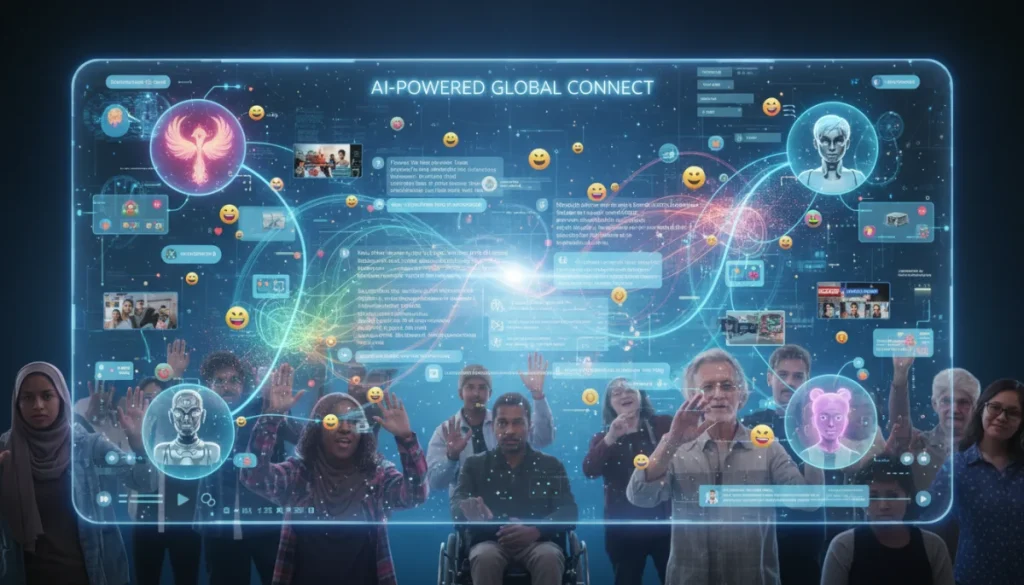
AI Entertainment Messaging is transforming how we connect and consume content, offering personalized experiences and dynamic social interactions that push the boundaries of traditional communication platforms.
The digital landscape is constantly evolving, and at its forefront is the exciting convergence of artificial intelligence with communication. We are witnessing a profound shift in how we interact, entertain, and share experiences, largely driven by AI-Powered Entertainment Messaging and Social Interactions. This fusion is not just about smarter chatbots; it’s about creating richer, more personalized, and deeply engaging connections in our daily lives.
The Evolution of Digital Communication with AI
Digital communication has come a long way from simple text messages. Today, it encompasses a rich tapestry of multimedia, interactive features, and social platforms. The integration of AI is propelling this evolution, moving beyond basic automation to intelligent systems that understand context, predict preferences, and facilitate dynamic interactions. This shift is redefining user expectations and opening new avenues for entertainment.
Early forms of AI in messaging were often limited to rule-based chatbots, offering predefined responses. While useful for customer service, these lacked the nuance required for genuine social interaction. Modern AI, however, leverages machine learning and natural language processing to create more sophisticated and human-like conversational experiences, making digital exchanges feel more natural and engaging.
Personalized Content Delivery
One of the most significant impacts of AI in entertainment messaging is its ability to personalize content. AI algorithms analyze user data, including past interactions, preferences, and even emotional cues, to deliver highly relevant entertainment. This can range from recommending a new show to suggesting a game or even tailoring the conversation itself to suit the user’s mood.
- Tailored media recommendations based on viewing history.
- Dynamic content feeds adapting to real-time interests.
- Context-aware suggestions for group activities or events.
- Personalized news and updates within messaging threads.
This personalization creates a more immersive and satisfying user experience, ensuring that individuals are always presented with content that resonates with them. It transforms passive consumption into an active, curated journey, making every interaction feel unique and valuable.
In essence, AI is making our digital conversations not just about exchanging information, but about experiencing content in a way that feels uniquely ours. This deep level of customization is a game-changer for how entertainment is consumed and shared within messaging platforms, fostering stronger connections through shared, relevant experiences.
Enhanced Social Interactions Through AI
AI is not just about individual experiences; it’s also profoundly enhancing how we interact with others. By providing tools that facilitate communication, foster engagement, and even mediate interactions, AI is making social platforms more dynamic and inclusive. This extends beyond simple chat, incorporating elements that make group interactions more entertaining and meaningful.
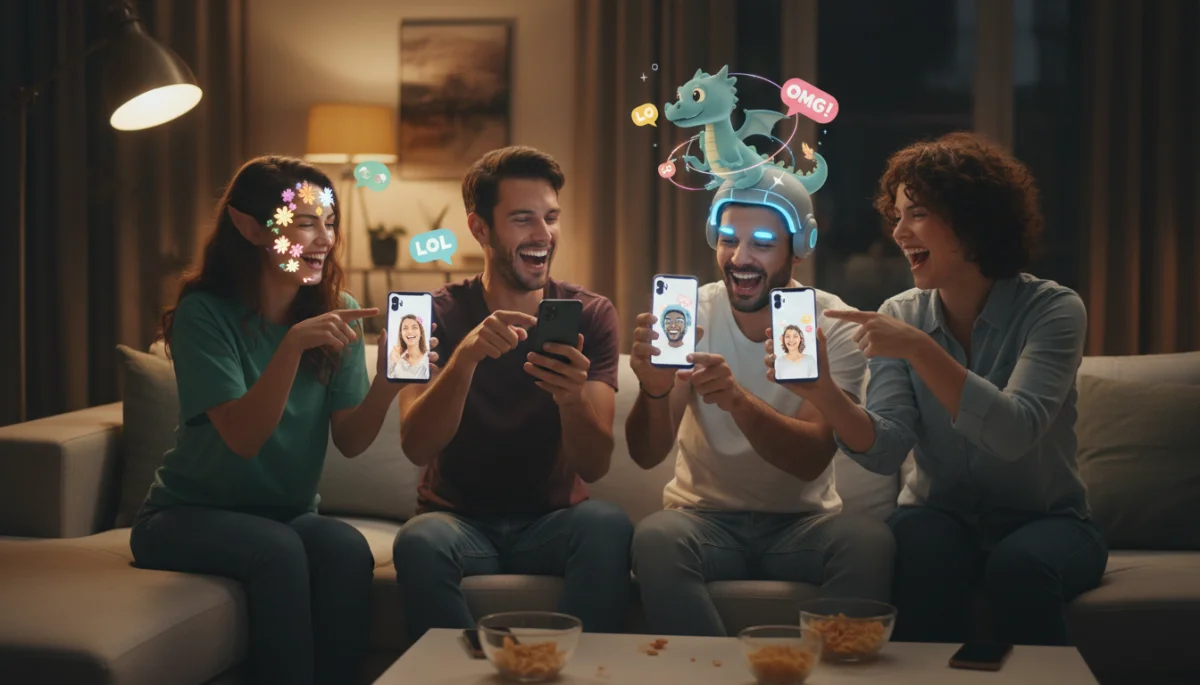
Consider the rise of intelligent filters and augmented reality (AR) features in messaging apps. These AI-powered tools allow users to transform their appearance, add virtual objects to their surroundings, and create interactive experiences that can be shared instantly. Such features add a layer of playfulness and creativity to conversations, making them more memorable and enjoyable.
AI-Powered Group Activities
AI is also enabling new forms of group entertainment within messaging platforms. Imagine an AI suggesting a collaborative game based on your group’s collective interests, or a virtual watch party where AI synchronizes content and provides interactive commentary. These features are designed to bring people closer, even when physically apart.
- Collaborative gaming suggestions and integration.
- Synchronized media consumption with interactive elements.
- AI-moderated group discussions and polls.
- Virtual event planning and coordination assistance.
These innovations transform messaging apps from mere communication tools into vibrant social hubs where entertainment is a shared, interactive experience. The AI acts as a facilitator, enhancing the flow of conversation and ensuring that everyone feels included and engaged. It moves beyond passive sharing to active, collective participation.
The ability of AI to understand group dynamics and suggest activities that resonate with multiple users is a powerful development. It ensures that social interactions remain fresh, exciting, and relevant, preventing the stagnation that can sometimes occur in long-standing digital groups. This intelligent facilitation is key to fostering stronger social bonds.
The Role of AI in Immersive Entertainment
Beyond traditional messaging, AI is paving the way for truly immersive entertainment experiences that blur the lines between the real and virtual. This involves leveraging AI in virtual reality (VR), augmented reality (AR), and mixed reality (MR) environments, often integrated with messaging capabilities, to create unparalleled levels of engagement and interaction.
Think about virtual worlds where AI-driven non-player characters (NPCs) can engage in natural conversations, adapt to user actions, and even develop unique personalities. These intelligent agents can serve as guides, companions, or even adversaries, making virtual narratives far more compelling and responsive than ever before. The messaging component allows users to communicate with these AI entities and other players seamlessly.
Virtual Avatars and Digital Identities
AI is also instrumental in creating sophisticated virtual avatars that can reflect users’ personalities and expressions in real-time. These avatars, powered by advanced AI, can mimic facial expressions, body language, and even emotional states, making virtual interactions feel more authentic and personal. This opens up new avenues for self-expression and identity formation in digital spaces.
- Realistic and expressive AI-driven avatars.
- Real-time emotion detection and avatar mirroring.
- Customizable digital identities for diverse platforms.
- Seamless integration with messaging for avatar communication.
The development of these intelligent avatars significantly enhances the social aspect of immersive environments. Users can interact with each other through highly personalized digital representations, making conversations and shared experiences more vivid and meaningful. The AI ensures that these avatars are not just static images but dynamic extensions of the user.
Furthermore, AI can analyze user behavior within these immersive worlds to tailor experiences dynamically, presenting personalized challenges, stories, or social opportunities. This level of responsiveness makes each user’s journey unique, fostering deeper engagement and a sense of agency within the virtual realm, all while maintaining seamless communication channels.
Challenges and Ethical Considerations
While the potential of AI in entertainment messaging is vast, it also presents a unique set of challenges and ethical considerations that must be addressed. As AI becomes more integrated into our social fabric, questions around privacy, data security, and the potential for manipulation become increasingly pertinent. Balancing innovation with responsible development is crucial for widespread adoption.
One major concern is data privacy. AI systems require vast amounts of user data to learn and personalize experiences. Ensuring that this data is collected, stored, and used ethically, with full transparency and user consent, is paramount. Users need to feel confident that their personal information is protected from misuse and unauthorized access.
Addressing Misinformation and Deepfakes
The ability of AI to generate realistic content also raises concerns about misinformation and deepfakes. AI-powered tools can create convincing fake videos, audio, and text, which could be used to spread false narratives or harm individuals. Developing robust detection mechanisms and educating users on critical media literacy are vital steps in combating these threats.
- Developing AI-driven detection tools for synthetic media.
- Implementing content verification protocols in messaging apps.
- Educating users about the risks of misinformation.
- Promoting responsible content creation and sharing.
Another ethical dilemma revolves around algorithmic bias. If the data used to train AI models reflects existing societal biases, the AI itself can perpetuate and amplify these biases in its recommendations and interactions. This could lead to unfair or discriminatory experiences for certain user groups, highlighting the need for diverse and inclusive training data sets.
The potential for addiction and excessive screen time is also a concern. AI-powered personalization and engagement strategies are designed to keep users hooked, which could lead to unhealthy digital habits. Developers must consider the well-being of their users and incorporate features that promote balanced usage and digital detox.
Future Trends in AI Entertainment Messaging
Looking ahead, the future of AI-Powered Entertainment Messaging and Social Interactions is brimming with exciting possibilities. We can anticipate even more sophisticated AI models that offer hyper-personalized experiences, seamless integration across devices, and new forms of interactive storytelling. The boundary between AI and human interaction will continue to blur, creating novel ways to connect and entertain.
One key trend is the development of truly sentient-like AI companions within messaging apps. These AI entities could evolve with users over time, remembering past conversations, understanding complex emotions, and offering genuine companionship. This goes beyond simple chatbots, aiming for a deeper, more meaningful digital relationship.
Cross-Platform AI Integration
The seamless integration of AI across various platforms will also be a major focus. Imagine an AI assistant that can manage your entertainment preferences across your messaging app, streaming services, gaming console, and smart home devices, all while anticipating your needs and suggesting relevant social interactions. This creates a unified and highly convenient user experience.
- Unified AI profiles across all digital entertainment platforms.
- Predictive AI anticipating user needs and preferences.
- Seamless transition of entertainment experiences between devices.
- AI-driven content creation for user-generated entertainment.
Another emerging trend is the use of AI to create dynamic, interactive narratives within messaging. Users could participate in choose-your-own-adventure stories, where AI adapts the plot and characters based on their choices and interactions. This transforms passive storytelling into an active, collaborative experience, enhancing engagement and creativity.
The continued advancement of AI in natural language understanding and generation will also lead to more nuanced and context-aware conversations. This means AI will be better equipped to handle complex social dynamics, understand sarcasm, humor, and subtle emotional cues, making digital interactions feel even more human-like and enjoyable.
Implementing AI for Engaging User Experiences
For developers and content creators, effectively implementing AI in entertainment messaging is about more than just adding features; it’s about crafting genuinely engaging user experiences. This requires a deep understanding of user psychology, creative design, and ethical considerations to build platforms that are both innovative and responsible.
A crucial aspect of successful AI implementation is focusing on user-centric design. AI should enhance, not complicate, the user journey. Interfaces should be intuitive, and AI features should feel like natural extensions of the platform, rather than tacked-on additions. The goal is to make AI invisible, allowing users to simply enjoy the enhanced experience.
Key Strategies for AI Integration
Successful AI integration in entertainment messaging involves several key strategies. Firstly, a phased approach allows for continuous testing and refinement based on user feedback. Secondly, prioritizing transparency about how AI uses data builds trust with the user base. Lastly, fostering a creative environment encourages the development of novel AI applications.
- Iterative development and user feedback loops.
- Transparent data privacy policies for AI features.
- Encouraging creative exploration of AI capabilities.
- Ensuring accessibility for all user demographics.
Furthermore, the integration of AI should aim to empower users, giving them more control and agency over their digital interactions. This could involve customizable AI settings, options to fine-tune personalization, and clear mechanisms for opting out of certain AI features. Empowered users are more likely to adopt and embrace new technologies.
Ultimately, the successful implementation of AI in entertainment messaging will hinge on its ability to create value for the user. Whether it’s through deeper connections, more personalized content, or more immersive experiences, AI must deliver tangible benefits that enhance daily life. This user-first approach will drive the next wave of innovation in digital communication.
| Key Aspect | Brief Description |
|---|---|
| Personalized Content | AI tailors entertainment and interaction suggestions based on user preferences and behavior. |
| Enhanced Social Features | AI-powered filters, AR effects, and collaborative activities enrich group messaging. |
| Immersive Experiences | AI drives realistic virtual avatars and dynamic narratives in VR/AR environments. |
| Ethical Considerations | Addressing privacy, misinformation, bias, and potential for addiction in AI applications. |
Frequently Asked Questions About AI in Entertainment Messaging
AI algorithms analyze user data like past interactions, preferences, and emotional cues to recommend tailored content such as movies, games, or music. This ensures that the entertainment suggestions are highly relevant and engaging for each individual user, enhancing their overall experience within the app.
AI enhances social interactions by providing tools like intelligent filters, augmented reality effects, and collaborative activity suggestions. These features add creativity and fun to conversations, making group interactions more dynamic, engaging, and memorable for all participants, fostering stronger connections.
Virtual avatars are digital representations of users in online spaces. AI improves them by enabling real-time mimicry of facial expressions, body language, and emotions, making virtual interactions feel more authentic. These AI-driven avatars allow for greater self-expression and personalized digital identities.
Key ethical concerns include data privacy, the potential for misinformation through deepfakes, algorithmic bias leading to unfair experiences, and the risk of addiction due to highly engaging AI features. Addressing these requires transparent data policies, robust detection tools, and responsible development practices.
Future trends include sentient-like AI companions, seamless cross-platform AI integration for unified experiences, and dynamic interactive narratives. These advancements aim to create hyper-personalized, deeply immersive, and highly intuitive digital interactions that further blur the lines between human and AI communication.
Conclusion
The integration of AI into entertainment messaging and social interactions marks a pivotal moment in digital communication. From personalizing content and enriching group activities to creating immersive virtual worlds, AI is reshaping how we connect, share, and experience entertainment. While challenges such as data privacy and ethical considerations demand careful attention, the transformative potential of AI to foster more engaging, dynamic, and meaningful digital relationships is undeniable. As technology continues to evolve, we can anticipate an even more seamless and intuitive blend of AI within our daily communications, promising a future where our digital interactions are not just functional, but profoundly entertaining and personally resonant.
