Comparing Messaging App Privacy Stances: A Comprehensive Guide
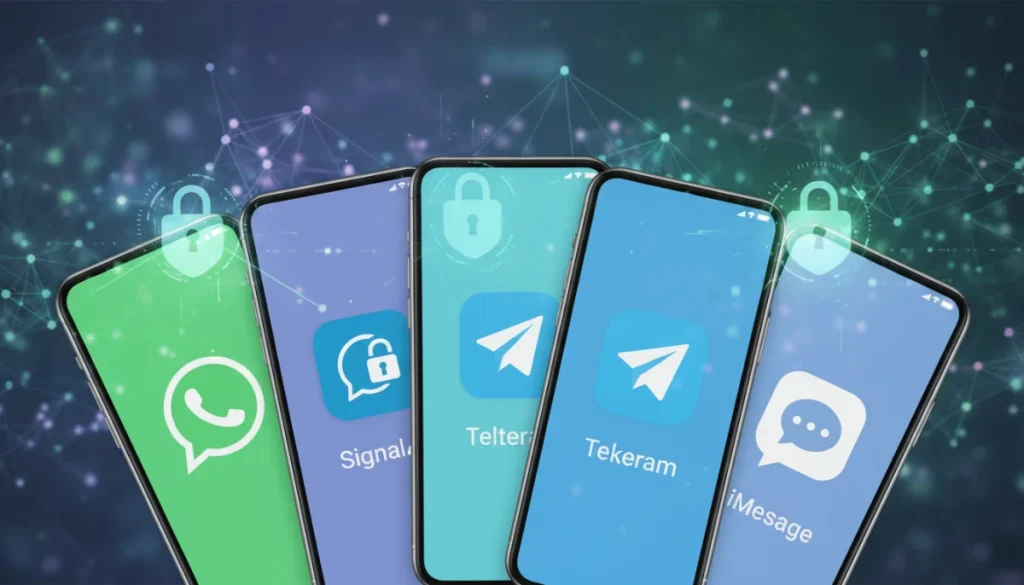
Understanding how different messaging applications protect user data and communication is crucial for digital privacy, with varying approaches to encryption, data retention, and user control defining their security postures.
In an increasingly digital world, understanding the privacy measures of our communication tools is paramount. This article delves into comparing messaging app privacy stances, offering a comprehensive look at how popular platforms protect your personal data and conversations.
The foundational role of end-to-end encryption
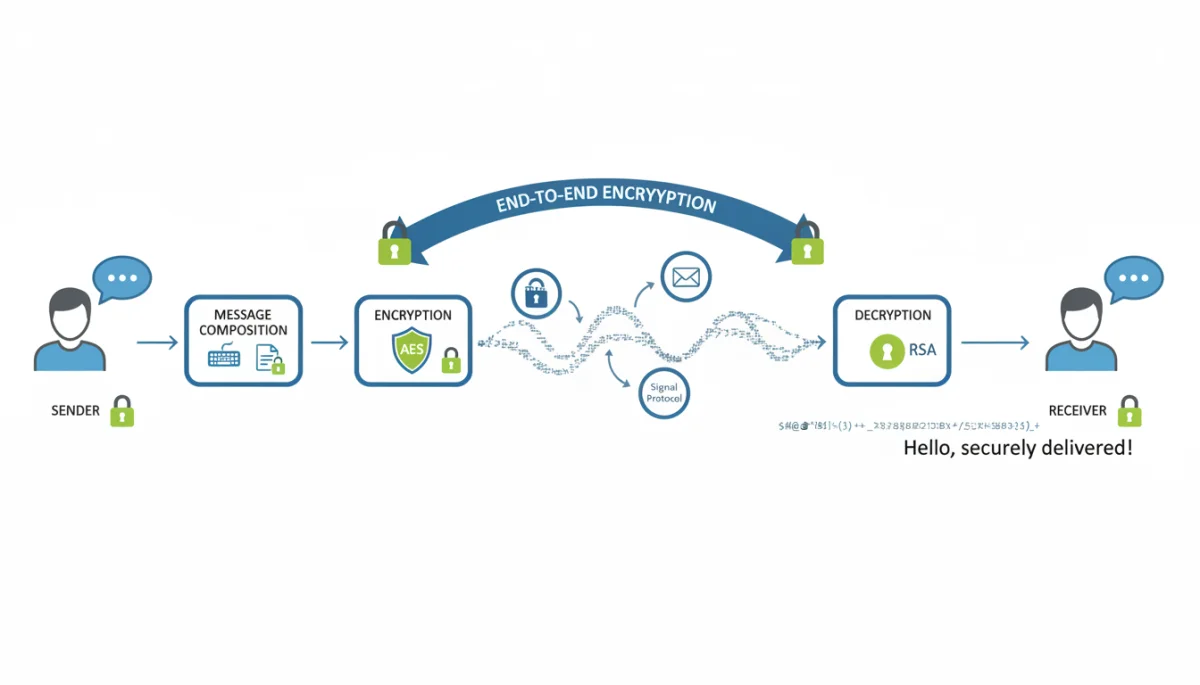
End-to-end encryption (E2EE) is the cornerstone of secure messaging, ensuring that only the sender and intended recipient can read messages. Not even the service provider can access the content of your communications. This fundamental technology is often misunderstood, yet it forms the basis of trust for millions of users worldwide.
When an app implements E2EE, it means your messages are scrambled on your device and only decrypted on the recipient’s device. This process prevents eavesdropping from third parties, including the app developers themselves. The integrity of E2EE relies on robust cryptographic protocols and transparent implementation.
How E2EE works in practice
E2EE isn’t a magical shield; it’s a meticulously designed system of keys. Each user has a pair of cryptographic keys: a public key and a private key. When you send a message, it’s encrypted using the recipient’s public key, which is openly shared. Only the recipient’s private key, held securely on their device, can decrypt it.
- Key Exchange: Secure methods are used to exchange public keys, often verified through safety numbers.
- Session Keys: For ongoing conversations, ephemeral session keys are often generated to enhance forward secrecy.
- Decryption: Messages are decrypted automatically on the recipient’s device, making the process seamless for users.
The effectiveness of E2EE is heavily dependent on its implementation. Some apps offer E2EE by default for all communications, while others require users to opt-in or only apply it to specific features. A critical aspect of comparing messaging app privacy stances is identifying which apps prioritize E2EE as a non-negotiable standard for all interactions.
WhatsApp’s privacy evolution: balancing convenience and security
WhatsApp, a global leader in messaging, has undergone significant changes in its privacy policies over the years, often sparking public debate. Owned by Meta (formerly Facebook), WhatsApp introduced end-to-end encryption in 2016 for all messages and calls, a move widely praised by privacy advocates.
However, its association with Meta continues to raise questions regarding data sharing and metadata collection. While message content remains encrypted, WhatsApp collects various metadata, including who you communicate with, when, and from where. This data can be valuable for advertising and user profiling, even if the content of conversations is inaccessible.
Data collection practices and user concerns
WhatsApp’s privacy policy updates, particularly the 2021 changes, led to widespread concerns about data sharing with its parent company, Meta. Although WhatsApp clarified that these changes primarily affected business accounts and not personal conversations, the incident highlighted the inherent tension between user privacy and corporate data strategies.
- Metadata: WhatsApp collects metadata like phone numbers, device information, and approximate location.
- Business Interactions: Chats with businesses might involve data sharing with Meta for targeted advertising.
- Backups: Cloud backups (Google Drive, iCloud) are not end-to-end encrypted by default, posing a potential vulnerability unless specifically enabled by the user.
Despite its robust E2EE for message content, WhatsApp’s broader data collection practices and its ties to Meta make it a complex case in the realm of messaging app privacy. Users must weigh the convenience and widespread adoption against these data considerations when evaluating their communication choices. The continuous evolution of its privacy policy necessitates ongoing scrutiny from users keen on maintaining their digital autonomy.
Signal: the gold standard for privacy-focused communication
Signal has consistently been lauded as the benchmark for privacy in messaging apps. Developed by the Signal Foundation, a non-profit organization, it is designed from the ground up with privacy as its core principle. Signal’s commitment to E2EE is absolute, and it extends to almost every aspect of its service.
Unlike many commercial apps, Signal collects minimal metadata. It doesn’t store information about who you message, when, or how often. This “zero-knowledge” approach means that even if compelled by authorities, Signal would have very little user data to provide, a significant differentiator in the landscape of messaging app privacy.
Key privacy features of Signal
Signal’s dedication to privacy is evident in its array of features that go beyond basic E2EE. These tools empower users with greater control over their digital footprint and interactions, making it a favorite among journalists, activists, and privacy-conscious individuals.
- Open-source Protocol: Signal’s encryption protocol is open-source, allowing security experts worldwide to audit and verify its security.
- Disappearing Messages: Users can set messages to automatically delete after a specified time, enhancing transient communication.
- Screen Security: Prevents screenshots within the app and hides message previews in the notification shade.
- Sealed Sender: Hides your IP address from the recipient, further anonymizing communication.
Signal’s comprehensive approach to privacy, coupled with its non-profit status, positions it as a leader in secure messaging. Its commitment to user anonymity and data minimization sets a high bar for other platforms when comparing messaging app privacy stances. For those prioritizing absolute privacy, Signal remains the top recommendation, offering a robust and transparent solution for secure digital interactions.
Telegram’s dual approach: secret chats vs. cloud chats
Telegram offers a unique privacy model, distinguishing between its standard “cloud chats” and “secret chats.” While popular for its speed, large group capabilities, and rich features, its privacy stance is more nuanced than many users realize, particularly concerning its default encryption settings.
Cloud chats, which are the default for all conversations, are encrypted client-to-server and then server-to-client. This means messages are stored on Telegram’s servers in an encrypted format. While Telegram claims strong encryption and robust security measures, it does not offer end-to-end encryption by default for these chats, meaning Telegram itself theoretically has access to the unencrypted content on its servers.
Understanding secret chats and their limitations
For users seeking true E2EE on Telegram, “secret chats” are the answer. These chats are device-specific, are not stored in the cloud, and feature self-destructing messages, screenshot prevention, and E2EE. However, secret chats are an opt-in feature and are not available for group conversations.
- Default Encryption: Cloud chats use client-server/server-client encryption, not E2EE.
- Secret Chats: Offer E2EE, disappearing messages, and are device-specific for one-on-one conversations.
- Metadata: Telegram collects metadata similar to other apps, including IP addresses, device types, and contact information.
Telegram’s approach presents a trade-off: convenience and feature richness in cloud chats versus the enhanced privacy of secret chats. Users must actively choose to enable secret chats for sensitive conversations, which can be a point of confusion. This dual system makes comparing messaging app privacy stances with Telegram a matter of understanding which chat mode is being utilized and its inherent privacy implications. While powerful, its default settings may not align with the highest privacy expectations.
iMessage and Apple’s ecosystem: privacy by design?
Apple’s iMessage, a staple for iPhone users, boasts end-to-end encryption for messages exchanged between Apple devices. This means that when you send an iMessage to another Apple user, the content is encrypted from your device to theirs, and Apple cannot read it. This commitment to E2EE is a significant advantage for users within the Apple ecosystem.
However, the privacy landscape of iMessage becomes more complex when communicating with Android users. In such cases, messages revert to standard SMS/MMS, which are not end-to-end encrypted and are handled by carrier networks. This seamless but less secure fallback can be a point of vulnerability for cross-platform conversations.
Data practices and integration with iCloud
Apple’s broader privacy policies emphasize user data protection, often promoting “privacy by design.” For iMessage, this extends to limiting metadata collection and making it difficult for third parties to access message content. However, like WhatsApp, iMessage backups to iCloud are a critical consideration.
- E2EE for iMessage: All messages between Apple devices are end-to-end encrypted.
- SMS/MMS Fallback: Messages to non-Apple devices are not encrypted.
- iCloud Backups: While iMessage content is E2EE, iCloud backups of messages are not fully E2EE by default, potentially allowing Apple access under certain legal circumstances if not explicitly secured by the user with advanced data protection.
- Metadata: Apple collects some metadata, such as timestamps and recipient information, but generally less than many other platforms.
Apple’s strong stance on privacy, particularly within its closed ecosystem, offers a high level of security for iMessage users communicating with each other. Yet, the non-encrypted fallback to SMS/MMS for Android users and the nuances of iCloud backups require users to be vigilant. When comparing messaging app privacy stances, iMessage stands out for its integrated E2EE within its platform, but its limitations outside of it are noteworthy.

The importance of user awareness and informed choices
Navigating the complex world of messaging app privacy requires more than just understanding technical specifications; it demands active user awareness. The choices we make about which apps to use directly impact our digital security and the extent to which our personal communications remain private. It’s not enough for an app to claim strong privacy; its policies and implementations must withstand scrutiny.
Users should regularly review the privacy policies of their preferred messaging applications and be aware of any updates. The digital landscape is constantly evolving, with new threats and privacy challenges emerging. An app’s privacy stance today might differ significantly tomorrow, making continuous education crucial for maintaining digital autonomy.
Factors influencing your privacy decision
Several factors should guide your decision-making process when choosing a messaging app, extending beyond just the presence of E2EE. A holistic view of an app’s privacy posture is essential for truly secure communication.
- Default vs. Optional E2EE: Is end-to-end encryption standard for all communications, or does it require manual activation?
- Metadata Collection: How much data about your communications (who, when, where) does the app collect and store?
- Company Ownership and Business Model: Is the app owned by a data-driven corporation, or is it a non-profit focused solely on privacy?
- Transparency: Is the app’s code open-source and regularly audited by independent security experts?
- Jurisdiction: Where is the company based, and what are the local laws regarding data retention and government access?
Ultimately, the responsibility for digital privacy rests partly with the user. By staying informed and making conscious choices, individuals can significantly enhance their security. Understanding the nuances of comparing messaging app privacy stances empowers users to select platforms that align with their personal privacy thresholds, fostering a safer and more secure digital communication environment for everyone.
Future trends in messaging app privacy and security
The landscape of messaging app privacy is not static; it’s a dynamic field continuously shaped by technological advancements, evolving user expectations, and regulatory pressures. As digital communication becomes even more integrated into our daily lives, we can anticipate several key trends influencing how messaging apps approach security and privacy.
One significant trend is the increasing demand for greater transparency from app developers regarding their data handling practices. Users are becoming more sophisticated in their understanding of privacy, pushing companies to provide clearer, more accessible information about what data is collected, how it’s used, and with whom it’s shared. This push for transparency is likely to lead to more detailed privacy reports and easier-to-understand policies.
Emerging technologies and regulatory impacts
Technological innovations will also play a crucial role. We might see further development in areas like federated messaging, where different platforms can communicate securely while maintaining user privacy, or advancements in zero-knowledge proofs, allowing verification of information without revealing the underlying data. Decentralized messaging protocols, which aim to remove single points of failure and central control, could also gain traction, offering new paradigms for secure communication.
- Decentralized Protocols: Exploring blockchain-based or peer-to-peer models to enhance user control and reduce reliance on central servers.
- Privacy-Enhancing Technologies: Integration of advanced cryptographic techniques to minimize metadata and improve anonymity.
- Regulatory Scrutiny: Governments worldwide are imposing stricter data protection laws (e.g., GDPR, CCPA), forcing apps to re-evaluate their privacy frameworks.
- Interoperability: Efforts to create secure communication across different platforms without sacrificing privacy, a complex but desirable goal.
The future will likely see a continued arms race between privacy-enhancing technologies and methods of data exploitation. As users become more aware of their digital rights, the demand for truly private messaging solutions will only grow. This ongoing evolution will keep comparing messaging app privacy stances a relevant and critical discussion, driving innovation towards more secure and user-centric communication platforms in the years to come.
| App | Privacy Stance Summary |
|---|---|
| Signal | Gold standard for E2EE and minimal metadata collection; non-profit. |
| E2EE for messages but collects significant metadata; owned by Meta. | |
| Telegram | Default cloud chats lack E2EE; ‘secret chats’ offer E2EE but are opt-in. |
| iMessage | E2EE within Apple ecosystem; unencrypted fallback to SMS for Android. |
Frequently asked questions about messaging app privacy
E2EE ensures that only the sender and recipient can read messages. It’s crucial because it prevents third parties, including the app provider, from accessing your communication content, thereby safeguarding your privacy from surveillance and data breaches.
No, WhatsApp’s personal messages are protected by end-to-end encryption, meaning Meta cannot read their content. However, WhatsApp does share metadata (like who you message and when) and data from business interactions with Meta for various purposes.
Telegram offers a dual approach. Its default cloud chats are not end-to-end encrypted, meaning Telegram can access them. For true privacy, users must opt for ‘secret chats,’ which feature E2EE and are device-specific, but are not available for groups.
Signal is highly regarded for privacy due to its default end-to-end encryption for all communications, minimal metadata collection, open-source protocol, and non-profit ownership. It prioritizes user anonymity and transparency above all else, setting a high standard.
When iMessage users communicate with Android users, messages revert to standard SMS/MMS, which lacks end-to-end encryption. This means these communications are not secure and can be intercepted by carriers, posing a significant privacy risk for cross-platform interactions.
Conclusion
The journey of comparing messaging app privacy stances reveals a complex landscape where convenience, features, and security often intersect and sometimes conflict. While end-to-end encryption has become a widely adopted standard for securing message content, the nuances of metadata collection, company ownership, and default settings significantly differentiate one app from another. Signal stands out as the leader for uncompromising privacy, while apps like WhatsApp and iMessage offer strong encryption within their ecosystems but come with caveats regarding metadata or cross-platform security. Telegram, with its dual chat system, requires users to be proactive in choosing privacy-enhanced modes. Ultimately, an informed user is the best defense against privacy compromises. By understanding these distinctions, individuals can make conscious choices that align with their personal privacy needs, fostering a more secure and trustworthy digital communication experience for everyone. The ongoing evolution of technology and regulation will continue to shape this critical area, making continuous awareness an indispensable tool for digital citizenship.
