Cyber Laws & Messaging App Privacy: Evolving Threat Landscape
The evolving threat landscape significantly impacts messaging app privacy, with cyber laws increasingly dictating how personal communications are protected, accessed, and regulated across digital platforms in the United States.
In our increasingly connected world, messaging apps have become indispensable tools for communication, both personal and professional. However, this convenience comes with a growing concern: privacy. The intersection of the evolving threat landscape: how cyber laws impact messaging app privacy is a critical subject that demands attention, shaping not only how we communicate but also the fundamental rights we retain in the digital realm. Understanding these dynamics is essential for every user.
The Digital Communication Revolution and its Privacy Challenges
The widespread adoption of messaging applications has fundamentally transformed how individuals interact, share information, and conduct business. From encrypted chats to multimedia sharing, these platforms offer unparalleled convenience. Yet, this digital revolution brings with it a complex array of privacy challenges that governments, corporations, and users are still grappling with.
The sheer volume of personal data exchanged daily through messaging apps creates an attractive target for malicious actors. Cybercriminals, state-sponsored entities, and even disgruntled individuals constantly seek vulnerabilities to exploit. This necessitates robust security measures, but equally important are the legal frameworks that define the boundaries of data access and protection.
The Rise of End-to-End Encryption
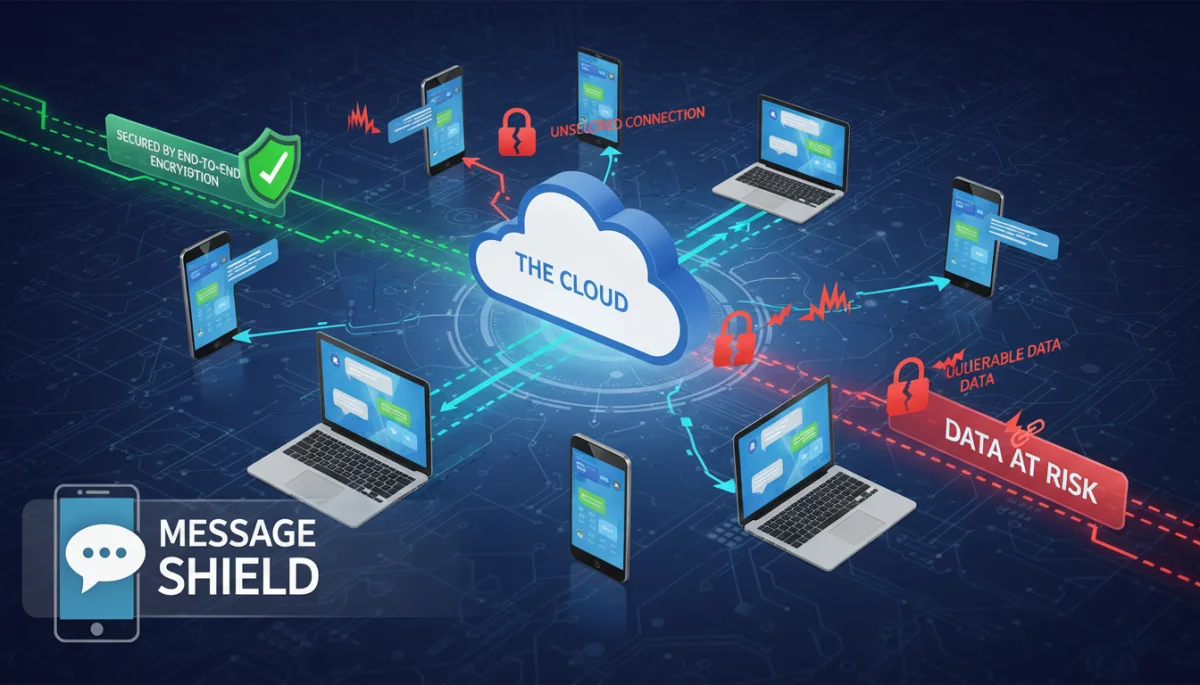
One of the most significant advancements in messaging app privacy has been the widespread implementation of end-to-end encryption (E2EE). This technology ensures that only the sender and intended recipient can read messages, making them inaccessible to third parties, including the app provider itself. E2EE has become a cornerstone of privacy-focused messaging services, offering a strong defense against unauthorized surveillance.
- Enhanced User Security: Protects communications from interception.
- Data Breach Mitigation: Reduces the impact of server-side data breaches.
- Trust Building: Fosters user confidence in platform privacy.
- Global Standard: Increasingly adopted by major messaging platforms.
However, the very strength of E2EE has also made it a focal point of debate, particularly concerning law enforcement access to encrypted communications. This tension highlights the ongoing struggle to balance individual privacy rights with national security concerns, a core aspect of how cyber laws impact messaging app privacy.
In conclusion, while messaging apps have revolutionized communication, they have simultaneously introduced profound privacy challenges. The push for end-to-end encryption offers a powerful solution, but it also creates new legal and ethical dilemmas that policymakers must address to ensure a secure and private digital future for all users.
Understanding US Cyber Laws and Their Reach
The United States has a multifaceted legal landscape governing cybersecurity and data privacy, which directly influences how messaging apps operate and protect user information. These laws are often a patchwork of federal and state regulations, evolving in response to technological advancements and emerging threats. Navigating this complex legal environment is crucial for both app developers and users.
Key federal laws like the Electronic Communications Privacy Act (ECPA) and the CLOUD Act play significant roles in defining government access to digital data. ECPA, enacted in 1986, attempts to extend privacy protections to electronic communications but often struggles to keep pace with modern technologies like encrypted messaging. The CLOUD Act, passed in 2018, allows US law enforcement to compel US-based tech companies to provide requested data, regardless of where the data is stored globally.
Federal Regulations Impacting Messaging Data
Several federal statutes dictate how messaging app data is handled, stored, and potentially accessed by authorities. These laws often come with specific requirements and limitations, creating a complex framework that companies must adhere to.
- Electronic Communications Privacy Act (ECPA): Governs government access to electronic communications and stored data.
- Clarifying Lawful Overseas Use of Data (CLOUD) Act: Permits US law enforcement to demand data from US tech companies, even if stored abroad.
- Foreign Intelligence Surveillance Act (FISA): Authorizes surveillance for foreign intelligence purposes, sometimes impacting messaging data.
- Children’s Online Privacy Protection Act (COPPA): Protects the online privacy of children under 13, relevant for apps used by minors.
The interpretation and application of these laws are continuously challenged in courts, especially when they intersect with highly encrypted platforms. This legal uncertainty contributes to the evolving threat landscape, as companies strive to comply with legal mandates while upholding user privacy commitments. The balance between these competing interests is delicate and perpetually shifting, directly influencing how cyber laws impact messaging app privacy.
In summary, US cyber laws present a complex and often debated framework for messaging app privacy. While designed to protect data and enable law enforcement, their application to modern encrypted communications remains a significant challenge, requiring ongoing legal and technological adaptation.
The Impact of Global Privacy Regulations on US Apps
While US cyber laws primarily govern domestic operations, the global nature of messaging apps means that international privacy regulations significantly influence how US-based applications handle user data worldwide. Regulations such as Europe’s General Data Protection Regulation (GDPR) and various other national data protection laws set high standards that often extend beyond US borders, compelling US companies to adopt more stringent privacy practices.
GDPR, in particular, has had a profound impact. Its broad scope means that any US messaging app processing the data of EU citizens, regardless of where the company is headquartered, must comply with its strict requirements for data protection, consent, and user rights. This includes principles like data minimization, purpose limitation, and the right to be forgotten. Non-compliance can result in substantial fines, making it a critical consideration for all international app providers.
Key International Regulations Affecting US Messaging Apps
The global regulatory environment is a mosaic of different laws, each with its own nuances and requirements. For US messaging apps operating globally, understanding these diverse legal landscapes is not just good practice, but a necessity for legal compliance and market access.
- General Data Protection Regulation (GDPR – EU): Comprehensive data protection law with strict requirements for processing personal data of EU residents.
- California Consumer Privacy Act (CCPA – US State): Grants California consumers significant privacy rights, influencing national standards.
- Lei Geral de Proteção de Dados (LGPD – Brazil): Brazil’s data protection law, similar in scope to GDPR, affecting apps with Brazilian users.
- Personal Information Protection and Electronic Documents Act (PIPEDA – Canada): Canadian law governing how private sector organizations collect, use, and disclose personal information.
The need to comply with multiple, sometimes conflicting, international regulations creates a complex compliance burden for messaging app providers. This often leads to a ‘race to the top’ in privacy standards, where companies adopt the highest common denominator of protection to ensure global compliance. This global pressure is a significant factor in how cyber laws impact messaging app privacy, pushing for stronger safeguards even within the US market.
In essence, global privacy regulations, particularly GDPR, compel US messaging apps to elevate their data protection practices. This international influence means that user privacy is increasingly protected by standards that transcend national borders, creating a more secure environment for digital communications globally.
Government Demands for Access: A Balancing Act
One of the most contentious aspects of how cyber laws impact messaging app privacy is the ongoing tension between government demands for access to encrypted communications and the fundamental right to privacy. Law enforcement and intelligence agencies often argue that encryption hinders their ability to investigate serious crimes and prevent terrorist attacks, advocating for ‘backdoors’ or other mechanisms to access encrypted data.
Conversely, privacy advocates, technology companies, and cybersecurity experts argue that creating backdoors would inherently weaken encryption for everyone, making all users vulnerable to exploitation by malicious actors. They assert that such access mechanisms could be abused by authoritarian regimes or compromised by cybercriminals, undermining the very security they are intended to enhance. This debate is at the heart of the evolving threat landscape.
The Encryption Debate: National Security vs. Privacy
The debate over encryption is not new, but it has intensified with the proliferation of strong end-to-end encryption in popular messaging platforms. Governments frequently cite specific cases where access to encrypted communications could have prevented harm, while tech companies highlight the broader societal risks of weakening security protocols.
- Law Enforcement Arguments: Need for access to prevent crime and terrorism.
- Privacy Advocate Arguments: Backdoors create vulnerabilities for all users and risk government overreach.
- Technological Challenges: Difficulty of creating ‘secure’ access mechanisms without compromising overall security.
- Legal Precedents: Court cases continually test the boundaries of government access powers.
High-profile legal battles, such as those involving Apple and the FBI, have brought this issue into the public spotlight, forcing a reevaluation of existing cyber laws and their applicability to modern encryption technologies. These cases often highlight the lack of clear legal frameworks that can effectively balance national security interests with individual privacy rights in the digital age. The outcome of these discussions will profoundly shape how cyber laws impact messaging app privacy for years to come.
In conclusion, the conflict between government demands for access to encrypted data and the imperative to protect user privacy remains a critical challenge. Striking a balance that safeguards both national security and digital rights is a complex task, demanding innovative legal and technological solutions.
User Rights and Responsibilities in the Digital Age
In the intricate discussion of how cyber laws impact messaging app privacy, it’s crucial to acknowledge the role of individual users. While laws and regulations set the framework, users themselves have significant rights and responsibilities in protecting their digital communications. Understanding these aspects empowers individuals to make informed choices and advocate for stronger privacy protections.
Users have a right to expect privacy in their digital communications, especially when using encrypted platforms. This right is increasingly recognized in various legal frameworks, though its scope and enforcement can vary. Beyond legal rights, users also have a responsibility to utilize available security features, understand privacy policies, and be vigilant against phishing, malware, and social engineering attacks that could compromise their messaging app security.
Empowering Users Through Awareness and Tools
Digital literacy and the adoption of best practices are powerful tools in the hands of users. By understanding the privacy settings available on their messaging apps and employing basic cybersecurity hygiene, individuals can significantly enhance their personal data protection.
- Privacy Settings: Actively review and configure privacy settings on all messaging apps.
- Strong Passwords/Biometrics: Secure devices with robust authentication methods.
- Two-Factor Authentication (2FA): Enable 2FA wherever possible for an added layer of security.
- Software Updates: Keep apps and operating systems updated to patch vulnerabilities.
- Awareness of Scams: Recognize and avoid phishing attempts and malicious links.
Furthermore, users have a responsibility to be discerning about the information they share and with whom. The digital footprint left by messaging app usage can be extensive, and exercising caution in sharing sensitive data is paramount. Advocating for stronger privacy laws and supporting companies that prioritize user privacy are also important responsibilities for digital citizens. This collective action significantly influences how cyber laws impact messaging app privacy, pushing for more user-centric regulations.
Ultimately, individual users are integral to the privacy equation. By understanding their rights and diligently exercising their responsibilities, they contribute significantly to their own digital security and help shape a more privacy-respecting online environment.
Emerging Threats and Future Legal Frameworks
The digital landscape is constantly evolving, bringing with it new threats that challenge existing cyber laws and necessitate the development of future legal frameworks. As messaging apps become more sophisticated, incorporating features like AI-driven assistants, ephemeral messages, and decentralized architectures, the complexities surrounding privacy and security will only intensify. Understanding these emerging threats is crucial for anticipating future legal responses.
One significant emerging threat is the increasing sophistication of state-sponsored cyberattacks, which can target messaging app infrastructure or individual users through advanced persistent threats (APTs). Another concern is the potential for deepfake technology and AI-generated content to be used for disinformation campaigns or identity theft through messaging platforms, posing new challenges for content moderation and legal accountability. The evolving threat landscape requires agile and forward-thinking legal solutions.

Anticipating Future Legal and Technological Responses
As technology progresses, so too must the legal frameworks designed to govern it. Future cyber laws will likely need to address issues that are currently on the horizon, requiring proactive measures rather than reactive ones.
- AI Regulation: Developing laws to govern AI’s role in data processing and content generation within messaging apps.
- Quantum Computing Threats: Preparing for the eventual threat of quantum computers breaking current encryption standards.
- Decentralized Platforms: Crafting legal frameworks for privacy and accountability on blockchain-based or decentralized messaging services.
- Cross-Border Data Flows: Harmonizing international laws to facilitate secure and private data transfers across jurisdictions.
The future of how cyber laws impact messaging app privacy will depend heavily on collaboration between policymakers, technologists, legal experts, and civil society. Striking the right balance between fostering innovation, protecting national security, and upholding individual privacy rights will be a continuous challenge. Proactive legislative efforts, coupled with robust technological solutions, will be essential to navigate this increasingly complex digital future. The evolving threat landscape demands constant vigilance and adaptation from all stakeholders.
In conclusion, emerging threats and technological advancements necessitate continuous evolution of legal frameworks surrounding messaging app privacy. Future cyber laws must be forward-looking, addressing challenges posed by AI, quantum computing, and decentralized platforms to ensure robust digital rights and security.
The Future of Messaging App Privacy and Cyber Laws
Looking ahead, the trajectory of messaging app privacy will largely be shaped by the ongoing interplay between technological innovation, user expectations, and the development of cyber laws. The current landscape is dynamic, marked by continuous debates over encryption, data access, and the scope of individual digital rights. Predicting the exact future is challenging, but several key trends are likely to define this evolving domain.
One significant trend will be the increased demand for transparency from messaging app providers regarding their data handling practices and security protocols. Users are becoming more privacy-aware and will likely gravitate towards platforms that offer clear, verifiable commitments to protecting their information. This will put pressure on companies to not only implement strong security but also to communicate these efforts effectively to their user base. This transparency is crucial for understanding how cyber laws impact messaging app privacy.
Key Trends Shaping Digital Privacy
Several factors will converge to influence the future direction of messaging app privacy and the legal frameworks that govern it. These trends reflect both technological advancements and shifting societal values regarding digital rights.
- Increased User Demand for Privacy: Growing public awareness and concern about data breaches and surveillance will drive demand for more secure platforms.
- Regulatory Harmonization Efforts: International bodies may push for more unified global privacy standards to simplify compliance for multinational companies.
- Privacy-Enhancing Technologies (PETs): Further development and adoption of technologies like federated learning, differential privacy, and zero-knowledge proofs will offer new ways to protect data.
- Ethical AI Considerations: Legal and ethical guidelines will emerge to address how AI processes and uses data within messaging apps, particularly concerning personal profiling and content moderation.
The role of governments will also evolve, moving beyond reactive legislation to more proactive policy-making that anticipates technological changes. This might include greater investment in cybersecurity research, public-private partnerships to address threats, and educational initiatives to improve digital literacy among citizens. The balance between allowing innovation and imposing necessary regulations will be a constant challenge. Ultimately, the future of how cyber laws impact messaging app privacy will be a collaborative effort, requiring ongoing dialogue and adaptation from all stakeholders to ensure a secure and private digital communication environment.
In conclusion, the future of messaging app privacy will be shaped by a confluence of technological advancements, heightened user expectations for transparency, and evolving cyber laws. The ongoing challenge will be to adapt legal frameworks proactively to new threats, fostering a digital environment where privacy and security are paramount.
| Key Aspect | Brief Description |
|---|---|
| Evolving Threat Landscape | New cyber threats constantly emerge, challenging existing security measures in messaging apps. |
| Cyber Laws & Privacy | Legal frameworks dictate how messaging app data is protected, accessed, and regulated. |
| Encryption Debate | Ongoing conflict between government access demands and the need for strong end-to-end encryption. |
| User Empowerment | Users play a crucial role in protecting their privacy through awareness and security practices. |
Frequently Asked Questions About Messaging App Privacy
Cyber laws attempt to balance user privacy with national security. Some laws, like the CLOUD Act, allow government access to data, but generally do not mandate backdoors in end-to-end encryption. The legal debate continues on whether and how governments can compel tech companies to provide access to encrypted communications, impacting app design.
The CLOUD Act permits US law enforcement to compel US-based tech companies to provide requested data, even if that data is stored on servers outside the United States. For messaging apps, this means user data, regardless of its physical location, can potentially be accessed by US authorities under legal process.
Yes, if US messaging apps process the personal data of citizens residing in regions with strong data protection laws, such as the European Union’s GDPR, they must comply with those regulations. This often leads to US companies adopting higher privacy standards globally to ensure legal compliance and avoid significant fines.
Users can enhance privacy by enabling end-to-end encryption, using strong passwords and two-factor authentication, regularly updating apps, and reviewing privacy settings. Being cautious about sharing sensitive information and recognizing phishing attempts are also crucial steps to protect digital communications.
AI’s increasing role in data processing, content generation, and potential surveillance will necessitate new laws governing its ethical use and impact on privacy. Future cyber laws will need to address challenges posed by deepfakes, quantum computing threats to encryption, and decentralized messaging platforms to maintain robust digital rights.
Conclusion
The journey through the evolving threat landscape: how cyber laws impact messaging app privacy reveals a complex and dynamic environment where technology, legal frameworks, and individual rights are in constant flux. From the foundational shift to end-to-end encryption to the intricate web of US and international cyber laws, every development reshapes the contours of digital communication security. The ongoing debate between national security interests and the imperative of personal privacy underscores the challenges faced by policymakers, tech companies, and users alike. As new threats emerge and technologies advance, the need for agile, comprehensive, and globally harmonized legal frameworks will only intensify. Ultimately, safeguarding messaging app privacy in this evolving landscape requires a concerted effort from all stakeholders, fostering a future where secure and private digital communication remains a cornerstone of our connected world.
