Why Social App Users Are Shifting to Encrypted Messaging
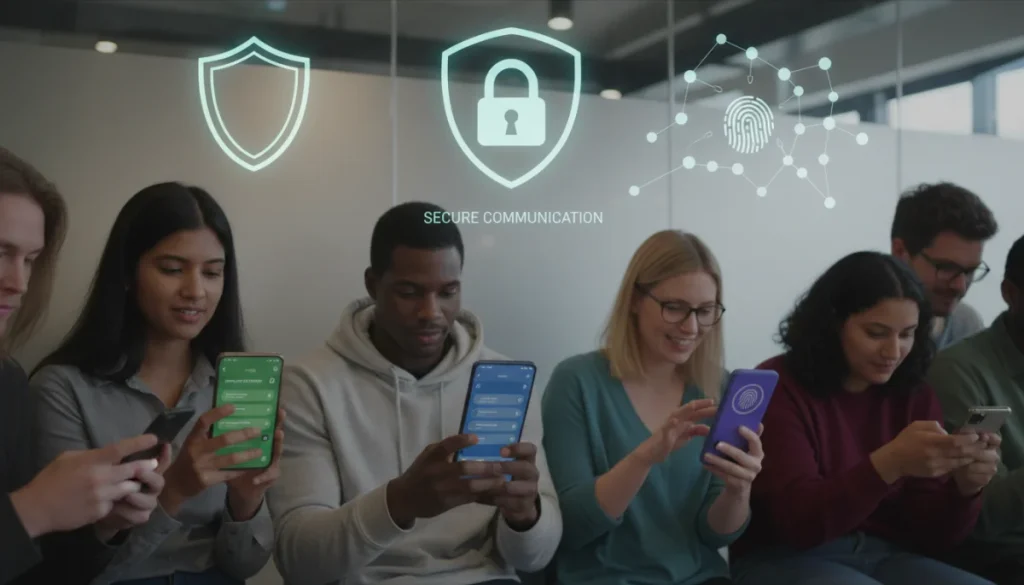
Users are increasingly shifting from traditional social apps to encrypted messaging platforms driven by a growing demand for enhanced privacy, robust data security, and greater control over their digital communications.
Have you ever wondered why social app users are shifting to encrypted messaging? In an age where digital interaction is constant, the quest for secure and private communication has never been more paramount. This significant migration reflects a broader societal concern about personal data and digital footprints, urging a closer look into the underlying reasons for this evolving trend.
The growing demand for data privacy
The digital landscape has fundamentally reshaped how we interact, share, and connect. However, this convenience often comes at a cost, particularly concerning our personal data. Users are increasingly becoming aware of how their data is collected, stored, and potentially used by social media giants. This heightened awareness is a primary catalyst driving the shift towards more private communication channels.
For years, social media platforms have been criticized for their opaque data policies and business models that heavily rely on user data for targeted advertising. The realization that private conversations might not be so private, or that personal information could be monetized without explicit, clear consent, has eroded trust among many users. This erosion of trust is a critical factor in the exodus from less secure platforms to those offering stronger privacy guarantees.
Understanding data collection practices
Many social apps collect a vast array of user data, often beyond what is immediately apparent. This can include everything from message content (even if claimed to be private), location data, browsing habits, and even biometric information. Users are now demanding transparency and control over this data.
- Message Content: Some platforms scan messages for keywords to target ads.
- Location Tracking: Constant monitoring of physical whereabouts.
- Usage Patterns: Analysis of how and when users interact with the app.
- Personal Information: Data shared during sign-up and profile creation.
The fear of data misuse, whether by the platforms themselves or by third-party entities, has become a significant deterrent for many. This fear is not unfounded, as numerous high-profile data breaches and privacy scandals have plagued the tech industry in recent years, making headlines and fueling public skepticism.
The desire for a digital space where conversations remain genuinely private, free from surveillance or commercial exploitation, is a powerful motivator. Encrypted messaging services offer this assurance, promising that only the sender and intended recipient can read the messages, thanks to robust encryption protocols.
Enhanced security against cyber threats
Beyond privacy concerns, the ever-present threat of cyberattacks and data breaches plays a crucial role in the migration to encrypted platforms. Traditional social media apps, while investing heavily in security, often present a larger attack surface due to their complex infrastructure and vast user bases. Encrypted messaging, particularly those employing end-to-end encryption, offers a more fortified defense against such threats.
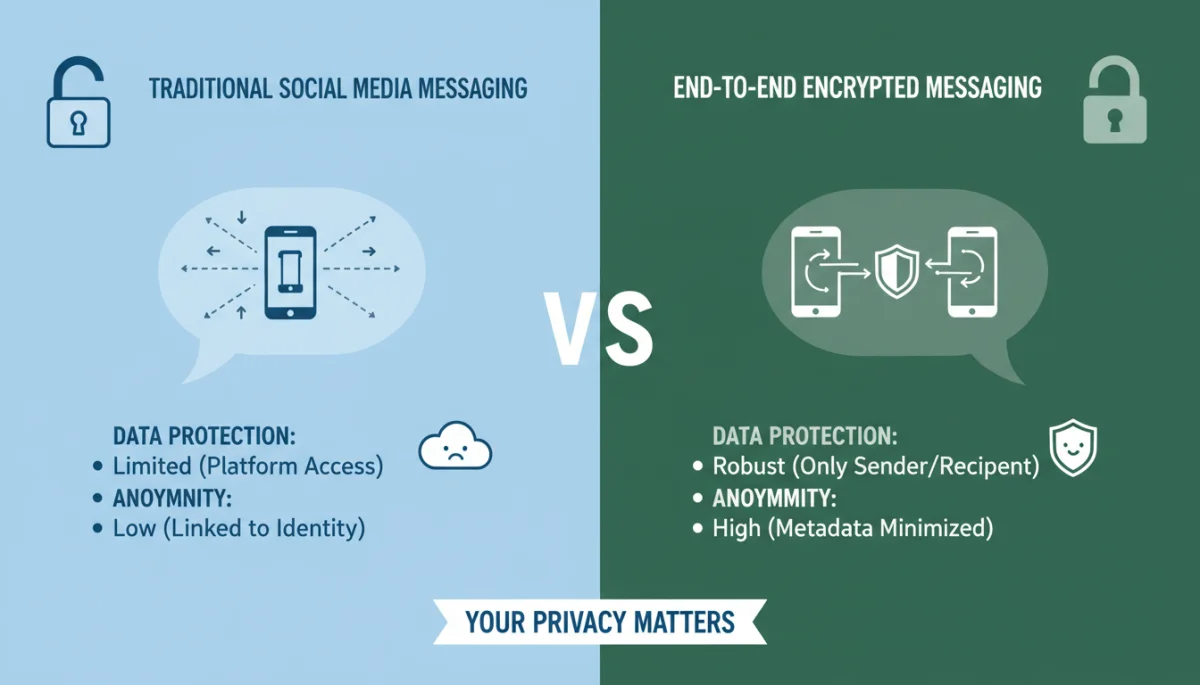
End-to-end encryption (E2EE) ensures that messages are encrypted on the sender’s device and remain encrypted until they reach the recipient’s device. This means that even the service provider cannot access the content of the messages. This level of security is a stark contrast to many social media platforms where messages might be encrypted in transit but stored in an unencrypted or less securely encrypted format on servers, making them vulnerable to breaches.
The mechanics of end-to-end encryption
E2EE is not just a buzzword; it’s a cryptographic marvel that fundamentally changes the security posture of digital communication. It relies on complex algorithms and unique keys generated for each conversation, making it virtually impossible for unauthorized parties to intercept and decipher messages.
- Key Exchange: Secure generation and exchange of cryptographic keys.
- Data Scrambling: Messages are turned into unreadable code.
- Decryption on Device: Only the recipient’s device can decrypt the message.
- Server Blindness: The service provider has no access to message content.
This architectural choice significantly reduces the risk of messages being intercepted by hackers, government agencies, or even the platform itself. In an era where personal information is a valuable commodity for cybercriminals, the peace of mind offered by E2EE is invaluable. Users are no longer willing to gamble with their sensitive conversations.
The increasing sophistication of cyber threats necessitates a more robust approach to digital security. Encrypted messaging apps are designed with this in mind, making them a preferred choice for individuals and businesses alike who prioritize the integrity and confidentiality of their communications. The shift is a clear indicator that users are seeking proactive measures to protect themselves online.
Loss of trust in mainstream social platforms
The public’s trust in mainstream social media platforms has been steadily declining over the past few years. A series of controversies, including data breaches, privacy scandals, and concerns about political manipulation, have painted a picture of platforms that prioritize profit over user well-being and privacy. This erosion of trust is a significant driver behind why social app users are shifting to encrypted messaging.
High-profile incidents, such as the Cambridge Analytica scandal, exposed the vulnerabilities of user data on social platforms and demonstrated how personal information could be exploited for purposes beyond ordinary social interaction. These events have left a lasting impression on users, making them question the true cost of using ‘free’ social services.
Scandals and their impact on user perception
Each new scandal chips away at the foundation of trust platforms have tried to build. Users are now more critical and discerning about where they conduct their private conversations. The narrative has shifted from convenience to caution, prompting a reevaluation of digital habits.
- Data Breaches: Unauthorized access to millions of user accounts.
- Privacy Violations: Misuse of personal data without consent.
- Content Moderation Issues: Concerns over censorship and bias.
- Political Manipulation: Allegations of influencing elections through data.
This accumulation of negative experiences has led many to seek alternatives that explicitly promise and deliver on privacy and security. Encrypted messaging apps, by design, offer a clearer commitment to these values, which resonates deeply with a disillusioned user base. The promise of a secure, private space feels like a breath of fresh air in a crowded and often compromised digital world.
The loss of trust isn’t just about data; it’s about the perceived ethical stance of these companies. Users want to feel respected and protected, not like a product whose data is constantly being harvested. This fundamental shift in user expectation is a powerful force propelling the adoption of encrypted messaging.
The allure of greater control over personal data
One of the most compelling reasons for the move to encrypted messaging is the desire for greater autonomy and control over one’s personal data. In the past, users often passively accepted the terms and conditions of social media platforms, often without fully understanding the implications for their data. Today, there’s a growing movement towards digital self-determination.
Encrypted messaging services typically offer more transparent data handling policies and often collect less user data to begin with. This minimalist approach to data collection, combined with strong encryption, gives users a sense of empowerment. They feel that their conversations truly belong to them and are not subject to external scrutiny or commercial analysis.
Features that empower users
Many encrypted messaging apps include features designed specifically to give users more control. These go beyond just encryption and delve into aspects of message retention, identity verification, and even self-destructing messages, all aimed at putting the user in the driver’s seat.
- Self-Destructing Messages: Messages automatically disappear after a set time.
- Screenshot Prevention: Features to prevent or notify when screenshots are taken.
- Identity Verification: Tools to verify the authenticity of contacts.
- Minimal Data Collection: Apps designed to collect as little user data as possible.
The ability to control who sees what, for how long, and under what circumstances, is a significant draw. It addresses the fundamental human need for privacy and personal boundaries, which many feel have been eroded by traditional social media. This shift is not just about technology; it’s about reclaiming a sense of digital sovereignty.
Users are actively seeking platforms that align with their values of privacy and control. The market is responding by developing and promoting apps that prioritize these aspects, further accelerating the trend. This push for greater control is a clear indicator of a maturing digital populace that understands the value of its own data.
Regulatory pressures and legal changes
The evolving global regulatory landscape also plays a significant role in why social app users are shifting to encrypted messaging. Governments worldwide are enacting stricter data protection laws, such as the GDPR in Europe and various state-level privacy laws in the United States. These regulations are raising the bar for how companies handle personal data, influencing both platform behavior and user expectations.
These legal frameworks often mandate explicit consent for data collection, grant users the right to access and delete their data, and impose hefty fines for non-compliance. While primarily targeting companies, these laws empower users by giving them legal recourse and making them more aware of their data rights. This awareness, in turn, fuels the demand for platforms that are inherently designed to be privacy-preserving.
Impact of data protection laws
Regulations like GDPR have had a ripple effect across the tech industry, prompting companies to rethink their data practices. For users, these laws provide a legal foundation for demanding better privacy from the services they use.
- Explicit Consent: Companies must clearly obtain permission to collect data.
- Right to Be Forgotten: Users can request their data be deleted.
- Data Portability: Users can transfer their data between services.
- Increased Penalties: Significant fines for privacy violations incentivize compliance.
The legal pressure on social media companies to be more transparent and responsible with user data inadvertently highlights the inherent privacy advantages of encrypted messaging. When platforms are forced to disclose their data handling, the contrast with E2EE services becomes even more apparent, making the latter a more attractive option for privacy-conscious individuals.
Furthermore, the ongoing debate about government access to encrypted communications, while complex, also underscores the importance of strong encryption. Users often view attempts to weaken encryption as a threat to their civil liberties, further solidifying their preference for platforms that resist such pressures.
Peer influence and evolving social norms
Social trends are often shaped by peer influence and evolving norms, and the migration to encrypted messaging is no exception. As more individuals within a social circle adopt privacy-focused apps, it creates a network effect, encouraging others to follow suit. This is particularly true among younger demographics who are often early adopters of new technologies and more acutely aware of digital privacy issues.
The conversation around digital privacy has shifted from a niche concern to a mainstream topic. What was once considered paranoid is now seen as prudent. Sharing personal information carelessly on open platforms is increasingly viewed as an outdated or risky practice, prompting a reevaluation of where and how private conversations occur.
The network effect and privacy-conscious communities
When friends, family, or colleagues start using encrypted apps, others are often compelled to join them to maintain seamless communication. This natural progression helps normalize the use of these platforms and fosters communities centered around shared privacy values.
- Group Migration: Entire friend groups or communities move to a single app.
- Influencer Advocacy: Tech personalities and privacy advocates promote secure apps.
- Educational Content: Increased awareness through articles and videos about digital security.
- Feature Parity: Encrypted apps now offer many features found in social apps, easing transition.
The growing availability of user-friendly encrypted messaging apps that offer a rich feature set also reduces the barrier to adoption. Users no longer have to sacrifice functionality for security. This combination of social pressure, increased awareness, and improved user experience is accelerating the shift away from less private alternatives.
Ultimately, the move towards encrypted messaging is becoming a social statement – a declaration that privacy is a non-negotiable right in the digital age. This evolving social norm reinforces the choice to use more secure platforms, making the trend irreversible for many users.
| Key Factor | Brief Description |
|---|---|
| Data Privacy Concerns | Users worry about how personal data is collected and used by social apps. |
| Enhanced Security | End-to-end encryption offers robust protection against cyber threats and unauthorized access. |
| Loss of Trust | Scandals and data breaches have eroded confidence in mainstream social platforms. |
| Greater Control | Users seek more autonomy over their digital footprint and message retention. |
Frequently Asked Questions About Encrypted Messaging
End-to-end encryption (E2EE) ensures that only the sender and recipient can read messages. It’s crucial because it prevents third parties, including the service provider, from accessing communication content, thereby maximizing privacy and security against surveillance and data breaches.
No, not all messaging apps offer the same level of security. Apps with true end-to-end encryption, like Signal or WhatsApp (for messages), are generally more secure than those that encrypt only in transit or store data on servers in an unencrypted format. Always check an app’s privacy policy.
Social apps often collect extensive user data, including message content, location, and usage patterns, for advertising or other purposes. Encrypted messaging apps typically collect minimal metadata and cannot access message content, prioritizing user privacy by design.
With true end-to-end encryption, governments cannot directly access the content of messages, even with a warrant, as the data is unreadable to the service provider. However, they might still access metadata or information stored on devices if legally compelled or compromised.
Look for end-to-end encryption by default, open-source code for independent auditing, minimal data collection policies, and features like self-destructing messages or screenshot prevention. Transparency in their privacy policy is also a key indicator of a trustworthy app.
Conclusion
The significant migration of social app users to encrypted messaging platforms is a clear indicator of a fundamental shift in user priorities. Driven by mounting concerns over data privacy, the persistent threat of cyberattacks, and a profound loss of trust in mainstream social media, individuals are actively seeking digital spaces that offer robust security and greater control over their personal information. This trend is further bolstered by evolving regulatory frameworks and the powerful influence of peer adoption, solidifying the idea that privacy is not merely a feature, but a fundamental right in the digital age. As technology continues to advance, the demand for truly private and secure communication will only grow, making encrypted messaging an indispensable part of our online lives.
