End-to-End Encryption Explained: Securing Your Communications
End-to-end encryption (E2EE) is a secure communication method preventing third parties from accessing data while it’s transferred from one end system or device to another, ensuring only the communicating users can read messages.
In an increasingly interconnected world, safeguarding our digital conversations has become paramount. This article delves into the intricacies of end-to-end encryption, a fundamental technology that serves as your digital shield, ensuring your private communications remain private.
Understanding the Basics of End-to-End Encryption
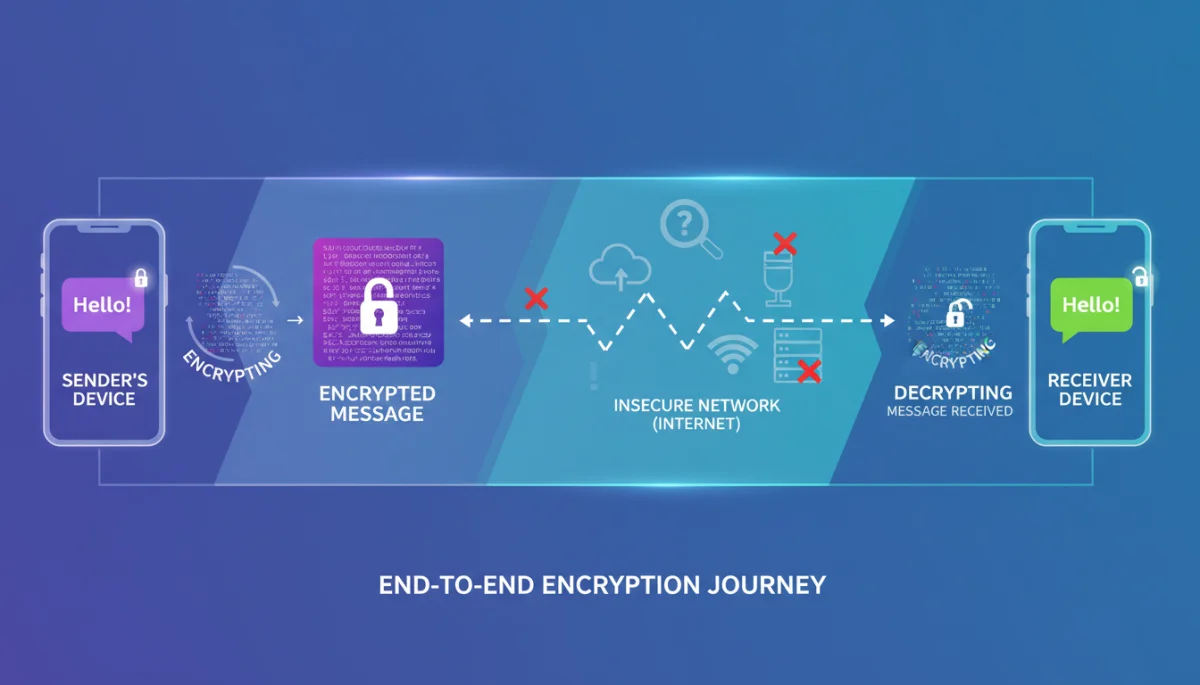
End-to-end encryption, often abbreviated as E2EE, is a system of communication where only the communicating users can read the messages. In principle, it prevents potential eavesdroppers – including internet service providers, application providers, and even governments – from accessing the cryptographic keys needed to decrypt the conversation. This means your messages, photos, videos, voice calls, and documents are scrambled from the moment they leave your device until they reach the intended recipient’s device.
The core idea behind E2EE is to create a secure tunnel between two endpoints. Imagine sending a letter in a locked box, where only you and the recipient have the key. Even if someone intercepts the box, they can’t open it without the correct key. In the digital realm, this ‘key’ is a complex algorithm, generated and managed securely by the devices involved in the communication.
How E2EE Differs from Other Encryption Methods
It’s crucial to distinguish E2EE from other forms of encryption, such as transport-layer encryption. While transport-layer encryption (like HTTPS for websites) protects data in transit, the service provider often holds the keys and can, theoretically, access your data. E2EE, however, ensures that even the service provider cannot decrypt the content, as the encryption and decryption processes occur exclusively on the end-user devices. This distinction is vital for true privacy.
- Transport-Layer Encryption: Data is encrypted between your device and the server, and between the server and the recipient’s device. The server can see the content.
- End-to-End Encryption: Data is encrypted on your device and remains encrypted until it reaches the recipient’s device. The server cannot see the content.
- Disk Encryption: Protects data stored on a device, preventing unauthorized access if the device is lost or stolen.
The beauty of E2EE lies in its decentralized trust model. You don’t have to trust the service provider with your data’s content, only with the delivery mechanism. This paradigm shift has profound implications for digital rights and personal freedom in the digital age.
The Cryptographic Principles Behind E2EE
At its heart, end-to-end encryption relies on sophisticated cryptographic principles, primarily asymmetric (public-key) cryptography and symmetric-key cryptography. Understanding these concepts helps demystify how E2EE provides such robust security without requiring users to be cryptography experts.
When you initiate a conversation, your device and the recipient’s device exchange public keys. These public keys are like open padlocks; anyone can see them, but they can only be used to lock a message. Each user also possesses a private key, which is kept secret and is the only key that can unlock messages encrypted with their corresponding public key. This clever system allows for secure key exchange even over insecure channels.
Key Exchange and Session Keys
The process often begins with a Diffie-Hellman key exchange, a method allowing two parties to establish a shared secret key over an insecure communication channel. Once this shared secret is established, it’s used to derive a symmetric session key. Symmetric encryption is much faster for encrypting and decrypting large amounts of data, making it ideal for ongoing conversations.
- Public Key: Shared openly, used to encrypt messages for a specific recipient.
- Private Key: Kept secret by the owner, used to decrypt messages encrypted with their public key.
- Session Key: A temporary symmetric key generated for a specific communication session, used for fast encryption/decryption of messages.
Each message sent during the session is then encrypted with this temporary session key. Because this key is only known to the two communicating parties and is often ephemeral (meaning it’s discarded after the session), even if an attacker compromises a future session, they cannot decrypt past messages. This property is known as forward secrecy, a critical component of strong E2EE.
The cryptographic algorithms employed are constantly evolving, with standards like AES (Advanced Encryption Standard) for symmetric encryption and RSA or Elliptic Curve Cryptography (ECC) for asymmetric encryption being commonly used. These algorithms are rigorously peer-reviewed and considered highly secure against modern computational attacks.
Applications of End-to-End Encryption in Daily Life
End-to-end encryption is no longer a niche technology; it’s a fundamental feature embedded in many of the digital tools we use daily. Its widespread adoption has significantly enhanced the privacy and security of countless individuals, making it harder for unauthorized parties to snoop on personal and professional communications.
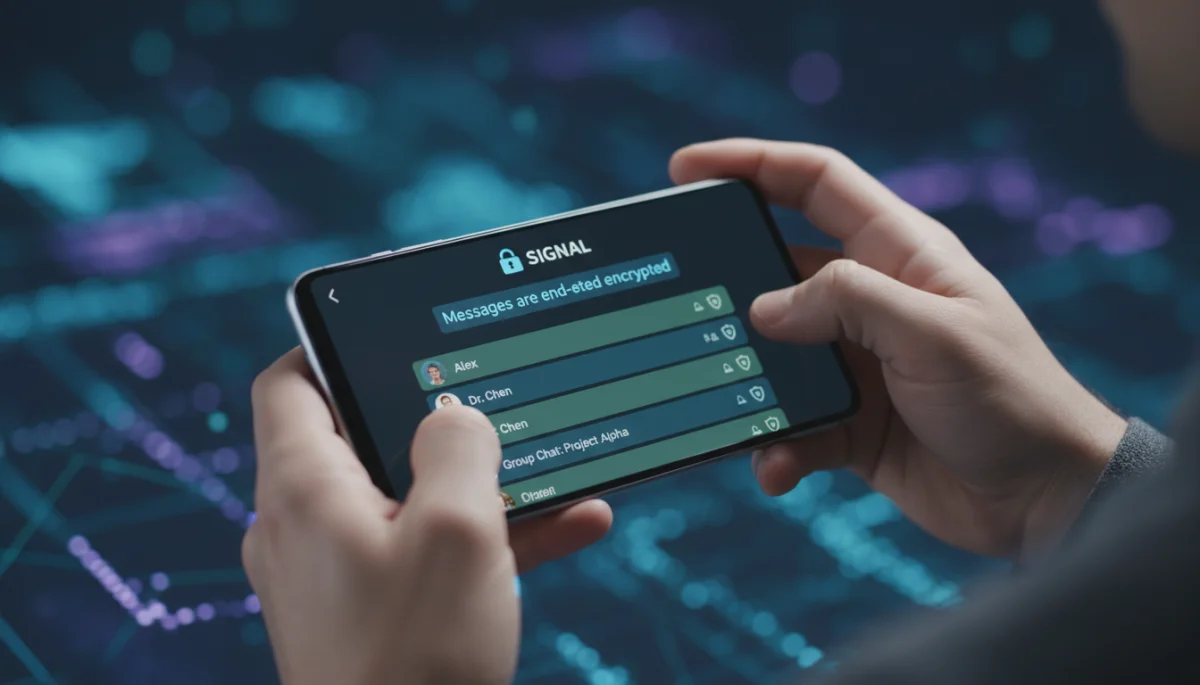
Messaging applications are perhaps the most prominent example of E2EE in action. Platforms like WhatsApp, Signal, and Apple’s iMessage have implemented E2EE by default, ensuring that conversations between users are private. This means that when you send a text or make a call through these apps, the content is encrypted on your device and can only be decrypted by the recipient’s device.
Beyond Messaging: Email and Cloud Storage
While mainstream email providers like Gmail or Outlook typically do not offer E2EE by default (they use transport-layer encryption), specialized services like ProtonMail or Tutanota are built around E2EE, providing users with a secure alternative. Similarly, cloud storage providers are beginning to offer E2EE options, allowing users to encrypt their files before uploading them, ensuring that even the cloud provider cannot access the unencrypted data.
- Secure Messaging Apps: WhatsApp, Signal, Threema, Wickr Me are popular choices.
- E2EE Email Services: ProtonMail, Tutanota provide encrypted email communication.
- E2EE Cloud Storage: Services like Sync.com or MEGA offer client-side encryption for files.
The integration of E2EE into these diverse applications underscores its versatility and the growing demand for privacy-preserving technologies. As digital interactions become more integral to our lives, the expectation for strong encryption across all platforms will only increase, pushing more developers to adopt E2EE as a standard.
Benefits and Challenges of Widespread E2EE Adoption
The widespread adoption of end-to-end encryption brings a multitude of benefits, primarily centered around enhanced privacy and security for individuals and organizations. However, it also introduces significant challenges, particularly for law enforcement and in the fight against online abuse.
From a user’s perspective, E2EE offers peace of mind. It protects sensitive personal information, confidential business communications, and journalistic sources from surveillance and data breaches. This protection is crucial for fostering free speech and enabling secure transactions in a digital economy. For businesses, E2EE helps meet compliance requirements for data protection regulations like GDPR and HIPAA.
The Debate: Privacy vs. Security Concerns
On the other hand, the very strength of E2EE creates a dilemma for governments and law enforcement agencies. The inability to access encrypted communications, even with a warrant, is often cited as a hindrance to investigating criminal activities, including terrorism, child exploitation, and organized crime. This has led to calls for ‘backdoors’ or ‘key escrow’ mechanisms, which would allow authorities to access encrypted data under specific circumstances.
- Benefits:
- Enhanced personal privacy and data security.
- Protection against surveillance and data breaches.
- Facilitates secure business operations and regulatory compliance.
- Supports freedom of speech and expression.
- Challenges:
- Hindrance to law enforcement investigations.
- Potential for misuse by criminals and malicious actors.
- Complexity in implementing and managing E2EE securely.
- Risk of ‘backdoor’ demands compromising overall security.
However, security experts largely argue that creating backdoors inherently weakens the security for everyone, making systems vulnerable to exploitation by malicious actors. The debate between privacy and national security remains a complex and ongoing one, with no easy answers. Finding a balance that protects both individual rights and public safety is a continuous challenge for policymakers and technologists alike.
Implementing and Verifying E2EE for Users
For the average user, implementing end-to-end encryption often means choosing applications and services that offer it by default. Most reputable secure messaging apps, for instance, handle the complex cryptographic processes behind the scenes, making E2EE accessible without requiring deep technical knowledge. However, even with automated systems, there are steps users can take to ensure their communications are truly secure.
One of the most critical steps is verifying contact identities. Many E2EE applications provide a feature to verify the cryptographic keys of your contacts, often through a QR code scan or a unique security number. This process confirms that you are indeed communicating with the intended person and not an imposter whose device has been compromised or whose key has been swapped. While not always convenient, this verification adds an extra layer of trust.
Best Practices for Maintaining E2EE Security
Beyond app selection and key verification, general cybersecurity hygiene plays a crucial role in maintaining the integrity of E2EE. If your device is compromised by malware, even the strongest E2EE cannot protect your communications once they are decrypted on your own device. Therefore, keeping your operating system and applications updated, using strong unique passwords, and being wary of phishing attempts are all essential.
- Choose Apps with Default E2EE: Opt for messaging, email, and cloud services that prioritize E2EE.
- Verify Contact Identities: Use security codes or QR scans to confirm who you’re talking to.
- Keep Software Updated: Ensure your operating system and all applications are current to patch vulnerabilities.
- Use Strong Passwords: Protect your devices and accounts with complex, unique passwords.
- Be Aware of Phishing: Exercise caution with suspicious links or unsolicited messages.
Remember, the ‘end’ in end-to-end refers to your device. If your device itself is not secure, then the benefits of E2EE can be undermined. Educating yourself on common cyber threats and adopting proactive security measures is key to truly securing your digital communications.
The Future of End-to-End Encryption and Digital Privacy
The landscape of end-to-end encryption is continuously evolving, driven by advancements in cryptography, increasing public awareness of digital privacy, and ongoing debates between privacy advocates and government agencies. The future of E2EE will likely see further integration into a broader range of services, alongside new challenges and innovations.
One significant area of development is post-quantum cryptography. As quantum computing advances, there’s a theoretical risk that current encryption methods could be broken. Researchers are actively working on quantum-resistant algorithms to ensure E2EE remains secure in a post-quantum world. This proactive approach highlights the commitment to long-term digital security.
Regulatory Pressures and Technological Innovations
Regulatory pressures will also continue to shape the future of E2EE. Governments worldwide are grappling with how to balance national security concerns with individual privacy rights, leading to proposals for new legislation that could impact encryption standards. The tech industry, in turn, is responding with innovative solutions aimed at strengthening privacy without compromising security.
- Post-Quantum Cryptography: Development of new algorithms to secure data against future quantum computer attacks.
- Increased Integration: E2EE becoming a default feature in more communication and data storage services.
- Decentralized Systems: Exploring blockchain and other decentralized technologies to enhance trustless communication.
- Enhanced Usability: Making E2EE more user-friendly and accessible for non-technical individuals.
Furthermore, we might see a rise in decentralized E2EE solutions, where the infrastructure itself is distributed, reducing reliance on central servers and further enhancing resilience against censorship and surveillance. The push for greater transparency in how E2EE is implemented, through open-source audits and standardized protocols, will also be crucial for building and maintaining public trust. The journey of end-to-end encryption is far from over, promising a more secure and private digital future for all.
Common Misconceptions and Realities of E2EE
Despite its growing prominence, end-to-end encryption is often misunderstood, leading to common misconceptions about its capabilities and limitations. Clarifying these points is essential for users to make informed decisions about their digital security and to understand what E2EE truly protects.
A frequent misconception is that E2EE makes users completely anonymous. While E2EE protects the content of your communications, it typically does not hide metadata, such as who you are communicating with, when, and how often. Service providers usually have access to this metadata, which can still reveal patterns of communication and potentially identify individuals. For true anonymity, E2EE needs to be combined with other privacy tools like VPNs or Tor.
The Myth of Absolute Invulnerability
Another myth is that E2EE makes communications absolutely invulnerable to all forms of attack. While it’s extremely difficult, if not impossible, to decrypt E2EE messages without the private key, the ‘endpoints’ themselves can be compromised. If a user’s device is infected with spyware or malware, the messages can be intercepted before encryption or after decryption. This highlights the importance of overall device security, as discussed previously.
- Misconception: E2EE provides complete anonymity.
- Reality: E2EE encrypts content but usually not metadata (who, when, how often).
- Misconception: E2EE makes communications impossible to compromise.
- Reality: Endpoints (devices) can still be compromised, allowing pre/post-encryption access.
- Misconception: E2EE is too complex for average users.
- Reality: Many apps implement E2EE seamlessly by default, requiring no user action.
Furthermore, some users mistakenly believe that deleting messages from an E2EE app completely erases them from all servers. While E2EE apps strive for message ephemerality, the deletion process can vary, and some metadata might persist. It’s important to read the privacy policies of the specific services you use to understand their data retention practices. Understanding these realities helps set appropriate expectations for E2EE’s role in your digital security strategy.
| Key Aspect | Brief Description |
|---|---|
| Core Principle | Only sender and recipient can read messages; third parties are locked out. |
| Key Exchange | Uses public-key cryptography to securely establish shared secret keys. |
| Applications | Common in secure messaging, some email, and cloud storage services. |
| Limitations | Does not protect metadata or compromised endpoints; not full anonymity. |
Frequently Asked Questions About End-to-End Encryption
End-to-end encryption ensures that only you and the person you’re communicating with can read your messages. No one else, not even the service provider, can access the content, significantly enhancing your digital privacy.
While the encryption itself is extremely robust and practically unbreakable with current technology, the security of E2EE relies on the security of the endpoints (your devices). If your device is compromised, the content can be accessed before encryption or after decryption.
No, not all messaging apps use E2EE by default. Popular apps like Signal and WhatsApp do, but others might use transport-layer encryption, meaning the service provider could potentially access your messages. Always check an app’s privacy policy.
Many E2EE apps offer security codes or QR scans to verify your contact’s identity. This process confirms that the cryptographic keys used are legitimate and that you are communicating with the intended person, not an imposter.
Typically, end-to-end encryption protects the content of your messages but not metadata, such as who you communicate with, when, and how often. To protect metadata, you might need to combine E2EE with other privacy tools like VPNs or Tor.
Conclusion
End-to-end encryption stands as a cornerstone of modern digital security, providing an indispensable layer of privacy for our increasingly interconnected lives. By ensuring that only the sender and intended recipient can access communication content, E2EE empowers individuals and organizations to interact securely and confidently. While it presents ongoing challenges for policymakers and law enforcement, the fundamental protection it offers against unauthorized surveillance and data breaches remains paramount. As technology evolves, so too will E2EE, adapting to new threats and continuing its vital role in safeguarding our digital freedom and privacy.
