Enhanced Messaging Privacy Features: Your Guide to Secure Chats
Enhanced messaging privacy features are crucial tools that empower users to control their personal data, ensuring digital conversations remain confidential and protected from unauthorized access through advanced encryption and secure protocols.
In an era where digital communication is paramount, understanding and utilizing enhanced messaging privacy features is no longer a luxury but a necessity. As our lives increasingly unfold across various messaging platforms, safeguarding personal conversations from prying eyes and data breaches has become a critical concern for everyone.
The foundation of secure communication: end-to-end encryption
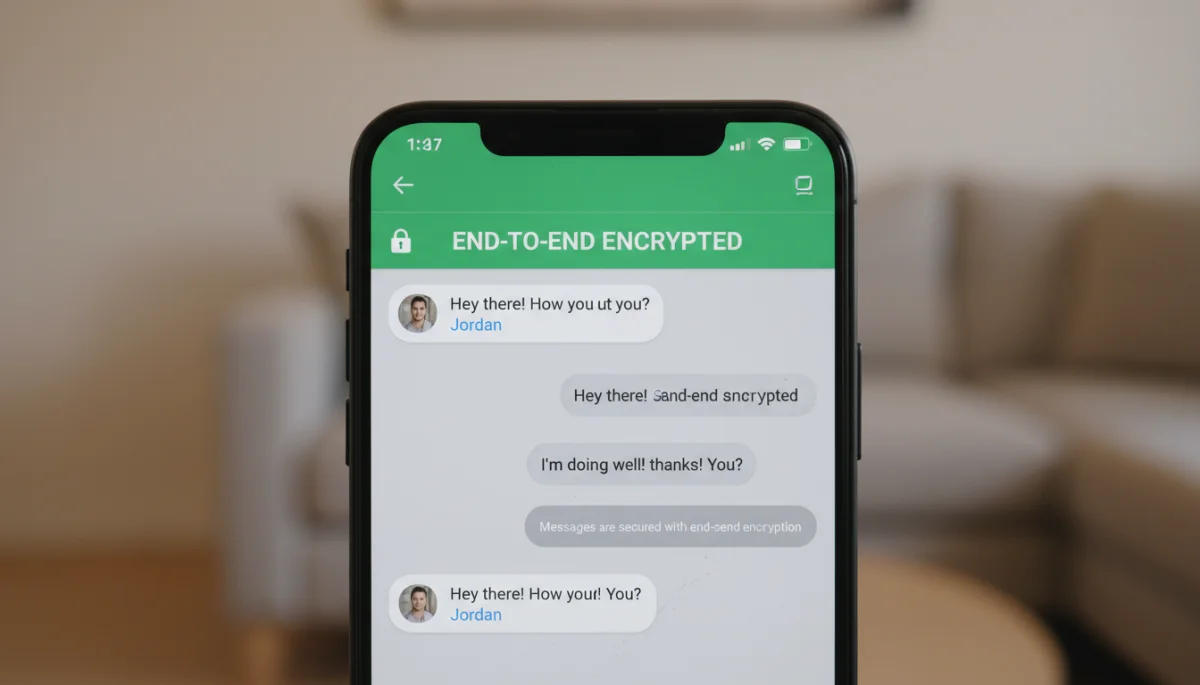
End-to-end encryption (E2EE) is the cornerstone of modern messaging privacy. It ensures that only the sender and the intended recipient can read messages, preventing even the service provider from accessing the content. This fundamental technology transforms digital communication into a private space, where conversations are shielded from interception.
The principle behind E2EE is elegant yet powerful. When you send a message, it’s encrypted on your device and remains encrypted as it travels through servers. Only the recipient’s device can decrypt it. This means that if anyone, including hackers or government agencies, were to intercept your messages, they would only see scrambled, unreadable text.
How end-to-end encryption works
E2EE relies on cryptographic keys. Each user has a pair of keys: a public key and a private key. The public key can be shared freely, while the private key must remain secret. When you send a message, it’s encrypted using the recipient’s public key. Only the recipient’s private key can decrypt it. This mathematical pairing ensures that the message’s confidentiality is maintained throughout its journey.
- Key generation: Unique cryptographic keys are generated on each user’s device.
- Message encryption: Messages are encrypted on the sender’s device using the recipient’s public key.
- Secure transmission: Encrypted messages travel through servers, unreadable to intermediaries.
- Message decryption: Only the recipient’s private key can decrypt and reveal the message content.
The implementation of E2EE varies across platforms, but the core objective remains the same: to create a secure channel where communication is truly private. This technological advancement has revolutionized how we think about digital privacy, providing a robust defense against surveillance and data exploitation.
Understanding E2EE is the first step towards appreciating the depth of security that modern messaging apps can offer. It’s a complex system designed to be simple for the user, providing peace of mind knowing that sensitive information remains confidential between communicating parties.
Disappearing messages: controlling your digital footprint
Beyond encryption, features like disappearing messages offer an additional layer of privacy by ensuring that conversations don’t live on indefinitely. This functionality allows users to set a timer for messages to automatically delete from both the sender’s and recipient’s devices after they have been viewed or after a specified period. It’s a proactive approach to managing one’s digital footprint and minimizing the risk of sensitive information being retained longer than necessary.
The concept of ephemeral messaging addresses a common concern in digital communication: the permanence of shared content. Even with strong encryption, messages can be stored indefinitely on devices, potentially exposing past conversations to future risks. Disappearing messages provide a solution, giving users greater control over the longevity of their communications.
Benefits of ephemeral messaging
Implementing disappearing messages brings several advantages, especially for sensitive discussions or simply for those who prefer a cleaner chat history. It reduces the accumulation of old data, which can be a target for data breaches, and fosters a sense of security during conversations.
- Reduced data retention: Minimizes the amount of personal data stored on devices and servers.
- Enhanced confidentiality: Ensures sensitive information is not accessible long-term.
- Greater control: Empowers users to dictate how long their messages exist.
- Improved privacy: Decreases the risk of old conversations being exposed in the future.
While disappearing messages significantly enhance privacy, it’s important to remember that recipients can still take screenshots or forward content before it vanishes. Therefore, users should always exercise caution and judgment when sharing highly sensitive information, even with these features enabled.
The integration of disappearing messages into popular platforms reflects a growing demand for more dynamic and controllable privacy settings. This feature, combined with strong encryption, offers a comprehensive approach to securing digital dialogue, allowing users to communicate more freely and confidently.
Two-factor authentication (2FA) for account security
While encryption protects the content of your messages, two-factor authentication (2FA) secures access to your messaging accounts themselves. This critical security measure adds an extra layer of protection beyond just a password, making it significantly harder for unauthorized individuals to gain access to your conversations, even if they manage to steal your password.
2FA typically involves a second verification step, such as a code sent to your phone, a fingerprint scan, or a prompt in an authenticator app. This means that even if a malicious actor has your password, they still need access to your secondary verification method to log in. Without this, your account remains secure.
Implementing 2FA for messaging apps
Most major messaging platforms now offer 2FA as an optional or mandatory security setting. Enabling it is usually a straightforward process that involves linking your account to a secondary device or method. This small effort yields a significant boost in security, protecting your private communications from unauthorized entry.
- SMS codes: A verification code sent via text message to your registered phone number.
- Authenticator apps: Apps like Google Authenticator or Authy generate time-sensitive codes.
- Biometric authentication: Fingerprint or facial recognition used as a secondary verification.
- Hardware tokens: Physical devices that generate unique codes for login.
It is highly recommended that all users enable 2FA on their messaging apps and any other online accounts where sensitive information is stored. This simple yet effective measure dramatically reduces the risk of account compromise, safeguarding your digital identity and communications.
By combining robust encryption with strong account-level security like 2FA, users can build a formidable defense against various digital threats. These layers of protection are essential for maintaining privacy in an interconnected world where cyber threats are constantly evolving.
Secure backups and data handling policies
The security of your messages extends beyond active conversations to how your data is backed up and handled by service providers. Many messaging apps offer cloud backup options, which, while convenient, can sometimes introduce vulnerabilities if not properly secured. Understanding a platform’s data handling policies and backup encryption is crucial for comprehensive privacy.
Some platforms offer encrypted backups, ensuring that even if your cloud storage is compromised, your messages remain unreadable. Others may rely on the cloud provider’s encryption, which might not offer the same level of end-to-end protection. It is vital to investigate these details before opting for backup solutions.
Evaluating data handling and backup security
When choosing a messaging app, consider their transparency regarding data handling. Look for clear privacy policies that outline how your data is collected, stored, and used. Providers committed to privacy will often detail their encryption methods for backups and offer options for users to manage their data retention.
- Encrypted cloud backups: Ensures messages remain encrypted even in cloud storage.
- Local backup options: Allows users to store backups directly on their device or a personal drive.
- Transparent privacy policies: Clearly outlines data collection, storage, and usage practices.
- User data control: Provides tools for users to manage and delete their data from servers.
Opting for messaging apps that prioritize user control over data and offer strong encryption for all aspects of communication, including backups, is key. This proactive approach helps to mitigate risks associated with data storage and ensures that your privacy is protected even when your devices are not directly in use.
Ultimately, the security of your messaging data is a shared responsibility between you and your service provider. By being informed and making conscious choices about backup options and platform policies, you can significantly enhance the overall privacy of your digital communications.
Privacy settings and user controls
Beyond core encryption and authentication, many messaging apps offer a suite of privacy settings that empower users to fine-tune their experience and control who sees what. These user controls are integral to personalizing your privacy posture, allowing you to manage everything from read receipts and online status to who can add you to groups.
Taking the time to explore and configure these settings is an essential step in maximizing your messaging privacy. Default settings are often designed for convenience, not necessarily for the highest level of privacy, making it incumbent upon the user to customize them according to their preferences and risk tolerance.
Customizing your privacy experience
Most apps provide granular controls that can be adjusted to suit individual needs. For instance, you might choose to hide your ‘last seen’ status from everyone, or only from specific contacts. Similarly, controlling who can see your profile picture or add you to group chats can prevent unwanted interactions and exposure.
- Read receipts: Toggle on or off to control whether others know you’ve read their messages.
- Online status: Manage who can see when you are active on the app.
- Profile visibility: Restrict who can view your profile picture and ‘about’ information.
- Group invitations: Control who can add you to new group chats, preventing spam or unwanted additions.
- Message forwarding restrictions: Some apps allow you to limit how many times a message can be forwarded.
Regularly reviewing and updating your privacy settings is a good practice, especially as new features are introduced or your privacy needs evolve. These settings provide a flexible framework for users to maintain a comfortable level of anonymity and control within their digital social circles.
By actively engaging with these user controls, individuals can tailor their messaging environment to reflect their personal privacy values. This proactive management of privacy settings is a powerful tool in safeguarding personal information and fostering a more secure communication experience.
The future of messaging privacy: innovation and challenges
The landscape of messaging privacy is constantly evolving, driven by technological advancements and the ever-present cat-and-mouse game between security measures and those seeking to circumvent them. As we look to the future, innovation in areas like federated messaging, post-quantum cryptography, and decentralized platforms promises even greater privacy enhancements, while also posing new challenges.
New protocols and architectural designs are being explored to further decentralize communication, reducing reliance on single points of failure and making it harder for any entity to control or monitor message flows. This move towards distributed systems could represent the next frontier in secure messaging.
Emerging technologies and privacy implications
The development of quantum computing, for example, raises concerns about the long-term security of current encryption standards. Researchers are already working on post-quantum cryptography to ensure that today’s secure messages remain secure against future computational power. Similarly, advancements in AI and machine learning could be leveraged for both enhancing and compromising privacy, creating a complex ethical dilemma.
- Post-quantum cryptography: Developing encryption resistant to quantum computer attacks.
- Decentralized messaging: Architectures that distribute data across multiple nodes, enhancing resilience and privacy.
- Zero-knowledge proofs: Allowing verification of information without revealing the information itself.
- Federated protocols: Enabling interoperability between different secure messaging services while maintaining privacy.
However, these innovations also come with challenges. Balancing enhanced privacy with usability, ensuring widespread adoption of new standards, and navigating regulatory pressures will be crucial. The ongoing debate between privacy advocates and national security interests continues to shape the development and deployment of new privacy features.
The future of messaging privacy will likely be characterized by a continuous push for stronger, more resilient security measures, coupled with an increasing emphasis on user education and empowerment. Staying informed about these developments will be key for users seeking to maintain the highest levels of privacy in their digital lives.
| Key Feature | Brief Description |
|---|---|
| End-to-End Encryption | Ensures only sender and recipient can read messages, protecting content from interception. |
| Disappearing Messages | Messages automatically delete after a set time, reducing digital footprint and enhancing confidentiality. |
| Two-Factor Authentication | Adds an extra layer of security to account access, requiring a second verification step. |
| Granular Privacy Controls | Allows users to customize settings like read receipts, online status, and profile visibility. |
Frequently asked questions about messaging privacy
End-to-end encryption (E2EE) ensures that only the sender and recipient can read messages. It’s crucial because it prevents third parties, including the messaging service provider, from accessing your private conversations, thereby safeguarding your data from interception and unauthorized surveillance.
Disappearing messages automatically delete after a set time, reducing your digital footprint. This feature enhances privacy by preventing sensitive information from being stored indefinitely on devices, minimizing the risk of exposure in future data breaches or unauthorized access to old conversations.
Yes, 2FA is highly necessary. It adds a critical layer of security to your account, requiring a second verification step beyond just a password. This makes it significantly harder for unauthorized users to access your messaging account, even if they manage to compromise your primary password.
You should look for transparency regarding how data is collected, stored, and used. Prioritize apps with clear privacy policies that detail encryption methods for backups, offer options for local storage, and provide robust user controls for managing and deleting your personal data from their servers.
Most messaging apps offer granular privacy controls within their settings menu. You can typically adjust who sees your ‘last seen’ status, profile picture, and online presence. You can also manage read receipts and control who can add you to group chats, allowing for a personalized privacy experience.
Conclusion
The journey through the world of enhanced messaging privacy features reveals a landscape where user control and data protection are increasingly prioritized. From the foundational strength of end-to-end encryption to the ephemeral nature of disappearing messages, and the robust security of two-factor authentication, users now have a comprehensive toolkit to safeguard their digital conversations. Understanding and actively utilizing these features is paramount in an age where digital interactions are central to our lives. As technology continues to advance, so too will the methods of securing our private communications, making it essential for individuals to stay informed and proactive in managing their digital privacy.
