Electric Vehicle Charging: Impact on Home Utility Bills
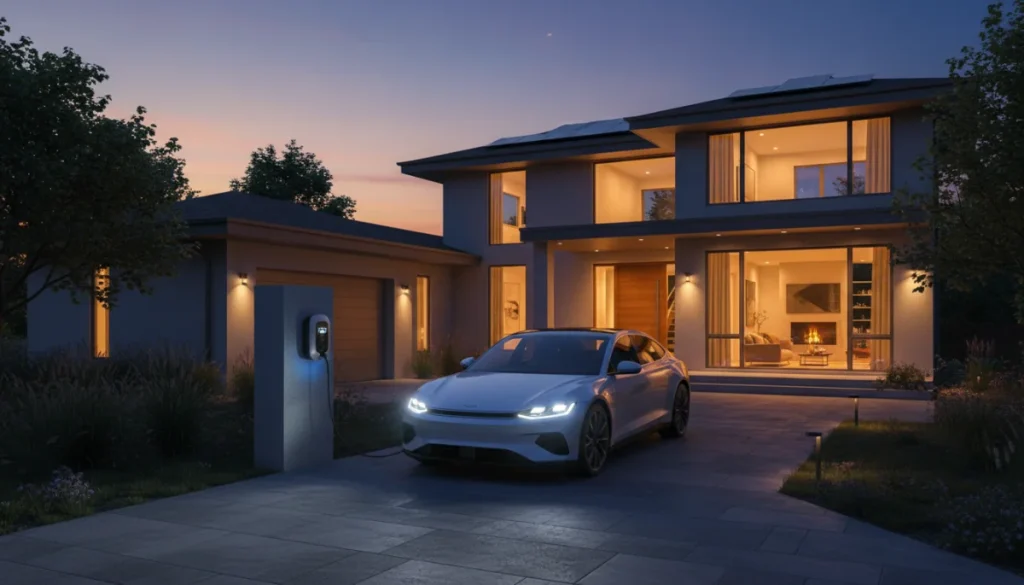
Charging an electric vehicle at home significantly influences household electricity consumption, directly impacting monthly utility bills, making strategic charging practices essential for managing costs effectively.
Considering an electric vehicle (EV) or already own one? Understanding how
electric vehicle charging and its impact on home utility bills
is paramount for any homeowner. The convenience of charging at home is undeniable,
but it also introduces a new variable into your household’s energy consumption.
This article delves into the financial implications, offering insights and strategies
to help you navigate this evolving landscape.
Understanding EV Charging Basics and Power Consumption
Before diving into bill impacts, it’s essential to grasp the fundamentals of EV charging.
Electric vehicles require significant amounts of electricity to replenish their batteries,
and this power draw can vary greatly depending on the type of charger used, the vehicle’s
battery capacity, and the frequency of charging. Residential charging primarily involves
Level 1 and Level 2 chargers, each with distinct power requirements and charging speeds.
Level 1 charging uses a standard 120V household outlet, offering the slowest charging speed.
While convenient for overnight top-ups, it’s generally insufficient for daily drivers with
higher mileage needs. Level 2 charging, on the other hand, utilizes a 240V outlet, similar
to those used for electric dryers or ovens, and provides significantly faster charging. This
faster speed, however, means a higher instantaneous power draw, which can be a key factor
in utility bill calculations.
Level 1 vs. Level 2 Charging: What’s the Difference for Your Bill?
The choice between Level 1 and Level 2 charging has a direct bearing on your electricity
consumption patterns. Level 1 chargers draw less power over a longer period, resulting in a
consistent, albeit low, baseline load. Level 2 chargers draw more power in a shorter burst.
While the total energy consumed to fully charge a battery remains the same regardless of the
level, the timing and intensity of that consumption are crucial, especially with time-of-use
(TOU) electricity rates.
- Level 1 Charging: Slower, lower power draw (typically 1.4-2.4 kW), ideal for minimal daily driving or overnight trickle charging. Less impact on peak demand.
- Level 2 Charging: Faster, higher power draw (typically 3.3-19.2 kW), suitable for daily charging and faster turnaround. Can significantly increase peak demand if not managed.
- Energy Consumption: Both levels deliver the same total energy for a full charge, but the rate of delivery differs.
Understanding these differences allows homeowners to make informed decisions about their
charging infrastructure and habits. The goal is to maximize charging efficiency while
minimizing the financial burden on their utility bills. Improper charging can lead to
unexpected spikes in electricity costs, especially in areas with tiered or time-of-use rates.
Analyzing the Direct Impact on Home Utility Bills
The most immediate effect of owning an EV is the noticeable increase in your monthly
electricity bill. The magnitude of this increase depends on several factors, including
how much you drive, your vehicle’s efficiency, and crucially, the cost of electricity
in your region. Unlike gasoline, electricity prices can fluctuate based on the time of day,
season, and even your overall consumption.
To calculate the approximate cost, consider your EV’s miles per kilowatt-hour (kWh) and your
local electricity rate (cents per kWh). For example, if your EV gets 3 miles/kWh and you drive
1,000 miles a month, you’ll consume roughly 333 kWh. At an average US residential electricity
rate of 16 cents/kWh, that’s an additional $53.28 per month. This is a significant addition
to an average household’s energy usage.
Factors Influencing Your EV Charging Costs
Several key variables determine the actual cost you’ll incur for charging your electric vehicle.
Being aware of these can help you better manage your expenses.
- Electricity Rates: These vary widely by state and even by utility provider within a state. Some areas have much higher rates than others.
- Time-of-Use (TOU) Plans: Many utilities offer lower rates during off-peak hours (e.g., overnight) and higher rates during peak demand. Charging during off-peak hours can drastically reduce costs.
- EV Efficiency: Just like gasoline cars have different MPG, EVs have different miles per kWh ratings. More efficient EVs will cost less to charge.
- Driving Habits: The more miles you drive, the more you’ll need to charge, directly increasing your electricity consumption.
Understanding these factors is the first step toward effectively managing the financial
aspects of EV ownership. Homeowners should review their current electricity plan and consider
whether a time-of-use plan would be beneficial given their charging habits.
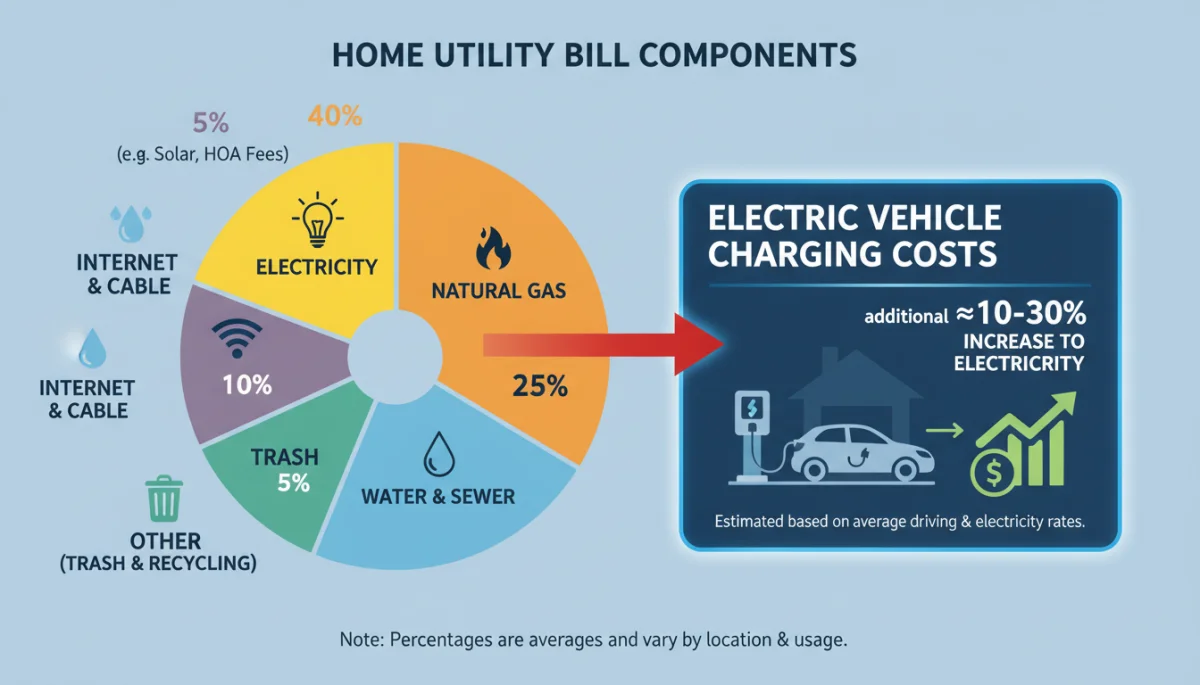
Strategies for Minimizing EV Charging Costs
While EV charging adds to your utility bill, there are numerous strategies homeowners can employ
to significantly reduce these costs. Proactive planning and smart charging habits are key to
maximizing savings and enjoying the full economic benefits of electric vehicle ownership.
One of the most effective strategies involves leveraging time-of-use (TOU) electricity rates.
Many utility companies offer plans that charge less for electricity consumed during off-peak hours,
typically late at night or early morning. By programming your EV or charger to initiate charging
during these periods, you can dramatically lower your per-kWh cost.
Smart Charging Solutions and Off-Peak Optimization
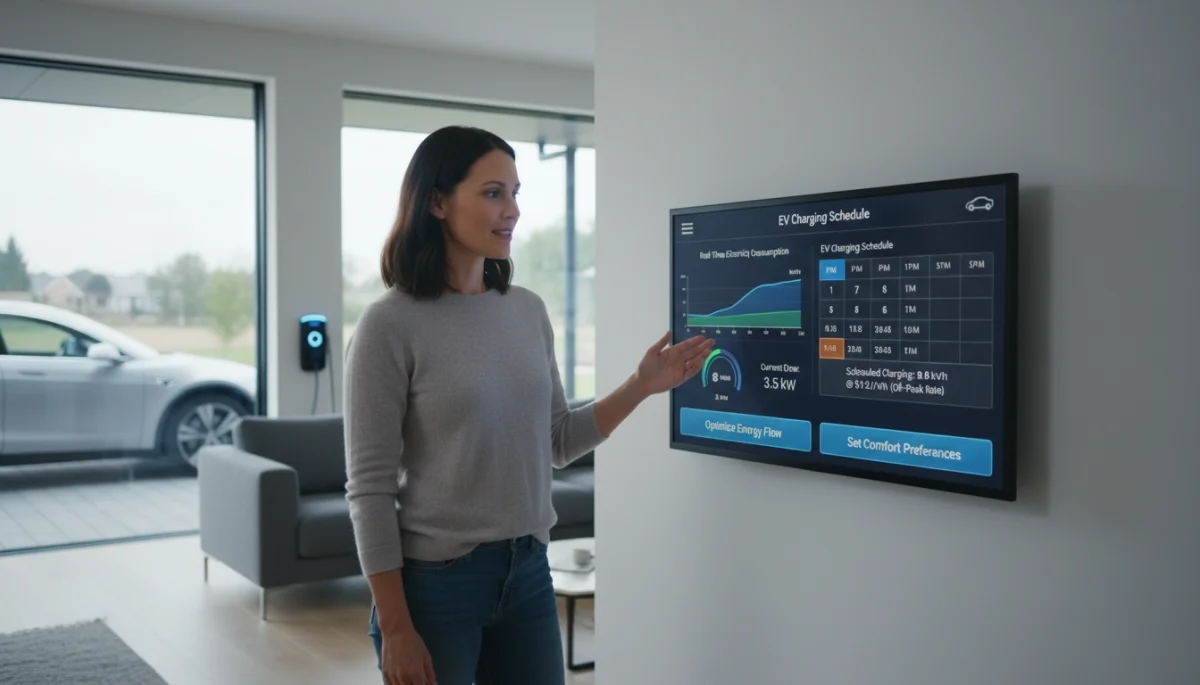
Modern EVs and smart charging stations come equipped with features that facilitate off-peak charging.
These smart solutions allow you to schedule charging times, monitor electricity consumption, and even
respond to real-time grid conditions. Investing in a smart charger can pay dividends in the long run.
- Scheduled Charging: Utilize your EV’s or charger’s built-in scheduling feature to charge only during off-peak hours.
- Utility Programs: Check if your utility offers specific EV charging programs or incentives for off-peak charging.
- Smart Home Integration: Integrate your EV charger with a broader smart home energy management system for holistic energy optimization.
Beyond scheduling, consider optimizing your charging frequency. Instead of charging to 100% every
night, which can sometimes be less efficient, aim to keep your battery between 20% and 80% for daily
driving, only topping up to full when necessary for longer trips. This not only benefits battery health
but can also help manage energy consumption more effectively.
The Role of Renewable Energy and Home Solar
For homeowners looking to further mitigate the impact of EV charging on their utility bills, integrating
renewable energy sources, particularly home solar, presents a compelling solution. Generating your own
electricity can offset a significant portion, if not all, of your EV charging costs, transforming a
variable expense into a more predictable and often lower one.
When you install solar panels, you produce clean electricity that can power your home and your electric
vehicle. During daylight hours, when solar production is typically highest, you can directly use this
energy to charge your EV. Any excess energy can be fed back into the grid, potentially earning you credits
through net metering programs, which can then be applied against your overall utility bill.
Maximizing Savings with Solar Power and Battery Storage
Combining solar panels with a home battery storage system offers the ultimate synergy for EV owners.
Battery storage allows you to store excess solar energy generated during the day and use it to charge
your EV at night, even during off-peak hours, without drawing from the grid. This creates a highly
self-sufficient and cost-effective charging ecosystem.
- Direct Solar Charging: Use solar power to charge your EV during the day, reducing reliance on grid electricity.
- Net Metering Benefits: Earn credits for excess solar energy fed back to the grid, offsetting future electricity costs.
- Battery Storage: Store solar energy for nighttime EV charging, further reducing grid dependency and costs.
- Tax Incentives: Federal and state incentives for solar panel and battery storage installations can make these investments more affordable.
The upfront investment in solar and battery storage can be substantial, but with various government
incentives and long-term energy savings, the return on investment can be very attractive for EV owners.
It transforms your home into a personal fueling station powered by clean, free energy.
Government Incentives and Utility Programs for EV Owners
The transition to electric vehicles is a national priority, and as such, various government bodies
and utility companies in the United States offer a range of incentives and programs designed to make
EV ownership more affordable and encourage charging infrastructure development. These can significantly
reduce the financial burden of purchasing an EV and managing its charging costs.
Federal tax credits, such as the clean vehicle tax credit, can provide substantial savings on the purchase
of new and used electric vehicles. These credits can amount to thousands of dollars, making EVs more
competitive with gasoline-powered cars. State and local governments often offer additional rebates,
grants, or tax exemptions for EV purchases, further sweetening the deal.
Exploring Charging Infrastructure Rebates and Special Rates
Beyond vehicle purchase incentives, many programs specifically target EV charging infrastructure. This
includes rebates for the installation of Level 2 home chargers, which can offset a significant portion
of the equipment and installation costs. Utility companies are also at the forefront of offering specialized
programs for EV owners.
- Federal Tax Credits: Significant credits for new and used EV purchases, reducing the overall cost of ownership.
- State and Local Incentives: Additional rebates, grants, or tax exemptions for EVs and charging equipment, varying by location.
- Utility Rebates for Chargers: Many utilities offer financial assistance for installing Level 2 home charging stations.
- Dedicated EV Rate Plans: Some utilities provide special, lower electricity rates specifically for EV charging, often with time-of-use structures.
It is highly recommended for prospective and current EV owners to research the specific incentives
available in their state and from their local utility provider. These programs are dynamic and can
change, so staying informed is crucial to maximizing potential savings. These incentives play a vital
role in making electric vehicle charging and its impact on home utility bills more manageable.
Future Trends and Long-Term Outlook for EV Charging Costs
The landscape of electric vehicle charging is rapidly evolving, with technological advancements,
policy changes, and grid modernization efforts all contributing to a dynamic future. Understanding
these trends can help homeowners anticipate future costs and opportunities related to EV charging.
One significant trend is the continuous improvement in battery technology, leading to more efficient
EVs with longer ranges and faster charging capabilities. As EVs become more efficient, the amount of
electricity required per mile driven may decrease, potentially lowering charging costs over time.
Furthermore, advancements in smart grid technologies are paving the way for more sophisticated
energy management systems at home.
Vehicle-to-Grid (V2G) and Dynamic Pricing Models
Emerging technologies like Vehicle-to-Grid (V2G) are set to revolutionize how EVs interact with the
power grid. V2G allows your EV to not only draw power from the grid but also to send excess power
back, potentially earning you credits or even revenue. This could transform EVs from mere consumers
of electricity into active participants in grid stability and energy management.
- V2G Technology: EVs can act as mobile power banks, selling electricity back to the grid during peak demand.
- Dynamic Pricing: Utilities may implement more granular, real-time electricity pricing, requiring smart charging to optimize costs.
- Public Charging Expansion: Increased availability of public fast chargers may reduce reliance on home charging for some.
- Renewable Integration: Greater integration of renewables into the grid could lead to cleaner and potentially cheaper electricity for everyone.
The long-term outlook suggests a future where EV charging is not just about consumption but also about
smart energy management and potential revenue generation. Homeowners who embrace these technologies and
adapt to dynamic pricing models will be best positioned to minimize their electric vehicle charging
and its impact on home utility bills, making EV ownership even more economically attractive.
Navigating Utility Bill Statements as an EV Owner
For many new EV owners, the initial utility bill after purchasing an electric vehicle can be a source
of confusion or even alarm. Understanding how to read and interpret your electricity statement is crucial
to identifying the impact of your EV charging and ensuring you’re on the most cost-effective plan.
Utility bills typically detail your total electricity consumption in kilowatt-hours (kWh) and the total
cost. If you’re on a standard rate plan, you’ll see a single rate applied to all your consumption. However,
if you’ve opted for a time-of-use (TOU) plan, your bill will segment your consumption by time period
(e.g., on-peak, off-peak, mid-peak) and apply different rates to each. This segmentation is vital for
tracking your EV charging efficiency.
Key Metrics to Monitor on Your Bill
To effectively manage your EV charging costs, you should pay close attention to specific sections of your
utility bill. Comparing these metrics month-over-month can provide valuable insights into your energy
usage patterns and the effectiveness of your charging strategies.
- Total kWh Consumption: Track the overall increase in electricity usage since owning an EV.
- Cost per kWh: Understand the average rate you are paying for electricity, especially if on a tiered or TOU plan.
- Time-of-Use Breakdown: If applicable, analyze how much electricity you consume during different rate periods. Aim to shift EV charging to lower-cost periods.
- Demand Charges (Commercial/Some Residential): Though less common for residential, be aware if your utility has demand charges, which penalize high instantaneous power draw.
Many utility providers also offer online portals or mobile apps that provide more detailed, real-time
energy consumption data. Utilizing these tools can empower you to proactively monitor your electricity
usage and make immediate adjustments to your charging habits. Being informed about your bill is the
best defense against unexpected increases related to electric vehicle charging and its impact on home
utility bills.
| Key Point | Brief Description |
|---|---|
| Charging Types | Level 1 (slow, 120V) and Level 2 (fast, 240V) chargers impact power consumption differently. |
| Cost Factors | Electricity rates, time-of-use plans, EV efficiency, and driving habits determine charging costs. |
| Cost Savings | Utilize smart charging, off-peak rates, and renewable energy like solar to minimize expenses. |
| Future Trends | V2G technology and dynamic pricing will further shape EV charging economics. |
Frequently Asked Questions About EV Charging and Utility Bills
The cost varies significantly based on electricity rates, driving distance, and EV efficiency. On average, it can range from $30 to $60 per month for a typical driver with a 15 cents/kWh rate, but this is highly dependent on usage.
Yes, many utility companies offer time-of-use (TOU) rates or specific EV-owner plans with lower rates during off-peak hours. Enrolling in these plans and charging strategically can lead to substantial savings on your utility bill.
A Level 2 charger draws more power at once, but the total energy consumed to charge your battery is largely the same. The impact on your bill depends more on when you charge rather than just the charger level, especially with TOU rates.
Yes, a sufficiently sized home solar system can generate enough electricity to cover your EV charging needs, and potentially even your entire home’s consumption, especially when combined with battery storage and net metering.
V2G allows your EV to send electricity back to the grid, potentially earning you credits or revenue. This could transform your EV into an active participant in energy management, offsetting or even reducing your overall utility expenses.
Conclusion
The integration of electric vehicles into our daily lives marks a significant shift towards sustainable transportation, but it also necessitates a clear understanding of
electric vehicle charging and its impact on home utility bills. While adding an EV to your household will undoubtedly increase electricity consumption, homeowners are not powerless against rising costs. By embracing smart charging practices, leveraging time-of-use rates, exploring renewable energy solutions like solar, and taking advantage of available incentives, EV owners can effectively manage and even minimize their charging expenses. The future of EV charging promises even greater efficiency and integration with the smart grid, offering exciting opportunities for cost savings and energy independence. Staying informed and proactive will ensure a smooth and economically beneficial transition to electric mobility.
