Anúncios
Few pieces in a winter wardrobe are as genuinely transformative as a great pair of boots — and once you understand why, it becomes impossible to treat them as an afterthought.
More than simply functional footwear for colder days, boots shape the entire energy of an outfit in ways that no other shoe category quite replicates. They can make a casual look feel polished and considered. They can turn a minimalist combination into something that reads as editorial. They can create visual balance in layered winter styling where lighter footwear would leave everything above it feeling unanchored. The right boot doesn’t just complete an outfit — it defines it, sometimes more powerfully than any other single element in the composition.
Anúncios
The reason boots hold this level of influence is both visual and structural. They sit at the absolute foundation of the silhouette, which means they determine how the eye travels up through the entire outfit. They influence the perception of leg length, shape the way the body reads in proportion, and establish a visual weight at the base that either grounds the look or leaves it feeling unstable. The same clothing combination can feel completely different depending entirely on which boots accompany it.
A knit dress with ankle boots feels urban and elegantly casual. The same dress with knee-high boots feels stronger, more dramatic, and more winter-specific. The same dress again with chunky combat boots shifts into something bold and contemporary with an entirely different personality. Three completely different outfits from one piece of clothing — and the boots are doing all of that work. Understanding how to use that power deliberately is one of the most useful and immediately applicable styling skills available for colder seasons.
Anúncios
Why Boots Work With Almost Everything
One of the most significant advantages boots hold over other footwear categories is their remarkable versatility across different outfit types and occasions — a quality that makes them worth investing in more thoughtfully than almost any other winter purchase.
Unlike highly seasonal shoes that serve a narrow range of contexts, boots adapt naturally across casual daywear, office environments, evening outfits, travel wardrobes, streetwear, and smart casual dressing. They do this because they bridge practicality and style simultaneously — protecting from cold weather and wet streets while still contributing meaningfully to the visual composition of the look. They solve a practical problem and an aesthetic one at the same time, which is a rarer combination than it might sound.
The key to unlocking that versatility is understanding the relationship between clothing volume and boot proportion. A heavy, chunky boot with an already oversized silhouette can create visual chaos. A sleek, refined boot with a flowing skirt creates elegant contrast. A substantial boot with straight-leg denim creates a clean, modern line. Each of these works because the boot was chosen in response to the clothing rather than independently of it. That responsive thinking is what makes boots feel intentional rather than default.
Ankle Boots: The Universal Starting Point
If there’s a single boot style that earns its place in virtually every winter wardrobe regardless of personal style preferences, it’s the ankle boot — and its dominance is entirely deserved.
The ankle boot’s versatility comes from its proportional restraint. It creates structure and definition at the base of the outfit without dominating everything above it, which means it works across an extraordinary range of clothing combinations without requiring careful thought about balance or volume. Denim, trousers, dresses, skirts, and knit sets all pair beautifully with a well-chosen ankle boot because the boot sits at exactly the right length to create a clean transition without interrupting the flow of the overall silhouette.
The best styles to have in rotation include sleek leather ankle boots, pointed-toe versions, block-heel boots, and Chelsea boots — each bringing a slightly different quality to the outfits they accompany. For women, pointed-toe ankle boots create extra leg elongation through the visual line they establish, which makes them particularly effective with midi skirts and straight trousers. For men, the Chelsea boot remains one of the strongest and most consistently elegant winter footwear choices available, working with everything from tailored trousers to dark straight denim without ever looking out of place.
Black remains the most versatile color choice — it coordinates naturally with the neutral palettes that winter dressing tends to favor and creates the clean lines that ankle boots do best. Brown and deep chocolate tones offer a softer alternative that suits warmer winter palettes particularly well, adding warmth and a slightly more approachable quality to combinations that might feel too stark in all-black.
Ankle Boots With Denim: Getting the Hem Right
The combination of ankle boots and denim is one of the most classic and reliably strong winter pairings — and the detail that determines whether it works beautifully or falls flat is almost always the trouser hem.
The hem should either skim lightly across the top of the boot shaft, tuck neatly inside it, or end just above the ankle in a way that creates a clean visual break. What it should never do is bunch around the ankle — that bunching creates horizontal visual weight at exactly the point where the outfit needs to feel lightest and most defined, making the entire look feel heavier and less intentional than it should.
A black ankle boot with dark straight denim demonstrates this formula at its cleanest. The dark tones create continuity between the trouser and the boot, the vertical line of the straight leg reads as refined and modern, and the ankle boot provides enough structure to anchor the look without adding visual weight that the outfit doesn’t need. This combination works equally well for casual settings and semi-elegant occasions, which is the hallmark of a truly versatile styling formula.
Boots With Wide-Leg Trousers
Wide-leg trousers and boots make many people uncertain — the volume of the trouser and the structure of the boot seem like they might conflict, and knowing how the hem should fall feels genuinely unclear. In practice, the combination is one of the most elegant winter styling options available when the proportions are handled correctly.
The principle is simpler than it might appear: the trouser hem should lightly cover part of the boot shaft rather than ending at the ankle or tucking inside. This creates a continuous line between the trouser and the boot that feels fluid and intentional rather than interrupted. The fabric drapes naturally over the boot, and the overall silhouette gains a kind of elongated elegance that neither piece achieves alone.
Heeled boots work particularly well in this combination because the heel supports the drape of a wider trouser in a way that flat boots sometimes don’t — the slight elevation keeps the fabric flowing rather than pooling on the ground. Wide charcoal trousers with black heeled boots and a camel coat is one example of this formula working at its most polished: the trouser provides volume, the boots provide structure and length, and the coat frames everything in a way that feels genuinely considered.
Knee-High Boots With Dresses and Skirts
Of all the boot combinations available in winter dressing, knee-high boots with dresses or skirts create some of the most distinctly winter-specific and immediately elegant looks the season offers.
The reason this combination works so powerfully is silhouette continuity. When a knee-high boot meets the hem of a midi dress or a structured skirt, it creates a visual line that travels uninterrupted from the knee to the floor — a continuity that adds both sophistication and warmth to the look simultaneously. The boot provides coverage and substance that lighter footwear can’t offer in cold weather, while the dress or skirt above it maintains the feminine softness and movement that heavier winter layers sometimes obscure.
Knit dresses, midi dresses, structured skirts, and coat dresses all pair beautifully with knee-high boots for this reason. Neutral shades — black, deep brown, and dark taupe — perform best because they allow the silhouette to speak without color competition. This is one of those winter styling formulas that consistently delivers regardless of the specific pieces involved, because its underlying logic is structurally sound: the boot extends and grounds the silhouette while the dress provides the shape and movement above it.
Combat Boots for Contemporary Edge
For a more urban and contemporary aesthetic, combat boots occupy a specific and powerful place in winter styling — and their ability to transform an otherwise quiet outfit into something with genuine attitude makes them worth understanding deliberately.
The best use of combat boots in winter dressing tends to involve contrast: pairing the heaviness and edge of the boot with something softer or more structured above it to create a productive tension that feels intentional rather than simply mismatched. A soft cream knit under a structured coat with black combat boots is a combination that works precisely because of that tension — the softness of the knit and the warmth of the coat sit against the weight and attitude of the combat boot, and the contrast between them creates something more interesting than either could produce with more predictable footwear.
Combat boots also work particularly well with oversized coats, monochrome outfits, and streetwear-inspired combinations where the boot’s weight and presence feel like a natural extension of the overall aesthetic rather than a stylistic departure from it. The key, as with all strong boot combinations, is that the choice feels considered — the combat boot belongs to the outfit, not just to the person wearing it.
Boots in Tailored and Formal Winter Looks
Boots aren’t limited to casual winter dressing — when chosen correctly, they integrate beautifully into more tailored and formal contexts, often producing results that feel more modern and interesting than traditional dress shoes would allow.
Sleek leather boots paired with well-cut tailored trousers create a combination that reads as premium and refined, suitable for office environments and smart casual settings where polish is expected. The boot provides the winter-appropriate substance that lighter footwear lacks while maintaining the clean lines that tailored clothing requires. Chelsea boots and pointed ankle boots are the strongest choices in this context — both offer enough refinement to work alongside formal pieces without the visual weight that chunkier styles would introduce.
The guiding principle is that boot formality should match clothing formality. A sleek coat and precision-cut trousers call for a clean, refined boot. A more relaxed or layered look can accommodate a heavier, more casual boot choice. When these two elements are aligned — when the boot feels like it belongs to the same register as the clothing — the overall look gains a completeness and coherence that mismatched formality undermines.
Color Coordination That Strengthens the Whole Look
Boot color plays a more significant role in the overall harmony of a winter outfit than many people give it credit for — and making deliberate color decisions in this area consistently produces stronger results than treating the boot as a neutral afterthought.
Black boots coordinate naturally with black, gray, white, camel, and denim — essentially the entire neutral winter palette — which is part of why they’re so universally recommended as a starting point. Brown and deep chocolate boots work particularly beautifully with cream, camel, olive, and dark denim combinations, adding warmth and a tonal richness that black sometimes doesn’t provide. Taupe boots create a soft, cohesive harmony with beige, gray, and the warmer soft neutrals that characterize winter’s quieter palette direction.
Matching boots with either the trousers or the accessories creates visual coherence that the eye reads as intentional without requiring exact color matching. A camel bag and camel boots with a neutral outfit creates warmth and tonal unity. Black boots and a black bag with a lighter outfit creates sharp definition at both ends of the look. These simple color conversations between the boot and the surrounding accessories are some of the most immediately effective styling moves available.
Creating Length and Proportion Through Boots
One of the most practically useful aspects of boot styling is the ability to influence perceived leg length and overall body proportion — and understanding this effect makes boot selection considerably more purposeful.
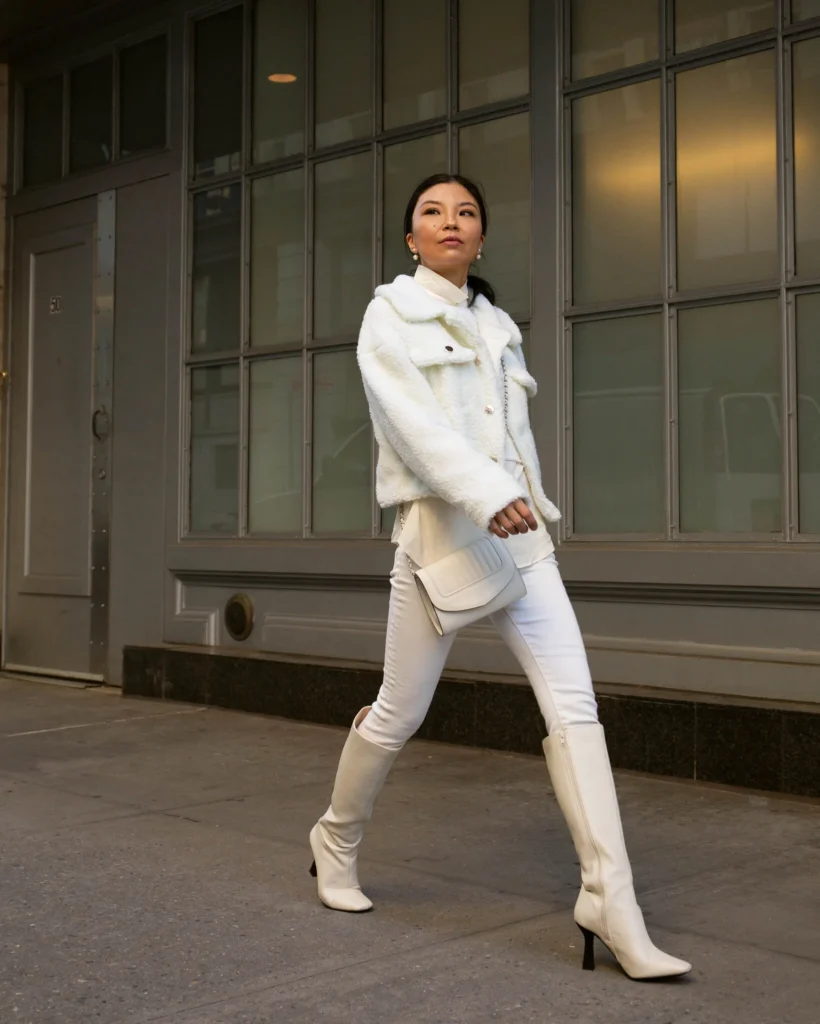
Pointed-toe boots create an elongating line that makes the leg appear longer, particularly effective when the boot tone matches the trouser or tight worn with it. The classic formula of black tights with black boots and a black skirt demonstrates this at its most effective: the uninterrupted dark tone from waist to floor creates a single, continuous vertical line that the eye reads as longer and more elegant than the actual measurements would produce. This technique is one of the most reliable in winter styling and works across different body types and proportions.
Monochrome styling between trouser and boot — wearing similarly toned pieces at the leg and foot rather than creating a strong color break — generally produces a more elongated and elegant silhouette than high-contrast combinations. This is particularly useful in shorter silhouettes or when the goal is creating more visual height within the overall composition.
Why Boots Anchor Everything Else
More than any other footwear category, boots anchor winter dressing in a way that gives the entire outfit a sense of groundedness and completion. They add presence that lighter shoes can’t provide. They introduce the structural weight that layered winter outfits need at their foundation to feel visually balanced. They define the mood and register of the look with a specificity that other shoe types rarely achieve.
This is why understanding how boots interact with different silhouettes, volumes, and occasions is one of the most valuable investments you can make in your winter styling knowledge. The return on that understanding comes every time you get dressed during the colder months — in outfits that feel complete and intentional from the very first element to the last, grounded and defined by the pair of boots that made everything above them make sense.