Implement a Daily Messaging App Audit for Enhanced Productivity

Implementing a daily messaging app audit is crucial for digital well-being and productivity, allowing users to systematically review and optimize their communication habits to minimize distractions and maximize efficiency in today’s hyper-connected world.
In our hyper-connected world, messaging apps have become indispensable tools for both personal and professional communication. However, without proper management, they can quickly transform into significant productivity drains. Learning to implement a daily messaging app audit is no longer a luxury but a necessity for anyone looking to reclaim their focus and optimize their digital workflow.
Understanding the Impact of Messaging Overload
The sheer volume of notifications, group chats, and direct messages we receive daily can be overwhelming. This constant influx of information fragments our attention, making deep work incredibly challenging. Before we dive into the ‘how,’ it’s crucial to acknowledge the ‘why’ behind the need for a systematic approach to our digital communication.
Messaging overload isn’t just about the number of messages; it’s about the cognitive load they impose. Each notification, each unread badge, pulls our attention away from the task at hand, forcing our brains to context-switch. This switching comes at a cost, reducing efficiency and increasing the time it takes to complete tasks.
The Hidden Costs of Constant Connectivity
While messaging apps promise instant communication and collaboration, their unmanaged use can lead to several detrimental effects on our productivity and mental well-being. Recognizing these costs is the first step towards implementing effective auditing strategies.
- Decreased Focus: Frequent interruptions break concentration, making it harder to engage in deep work.
- Increased Stress and Anxiety: The pressure to respond instantly creates a sense of urgency and can lead to burnout.
- Reduced Quality of Work: Rushed responses and fragmented attention often result in lower-quality output.
- Lost Time: What seems like a quick check often spirals into minutes, sometimes hours, of unproductive scrolling.
Ultimately, understanding these impacts underscores the importance of a proactive strategy. A daily messaging app audit provides the framework to mitigate these negative effects, transforming our digital interactions from a source of distraction into a tool for efficient communication.
Setting the Stage for Your Daily Audit
Before you can effectively implement a daily messaging app audit, you need to establish a clear framework and mindset. This involves defining your goals, identifying your primary communication platforms, and understanding what constitutes ‘effective’ communication for you. Without these foundational steps, any audit attempt might feel arbitrary and unsustainable.
Start by reflecting on your current messaging habits. Are you a serial responder? Do you have apps you rarely use but still receive notifications from? Be honest about your digital consumption patterns; self-awareness is key to instigating change.
Defining Your Communication Goals
What do you want to achieve with your messaging apps? Is it prompt client communication, staying connected with family, or coordinating team projects? Clearly articulating these goals will help you prioritize and decide which apps and conversations truly deserve your attention.
- Identify essential contacts: Who do you absolutely need to hear from promptly?
- Categorize message types: Differentiate between urgent, important, and non-urgent messages.
- Establish response expectations: Set realistic personal boundaries for response times.
This preliminary step ensures that your audit is tailored to your specific needs, making it far more effective than a generic approach. It’s about intentionality, not just reduction. Once you have a clear picture of your communication objectives, you can move on to a more granular analysis of your current app landscape.
The Core Steps of a Daily Messaging App Audit
Executing a daily messaging app audit requires a systematic approach. This isn’t about deleting apps indiscriminately but rather about optimizing their use to serve your productivity goals. Each step contributes to creating a more focused and less distracting digital environment.
The process should be quick, ideally taking no more than 10-15 minutes, and integrated into your daily routine. Consistency is paramount for long-term success. Think of it as a brief, daily digital decluttering session.
Step 1: Notification Management
The first and most immediate area to address is notifications. These are the primary culprits behind constant interruptions. Take a moment to review the notification settings for each messaging app.
Consider turning off all non-essential notifications. For critical apps, customize them to only alert you for direct messages or mentions, rather than every group chat message. This immediate reduction in pings will significantly decrease distractions.
Step 2: Prioritize and Archive Conversations
Once notifications are under control, delve into your active conversations. Identify urgent or important messages that require immediate attention and address them. For ongoing but non-urgent discussions, consider archiving them to reduce visual clutter.
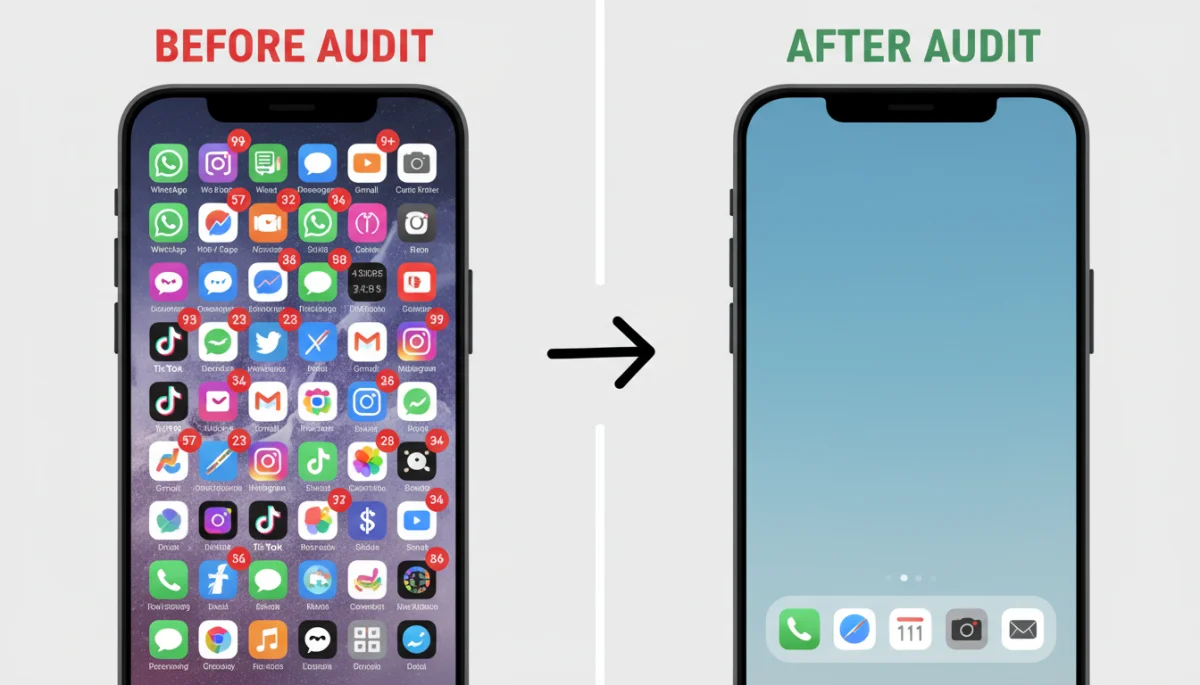
Many apps offer features like ‘mute for an hour’ or ‘archive chat.’ Utilize these tools to create a cleaner, more manageable inbox. The goal is to see only what needs your attention right now.
Step 3: Review and Unsubscribe from Unnecessary Groups
Group chats can quickly become overwhelming. During your daily audit, take a moment to assess the value each group brings. Are you actively participating? Is the information relevant to your goals? If not, consider muting the group or, if appropriate, leaving it entirely.
This might feel aggressive at first, but remember, your time and attention are valuable. Unsubscribing from irrelevant groups frees up mental bandwidth and reduces the volume of incoming messages, making the remaining communication more meaningful.
By consistently applying these steps, you transform your messaging apps from sources of constant distraction into efficient communication channels. The daily audit reinforces good habits and prevents digital clutter from accumulating, ensuring your digital environment supports, rather than hinders, your productivity.
Optimizing App Settings for Enhanced Focus
Beyond the daily audit, there are deeper settings within your messaging apps and device that can be configured to support sustained focus. These are typically one-time adjustments that create a more conducive environment for productive work, minimizing the urge to constantly check your phone.
Think of these as the preventative measures that complement your daily auditing efforts. They build a robust defense against digital distractions, allowing your daily audit to be more about maintenance and less about crisis management.
Leveraging ‘Do Not Disturb’ and Focus Modes
Most modern smartphones offer sophisticated ‘Do Not Disturb’ or ‘Focus Mode’ features. These allow you to schedule periods where notifications are silenced, or only allow alerts from specific contacts or apps. Configure these modes to align with your work schedule or periods requiring deep concentration.
Experiment with different settings. You might allow calls from favorites during work hours but silence all messaging app notifications. This creates a powerful boundary between your focused work and potential interruptions, giving you control over when and how you receive communication.
Customizing App-Specific Notifications
Dive into the individual settings of each messaging app. Many apps offer granular control over notification types, sounds, and vibrations. For example, in some apps, you can differentiate between direct messages and group messages, choosing to only receive a sound alert for the former.
- Silent notifications: Display alerts without sound or vibration.
- Badge icons only: See unread counts without disruptive pop-ups.
- Priority senders: Designate specific contacts whose messages will always break through silence.
These detailed customizations ensure that you are only alerted to what is truly important, reducing the cognitive load associated with constant, non-essential pings. By investing a little time in these settings, you build a more personalized and less intrusive communication experience.
Integrating the Audit into Your Daily Routine
For a daily messaging app audit to be truly effective, it must become an ingrained habit. This means finding specific times and triggers to perform your audit, ensuring it doesn’t feel like an additional chore but rather a natural part of your productive day. Consistency is the bedrock upon which lasting change is built.
Consider linking your audit to an existing habit. For instance, you could perform your audit right after your morning coffee, before starting your first major task, or as part of your end-of-day shutdown routine. This ‘habit stacking’ makes the new behavior easier to adopt.
Choosing Your Audit Window
The best time to conduct your audit will depend on your personal schedule and work demands. Some find a morning audit most effective, clearing the slate before the day begins, while others prefer an afternoon check-in to manage ongoing communications.

- Morning Audit: Review and prioritize messages for the day ahead.
- Lunchtime Check-in: Address any mid-day communications without disrupting morning focus.
- End-of-Day Review: Tidy up loose ends and prepare for the next day.
The key is to designate a specific, non-negotiable time slot for your audit. During this window, commit fully to the process, avoiding distractions. This focused approach ensures efficiency and prevents the audit itself from becoming another source of distraction.
Setting Reminders and Accountability
Initially, you might need reminders to establish the habit. Set an alarm on your phone or use a calendar event to prompt your daily audit. Over time, as the benefits become apparent, the audit will likely become a self-sustaining practice.
If you’re part of a team, consider discussing ‘communication agreements’ that encourage mindful messaging. This might involve agreeing on specific response times or designated ‘no-messaging’ periods. Collective accountability can significantly enhance individual efforts to manage digital communication effectively.
Advanced Strategies for Digital Communication Mastery
Once you’ve established a consistent daily messaging app audit, you can explore more advanced strategies to further refine your digital communication and elevate your productivity. These techniques move beyond basic management to proactive optimization, turning your messaging apps into true assets rather than liabilities.
These advanced strategies often involve a deeper understanding of human communication patterns and leveraging technology’s full potential. They aim to not just reduce distractions but to make every interaction more impactful and efficient.
Utilizing Templates and Canned Responses
Many common queries and responses are repetitive. Instead of typing out the same information repeatedly, create templates or canned responses for frequently asked questions, acknowledgments, or standard information sharing. This saves significant time and ensures consistency in your communication.
Platforms like Slack, Microsoft Teams, and even some personal messaging apps offer features for saving and quickly inserting pre-written text. This is especially useful for customer service, project updates, or even personal scheduling. The less time you spend on routine messages, the more you have for complex tasks.
Implementing Communication Protocols with Teams
For professional environments, establishing clear communication protocols can drastically reduce messaging overload. This involves defining which app is used for what purpose, expected response times, and when a message warrants a call or a meeting instead.
- Email for formal, asynchronous communication.
- Messaging apps for quick questions and urgent alerts.
- Project management tools for task-specific discussions.
By setting these boundaries, teams can ensure that information is shared on the most appropriate platform, reducing cross-app clutter and improving overall communication efficiency. This collective agreement amplifies the benefits of individual daily audits, creating a more cohesive and productive environment.
Regularly Reviewing App Usage and Needs
The digital landscape is constantly evolving, and so are our communication needs. Periodically (e.g., quarterly), conduct a more in-depth review of your entire app ecosystem. Are there new apps that could streamline your workflow? Are there old apps you no longer need?
This broader audit ensures that your digital tools remain aligned with your current goals and that you’re not holding onto obsolete platforms. It’s an ongoing process of refinement, ensuring your messaging strategy is always optimized for peak performance.
The Long-Term Benefits of Consistent Auditing
While the immediate benefits of a daily messaging app audit are clear—reduced distractions and improved focus—the long-term advantages extend far beyond momentary productivity gains. Consistently applying these practices fosters a healthier relationship with technology, promoting sustained well-being and enhanced overall effectiveness.
This isn’t just about managing messages; it’s about mastering your digital environment. Over time, you’ll find yourself less reactive and more proactive, dictating your attention rather than having it dictated by notifications.
Sustained Focus and Deep Work Capacity
By systematically reducing interruptions, you train your brain to engage in longer periods of uninterrupted concentration. This significantly enhances your capacity for deep work, which is crucial for complex problem-solving and creative tasks. The more you practice, the easier it becomes to enter and sustain a flow state.
This sustained focus translates directly into higher quality output and a greater sense of accomplishment. Instead of feeling constantly behind, you’ll experience the satisfaction of completing tasks with greater efficiency and precision.
Improved Digital Well-being and Reduced Stress
The constant pressure to be ‘always on’ contributes significantly to digital burnout and stress. A daily audit, by setting clear boundaries and reducing the perceived urgency of every message, helps alleviate this pressure. You gain a sense of control over your digital life, leading to greater peace of mind.
This improved digital well-being extends to better sleep, reduced anxiety, and a healthier work-life balance. When you’re not constantly tethered to your devices, you have more mental space for rest, hobbies, and personal connections, enriching your life beyond work.
Enhanced Communication Quality
When you’re not rushing to respond or juggling multiple conversations, your communication becomes more thoughtful and effective. You have the time to craft clear, concise messages, leading to fewer misunderstandings and more productive exchanges. This applies to both professional and personal interactions.
Ultimately, a consistent daily messaging app audit isn’t just a productivity hack; it’s a fundamental shift in how you interact with your digital tools. It empowers you to harness the power of communication technology without becoming enslaved by its demands, leading to a more focused, less stressed, and ultimately more productive existence.
| Key Audit Area | Brief Description |
|---|---|
| Notification Control | Disable non-essential alerts to minimize interruptions and enhance focus. |
| Conversation Prioritization | Address urgent messages, archive non-critical chats, and reduce visual clutter. |
| Group Management | Review and mute or exit irrelevant group chats to save time and mental energy. |
| Focus Mode Integration | Utilize device-level focus modes to schedule uninterrupted work periods. |
Frequently Asked Questions About Messaging App Audits
A daily messaging app audit is a routine process of reviewing and optimizing your communication apps. It involves managing notifications, prioritizing conversations, and decluttering groups to enhance focus and productivity, typically taking 10-15 minutes each day.
Daily audits prevent digital clutter and information overload from accumulating. They help maintain consistent focus, reduce stress from constant interruptions, and ensure that messaging apps serve as productive tools rather than distractions, improving overall digital well-being.
Begin by defining your communication goals and identifying essential apps. Then, tackle notification settings, turning off non-critical alerts. Prioritize urgent messages and archive less important ones to create a cleaner, more manageable digital space.
During your audit, assess the value of each group chat. Mute groups that are not essential for your immediate tasks or consider leaving those that no longer serve a purpose. This reduces the volume of incoming messages and frees up mental bandwidth.
Consistent auditing leads to sustained focus, improved capacity for deep work, and reduced digital stress. You’ll experience enhanced digital well-being, better sleep, and more thoughtful communication, ultimately boosting overall productivity and work-life balance.
Conclusion
In an era where digital communication often dictates our attention, the ability to effectively implement a daily messaging app audit stands as a critical skill for productivity and well-being. This systematic approach, far from being a restrictive measure, is an empowering practice that allows individuals to reclaim control over their digital lives. By consistently managing notifications, prioritizing conversations, and optimizing app settings, you transform potential distractions into efficient communication channels. The long-term benefits—from sustained focus and reduced stress to higher quality work and a healthier relationship with technology—underscore the profound impact of this simple yet powerful habit. Embrace the daily audit, and unlock a more focused, productive, and serene digital existence.
