Interactive Storytelling in Entertainment Messaging Apps
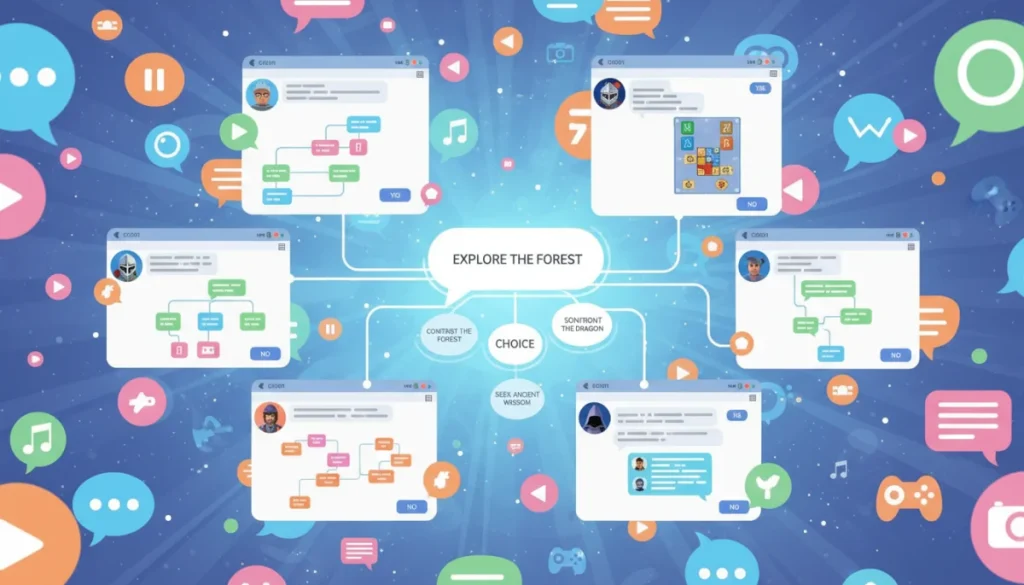
Interactive storytelling in entertainment messaging apps is transforming user interaction by integrating dynamic, choice-driven narratives directly into communication platforms, creating deeply engaging and personalized entertainment experiences.
The digital landscape is constantly evolving, and at the forefront of this transformation is how we consume entertainment. One of the most compelling trends emerging is interactive storytelling in entertainment messaging apps, which is radically redefining user engagement. This innovative approach turns passive consumption into an active, personalized adventure, directly within the platforms we use daily to connect with friends and family.
The Evolution of Digital Narratives
Digital narratives have come a long way from linear text adventures and static webcomics. Today, they are dynamic, responsive, and deeply integrated into our daily digital lives. The shift towards interactive storytelling within messaging apps represents a significant leap, offering users not just a story to read, but a world to actively participate in and shape.
This evolution is driven by several factors, including advancements in mobile technology, increased user demand for personalized content, and the ubiquitous nature of messaging platforms. Users are no longer content with being mere spectators; they seek agency and impact within the stories they engage with. Messaging apps, with their familiar interfaces and immediate feedback loops, provide an ideal environment for this new form of narrative.
From Passive to Participatory Experiences
Traditional storytelling often positions the audience as a receiver, absorbing a predetermined plot. Interactive storytelling, especially within messaging apps, flips this model on its head. Users become co-creators, making choices that directly influence character development, plot progression, and even the ultimate outcome of the narrative. This participatory element fosters a deeper connection and a sense of ownership over the story.
- Choice-driven plots: Users select dialogue options or actions, leading to different story branches.
- Personalized journeys: Narratives adapt based on individual preferences and past decisions.
- Emotional investment: Active participation increases empathy and emotional connection with characters.
- Replayability: Multiple endings and pathways encourage users to revisit stories.
The Role of Technology in Immersive Storytelling
Modern messaging apps leverage a suite of technological capabilities to enhance interactive narratives. This includes rich media support for images, videos, and audio, as well as sophisticated backend systems that can track user choices and adapt story logic in real-time. Artificial intelligence (AI) is also beginning to play a role, enabling more dynamic character responses and adaptive narrative structures.
The seamless integration of these technologies ensures that the interactive elements feel organic and intuitive, rather than clunky or disruptive. The goal is to make the technology disappear, allowing the user to fully immerse themselves in the unfolding narrative. This blend of narrative design and technological innovation is crucial for creating truly compelling interactive experiences.
The evolution of digital narratives within messaging apps signifies a broader trend towards more engaging and personalized entertainment. By empowering users to become active participants, these platforms are not just delivering stories, but crafting unique and memorable experiences that resonate on a deeper level.
Key Components of Engaging Interactive Narratives
Creating truly engaging interactive narratives within the confines of a messaging app requires a thoughtful approach to several key components. It’s not just about offering choices, but about crafting a cohesive and compelling experience that keeps users invested from start to finish. Understanding these elements is crucial for developers and writers looking to excel in this space.
At its core, an engaging interactive story leverages the unique strengths of the messaging app format. This means utilizing concise text, impactful visuals, and timely decision points to maintain momentum and capture the user’s attention. The familiar chat interface makes the interaction feel natural, almost like communicating with a real person.
Branching Storylines and Player Agency
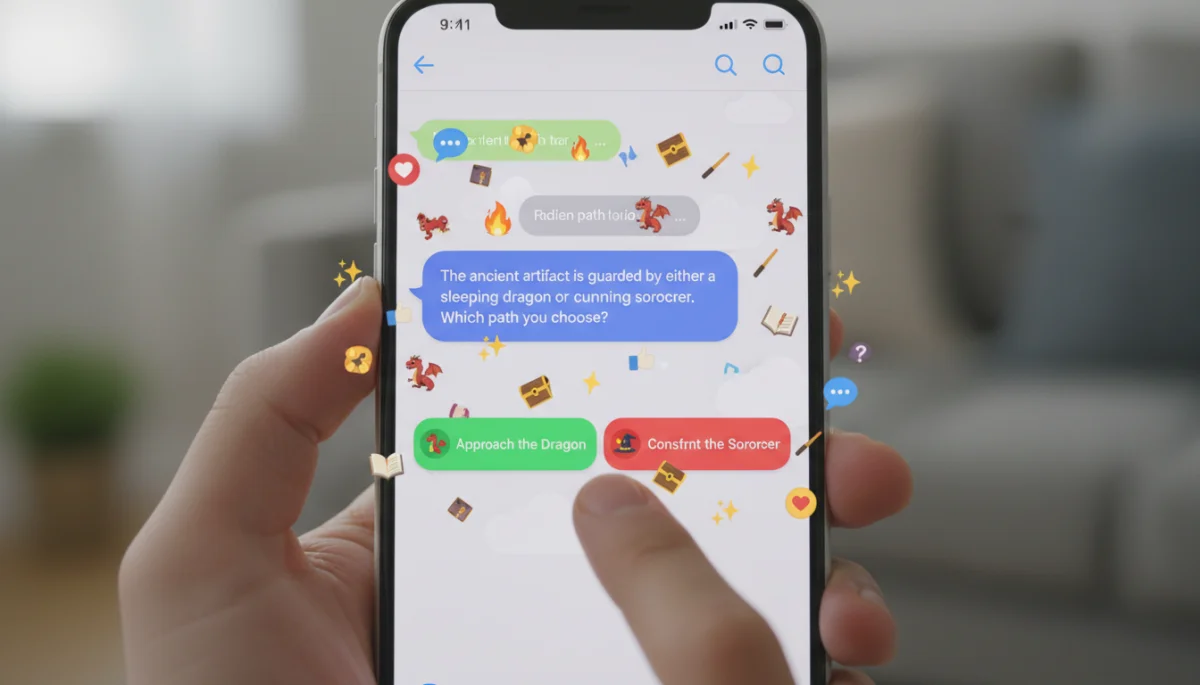
One of the most fundamental aspects of interactive storytelling is the concept of branching storylines. This allows player choices to lead to different narrative paths, consequences, and outcomes. The perceived agency of the player is paramount; they must feel that their decisions genuinely matter and have a tangible impact on the story’s direction.
- Meaningful choices: Decisions should have clear implications, not just superficial variations.
- Consequence management: Players must experience the repercussions of their actions, positive or negative.
- Illusion of control: Even if some paths converge, players should always feel in control of their journey.
- Multiple endings: Offering varied conclusions enhances replay value and the sense of agency.
Character Development and Relatability
Even in a short-form, interactive format, strong character development is essential. Users connect with characters that are relatable, flawed, and possess clear motivations. The messaging app format can facilitate this by allowing direct ‘conversations’ with characters, revealing their personalities through dialogue and reactions to player choices.
Relatability is further enhanced when characters reflect diverse experiences and perspectives. When users see themselves or aspects of their own lives reflected in the characters, their emotional investment in the story deepens significantly. This connection is vital for maintaining engagement across multiple choice points and narrative arcs.
Visuals, Audio, and Immersive Elements
While text forms the backbone of messaging app narratives, visual and audio elements are critical for immersion. High-quality images, short video clips, and sound effects can dramatically enhance the atmosphere, convey emotions, and provide crucial context without relying solely on descriptive text. These elements break up the text, making the experience more dynamic and visually appealing.
The strategic use of these multimedia components can elevate a simple chat story into a rich, sensory experience. For instance, a suspenseful sound effect after a critical choice or a striking image revealing a new location can powerfully impact the user’s perception and emotional response. These immersive elements are key to keeping users hooked.
By carefully balancing branching narratives, compelling characters, and rich multimedia, developers can craft truly engaging interactive stories that captivate audiences within entertainment messaging apps, turning casual interactions into memorable adventures.
The Psychology Behind Interactive Engagement
The success of interactive storytelling in entertainment messaging apps isn’t just about technological prowess; it’s deeply rooted in human psychology. Understanding the cognitive and emotional mechanisms at play helps explain why these narratives are so compelling and addictive. It taps into fundamental human desires for control, connection, and narrative completion.
At its core, interactive engagement leverages principles of operant conditioning and cognitive satisfaction. Users are rewarded for their participation, both intrinsically through a sense of accomplishment and extrinsically through story progression. This creates a positive feedback loop that encourages continued interaction.
The Power of Choice and Control
Humans inherently desire a sense of control over their environment and experiences. Interactive narratives grant this by allowing users to make choices that directly influence the story. This agency reduces feelings of passivity and increases engagement, as users feel they are active participants rather than mere spectators. The perception of control, even within a predefined framework, is a powerful motivator.
When users feel their choices matter, they become more invested in the outcomes. This heightened investment leads to greater emotional responses, whether it’s anxiety over a difficult decision or satisfaction from a positive result. The power of choice transforms a narrative from something external to something intimately personal.
Emotional Connection and Empathy
Interactive stories foster deeper emotional connections with characters and the narrative world. By making decisions on behalf of a character or interacting directly with them, users develop a stronger sense of empathy. They experience the consequences of their choices alongside the characters, leading to more profound emotional resonance.
This empathy is crucial for long-term engagement. When users care about what happens to the characters, they are more likely to continue playing, explore different paths, and recommend the experience to others. The messaging format, mimicking personal conversations, further amplifies this feeling of intimate connection.
Anticipation and Reward Mechanisms
The structure of interactive storytelling is inherently designed to create anticipation. Each choice presents a fork in the road, building suspense about what will happen next. This anticipation is a powerful psychological driver, keeping users on the edge of their seats and eager to discover the consequences of their actions.
The progression of the story, the unlocking of new information, or the achievement of a desired outcome all serve as reward mechanisms. These rewards reinforce the user’s behavior, making them more likely to continue interacting. The intermittent nature of these rewards can be particularly addictive, mirroring the psychological principles seen in game design.
In essence, interactive storytelling in messaging apps succeeds because it cleverly taps into our innate psychological needs for autonomy, social connection, and the satisfaction of problem-solving within a compelling narrative framework. This makes the experience not just entertaining, but profoundly engaging on a personal level.
Challenges and Innovations in the Field
While interactive storytelling in entertainment messaging apps offers immense potential, it also presents unique challenges for developers and creators. Balancing narrative depth with the constraints of a messaging interface, maintaining user engagement over time, and innovating to stand out in a crowded market are constant hurdles. However, these challenges also drive significant innovation within the field.
One primary challenge is crafting narratives that are both compelling and easily digestible within short, chat-like segments. Unlike traditional media, users might engage with these stories in brief bursts throughout their day, requiring a narrative structure that can pick up and leave off easily without losing context.
Designing for Attention Spans and Mobile Constraints
Mobile users often have shorter attention spans and interact with their devices in fragmented sessions. Interactive stories in messaging apps must be designed to accommodate this. This means concise dialogue, clear decision points, and the ability to save progress seamlessly. Overly complex plots or lengthy text blocks can quickly lead to user drop-off.
- Bite-sized content: Deliver narrative segments in short, digestible chunks.
- Intuitive UI: Choices and interactions must be clear and easy to tap.
- Push notifications: Strategic use to remind users of ongoing stories without being intrusive.
- Offline play: Where possible, allowing users to continue stories without constant internet access.
Monetization Models and Sustainability
Another significant challenge is establishing sustainable monetization models. While some apps offer premium content or subscription services, finding the right balance between user experience and revenue generation is critical. Developers are experimenting with various approaches, including in-app purchases for cosmetic items, faster progression, or exclusive story branches.
The key is to integrate monetization in a way that feels natural and adds value to the user experience, rather than disrupting it. Innovative models are emerging that blend advertising subtly into the narrative or offer optional, non-essential enhancements that appeal to dedicated fans.
Leveraging AI for Dynamic Story Generation
Artificial intelligence is becoming an increasingly important innovation in interactive storytelling. AI can be used to generate more dynamic character responses, adapt story elements based on user data, and even create procedurally generated narrative segments. This could lead to truly unique and endlessly replayable experiences.
While still in its early stages, AI’s potential to personalize narratives on an unprecedented scale is immense. Imagine a story that not only reacts to your choices but also learns your preferences and tailors future narrative beats to maximize your engagement. This level of dynamic storytelling could revolutionize the genre.
Despite the challenges, the creativity and technological advancements in interactive storytelling within messaging apps continue to push boundaries, promising even more immersive and personalized experiences for users in the future.
Impact on Traditional Entertainment Media
The rise of interactive storytelling in entertainment messaging apps is not occurring in a vacuum; it is having a palpable impact on traditional entertainment media. From film and television to video games and literature, the principles and expectations set by these mobile narratives are beginning to influence how stories are conceived and delivered across various platforms. This trend highlights a broader shift in audience preferences towards more active participation.
Traditional media, once solely focused on one-way consumption, is now exploring ways to incorporate interactive elements, recognizing the deep engagement that agency provides. This cross-pollination of ideas is enriching the entire entertainment ecosystem.
Inspiring New Forms of Media Consumption
Interactive messaging app stories are conditioning audiences to expect more from their entertainment. They are fostering a generation of consumers who are comfortable with, and even demand, participation in narratives. This expectation is pushing traditional media to innovate, leading to new hybrid forms of consumption.
We see this in choose-your-own-adventure style Netflix specials, interactive live streams, and even augmented reality experiences that blend digital narratives with the real world. The success of messaging app stories demonstrates that there is a significant appetite for content that allows users to shape their own journey, rather than passively observing one.
Bridging the Gap Between Games and Storytelling
Historically, games and storytelling have often been viewed as distinct entities. However, interactive messaging apps blur these lines, positioning themselves in a unique space that combines the narrative depth of traditional stories with the decision-making mechanics of games. This fusion is creating a new genre that appeals to both avid gamers and casual readers.
The gamified elements—choices, consequences, and sometimes even points or achievements—add a layer of engagement that pure text-based stories might lack. Conversely, the strong narrative focus distinguishes them from typical mobile games. This hybrid model is proving incredibly effective at capturing and retaining a broad audience.

Influencing Narrative Design Across Platforms
The lessons learned from crafting compelling interactive narratives within messaging apps are now informing narrative design across a wider spectrum of entertainment. Developers and writers are paying closer attention to player agency, branching pathways, and the emotional impact of choices, even in more linear forms of media.
The emphasis on concise, impactful storytelling, driven by immediate feedback, is also influencing how content is structured for other digital platforms. The ability to deliver a meaningful narrative experience in short bursts is a valuable skill that originated in the mobile-first, interactive messaging space.
Ultimately, interactive storytelling in messaging apps is not just a niche trend; it’s a powerful force reshaping the entire entertainment landscape, pushing creators to think more dynamically about how they engage with their audiences.
The Future of Interactive Storytelling
The trajectory for interactive storytelling in entertainment messaging apps points towards an even more integrated, personalized, and technologically advanced future. As mobile technology continues to evolve and user expectations for dynamic content grow, these narratives are poised to become an even more central part of our digital entertainment diet. The innovations on the horizon promise to make these experiences virtually indistinguishable from real-time conversations.
We can expect to see deeper integration with other aspects of our digital lives, blurring the lines between communication, entertainment, and even productivity. The future will be characterized by seamless, intelligent, and highly responsive narratives.
Hyper-Personalization and Adaptive Narratives
One of the most exciting prospects is the advancement of hyper-personalization. Future interactive stories will likely leverage more sophisticated AI to adapt not just to user choices, but also to their mood, location, social media activity, and even biometric data (with user consent). This could lead to narratives that feel uniquely crafted for each individual, offering unparalleled levels of immersion.
- AI-driven character responses: More nuanced and realistic interactions.
- Contextual story changes: Narratives adapting to real-world events or user schedules.
- Dynamic content generation: AI creating new scenes or dialogue based on user input.
- Emotionally intelligent stories: Narratives that respond to user’s perceived emotional state.
Integration with Augmented Reality and Voice AI
The convergence of interactive storytelling with augmented reality (AR) and voice AI holds immense potential. Imagine interacting with story characters through voice commands, or having narrative elements overlayed onto your real-world environment via AR. These technologies could transform the messaging app interface into a portal for even more immersive experiences.
AR could allow users to “find” story clues in their own homes or neighborhoods, while voice AI could enable natural language conversations with AI-driven characters, further enhancing the feeling of genuine interaction. This fusion would push the boundaries of what is possible within a mobile entertainment context.
Collaborative Storytelling and Social Features
While many interactive stories are currently single-player experiences, the future could see a significant rise in collaborative storytelling within messaging apps. Imagine co-creating a narrative with friends, where each participant’s choices influence the collective story arc. This would leverage the social nature of messaging apps, turning them into platforms for shared narrative adventures.
New social features could allow users to discuss choices, share outcomes, and even vote on collective decisions, adding a layer of community and shared experience to interactive narratives. This shift towards multi-user engagement would further solidify the role of messaging apps as entertainment hubs.
The future of interactive storytelling in entertainment messaging apps is bright, promising a landscape of deeply personal, technologically advanced, and socially engaging narratives that will continue to redefine how we experience and participate in stories.
Ethical Considerations and Responsible Design
As interactive storytelling in entertainment messaging apps becomes more sophisticated and pervasive, it’s crucial to address the ethical considerations and ensure responsible design practices. The power to influence user behavior, collect personal data, and create highly immersive experiences comes with a significant responsibility. Developers must prioritize user well-being, privacy, and transparency in their narrative design.
Responsible design means not only avoiding harm but also actively promoting positive user experiences. This involves careful consideration of the psychological impact of narrative choices and the data practices employed by these platforms.
User Privacy and Data Security
Interactive stories often require access to certain user data to personalize experiences. Ensuring robust user privacy and data security is paramount. Users must have clear understanding and control over what data is collected, how it’s used, and whether it’s shared. Transparency in privacy policies and easy-to-manage privacy settings are essential for building trust.
- Opt-in data collection: Users explicitly consent to data usage.
- Anonymization: Data used for personalization is de-identified where possible.
- Clear privacy policies: Easy-to-understand language about data practices.
- Secure data storage: Protecting user information from breaches.
Preventing Manipulation and Addiction
The highly engaging nature of interactive narratives can, if not designed responsibly, lead to addictive behaviors or manipulative practices. Developers have an ethical obligation to design stories that promote healthy engagement rather than excessive use. This includes avoiding dark patterns that trick users into spending more time or money than intended.
Narrative choices should empower users, not coerce them. Stories should offer genuine agency, and monetization strategies should be transparent and optional, focusing on enhancing the experience rather than exploiting psychological vulnerabilities. Promoting digital well-being should be a core design principle.
Content Moderation and Inclusivity
Interactive stories, especially those with user-generated content or open-ended choices, require robust content moderation to prevent the spread of harmful, offensive, or inappropriate material. Ensuring inclusivity in character representation and narrative themes is also crucial for creating welcoming and equitable experiences for all users.
Developers should actively work to create diverse and representative narratives that resonate with a global audience. This includes avoiding stereotypes, providing positive role models, and ensuring that story choices do not inadvertently lead to discriminatory or harmful outcomes. Responsible design fosters a positive and enriching environment for all participants.
By adhering to strong ethical guidelines and prioritizing responsible design, interactive storytelling in entertainment messaging apps can continue to innovate while safeguarding user interests and contributing positively to the digital landscape.
| Key Aspect | Brief Description |
|---|---|
| User Agency | Users actively shape narratives through choices, fostering deep engagement and personalized outcomes. |
| Psychological Engagement | Taps into desires for control, connection, and anticipation, driving addictive yet fulfilling experiences. |
| Technological Innovation | Leverages AI, AR, and rich media for hyper-personalization and immersive narrative delivery. |
| Ethical Design | Emphasizes user privacy, preventing manipulation, and promoting inclusivity in content creation. |
Frequently Asked Questions About Interactive Storytelling
It’s a form of digital entertainment where users make choices within a messaging app interface, influencing the plot, character development, and outcomes of a story. It turns passive reading into an active, personalized narrative experience directly through chat.
They engage users through player agency, meaningful choices that affect the narrative, emotional connection with characters, and psychological principles like anticipation and reward systems. Multimedia elements also enhance immersion.
Key innovations include advanced AI for dynamic responses, rich media integration (images, video, audio), and potential future integration with augmented reality (AR) and voice AI for more immersive and personalized experiences.
It inspires new forms of media consumption, blurring lines between games and stories, and influences narrative design across various platforms, pushing for more participatory and personalized content from traditional outlets.
Ethical considerations include ensuring user privacy and data security, preventing manipulative design or addictive behaviors, and promoting content moderation and inclusivity to create safe and positive user experiences.
Conclusion
The landscape of entertainment is undergoing a profound transformation, with interactive storytelling in messaging apps emerging as a powerful force. This innovative approach offers a compelling blend of technology and narrative, turning passive consumers into active participants who shape their own stories. By leveraging deep psychological drivers and cutting-edge technological advancements, these apps are not just delivering content; they are crafting deeply personal and memorable experiences. As the field continues to evolve, pushing boundaries with AI, AR, and collaborative features, it promises an even richer, more integrated, and ethically responsible future for digital entertainment, fundamentally redefining how we engage with narratives in our interconnected world.
