Recent Messaging App Updates: What’s New in 2025?

Recent messaging app updates are consistently introducing advanced features and security enhancements, reshaping how individuals and groups communicate digitally across various platforms.
The landscape of digital communication is in constant flux, and recent messaging app updates are at the forefront of this evolution. From enhanced privacy controls to groundbreaking new ways to interact, these updates are not just incremental changes; they are redefining how we connect, share, and collaborate. Staying informed about these developments is crucial for anyone looking to maximize their digital interactions, whether for personal use or professional engagement.
The Evolution of Privacy and Security Features
In an era where digital privacy is paramount, recent messaging app updates have heavily focused on bolstering security and offering users greater control over their data. These advancements reflect a growing demand for safer online interactions and a commitment from developers to protect user information from unauthorized access.
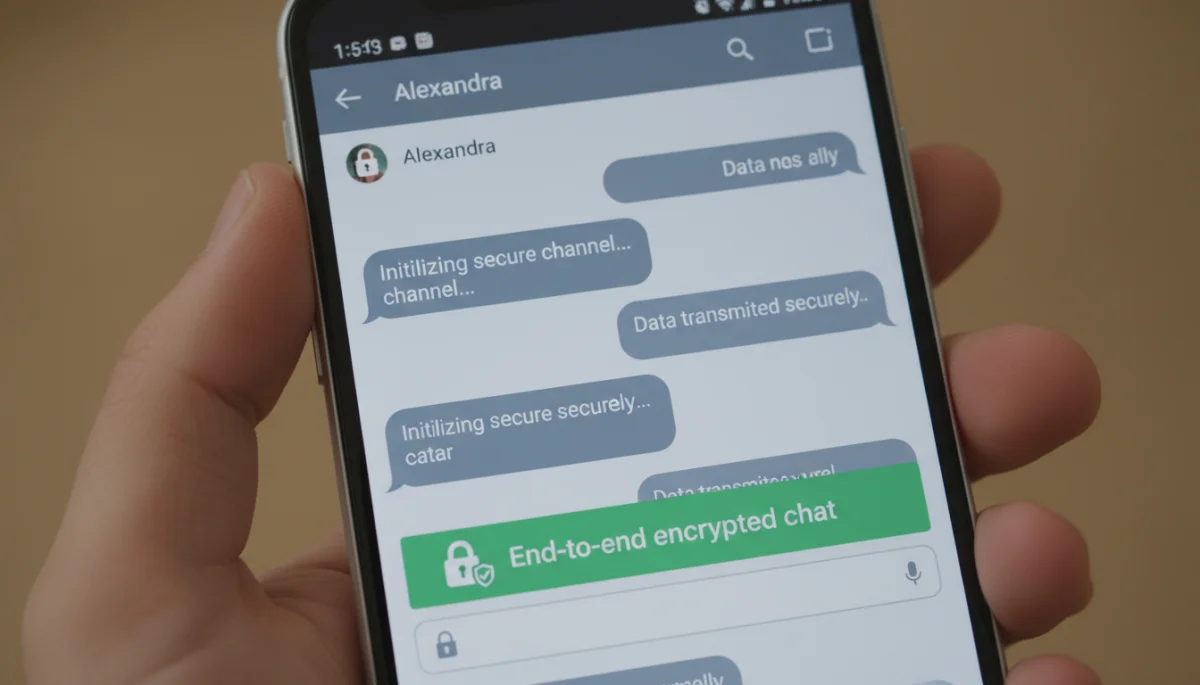
One of the most significant trends is the widespread adoption and enhancement of end-to-end encryption. This technology ensures that only the sender and intended recipient can read messages, making it virtually impossible for third parties, including the app providers themselves, to access the content of communications. This foundational security measure is now standard across many leading platforms.
Advanced Encryption Protocols
Many apps are moving beyond basic end-to-end encryption to implement more sophisticated protocols. These often include forward secrecy, which ensures that even if encryption keys are compromised in the future, past communications remain secure. This commitment to ongoing security improvements is vital for maintaining user trust in an increasingly interconnected world.
- Quantum-Resistant Encryption: Some pioneering apps are beginning to explore quantum-resistant cryptographic algorithms, anticipating future threats from quantum computing.
- Ephemeral Messaging: Features like disappearing messages with customizable timers have become standard, allowing users to control how long their communications persist.
- Secure Backups: Encrypted cloud backups are being introduced, ensuring that even message histories stored off-device remain protected.
Beyond encryption, apps are introducing granular privacy settings. Users can now often control who sees their online status, read receipts, profile picture, and even their ‘last seen’ timestamp. These controls empower individuals to tailor their digital presence according to their comfort levels, fostering a more personalized and secure messaging experience. The continuous push for better privacy and security features underscores a fundamental shift in how messaging apps operate, prioritizing user safety above all else.
Revolutionizing Multimedia Sharing and Content Creation
Messaging apps are no longer just for text; they’ve become powerful platforms for sharing rich multimedia content. Recent updates have brought significant enhancements to how users create, edit, and share photos, videos, and audio, transforming casual conversations into dynamic visual and auditory experiences.
The focus has shifted towards providing in-app editing tools that rival standalone applications, allowing users to perfect their content before sending. This integration streamlines the sharing process and encourages more creative expression directly within the messaging interface. High-quality media transfer is also a key area of improvement, addressing common frustrations with compression and resolution loss.
Enhanced Photo and Video Editing
Users can now access a suite of editing options directly within their messaging apps. This includes filters, cropping tools, text overlays, and even advanced features like exposure and contrast adjustments. Video editing capabilities have also expanded, offering trimming, speed adjustments, and the addition of background music or voiceovers.
- Sticker and GIF Integration: Vast libraries of animated stickers and GIFs are seamlessly integrated, allowing for quick, expressive reactions and personalized content.
- HD Media Sharing: Options to send photos and videos in their original high definition are becoming more prevalent, preserving quality for recipients.
- Interactive Media: Some platforms are experimenting with interactive media formats, such as 360-degree photos or short AR (Augmented Reality) experiences directly within chats.
Audio messaging has also seen a significant upgrade, with features like enhanced voice message transcription, allowing recipients to read messages in noisy environments or when listening is inconvenient. The ability to speed up or slow down voice messages, and even pause and resume recording, adds a layer of convenience and flexibility. These multimedia enhancements collectively make messaging apps more versatile and engaging, catering to a generation that communicates visually and audibly as much as through text.
Innovations in Group Communication and Collaboration
Group chats have evolved from simple message boards into sophisticated collaboration hubs, thanks to a wave of recent messaging app updates. These innovations are designed to make teamwork, event planning, and social interactions more efficient and enjoyable, catering to both personal circles and professional teams.
The challenge of managing large groups and diverse communication needs has driven developers to integrate a variety of tools that go beyond basic text messaging. From threaded conversations to integrated task management, these features aim to reduce clutter and enhance clarity within group settings.
Streamlined Group Management Tools
Administrators of group chats now have more robust controls, including the ability to set specific permissions for members, create announcements, and even moderate content. This helps in maintaining order and focus within large or active groups, ensuring that discussions remain productive and relevant.
- Threaded Replies: This feature allows users to respond directly to specific messages within a group chat, preventing conversations from becoming convoluted and making it easier to follow multiple discussion points.
- Shared Calendars and Polls: Many apps now integrate tools for scheduling events, setting reminders, and conducting polls directly within group chats, simplifying coordination.
- Document Collaboration: Some platforms offer real-time document sharing and co-editing capabilities, transforming group chats into dynamic workspaces.
Video and audio conferencing capabilities have also been significantly improved within group chats, allowing for seamless transitions from text-based conversations to face-to-face or voice-only meetings. These integrated communication methods reduce the need for external applications, creating a more cohesive and efficient collaboration environment. The emphasis on robust group communication tools reflects the growing importance of collective interaction in both our personal and professional lives.
Emerging AI and Automation in Messaging
Artificial intelligence (AI) and automation are no longer futuristic concepts; they are actively being integrated into recent messaging app updates, transforming how we interact with our devices and each other. These advancements promise to make communication smarter, more efficient, and more personalized, anticipating user needs and streamlining daily tasks.
The application of AI ranges from subtle background processes that enhance user experience to direct, interactive AI assistants. The goal is to reduce cognitive load, automate repetitive actions, and provide intelligent insights that enrich conversations without being intrusive.
Smart Replies and Predictive Text
AI-powered smart replies analyze the context of incoming messages and suggest short, relevant responses, saving users time and effort. Predictive text has also become more sophisticated, learning individual writing styles and offering more accurate word and phrase suggestions, making typing faster and less error-prone.
- AI-Powered Summarization: Some apps are beginning to offer AI that can summarize long conversations or document attachments, providing quick overviews.
- Automated Task Management: AI can now identify potential tasks or appointments mentioned in chats and offer to add them to a calendar or create reminders.
- Language Translation: Real-time, in-app translation features are becoming more accurate and widely available, breaking down communication barriers across different languages.
Beyond these immediate benefits, AI is also being used to personalize user experiences, from curating news feeds within the app to suggesting relevant contacts or groups based on communication patterns. Chatbots have also seen a resurgence, becoming more intelligent and capable of handling complex queries, providing customer support, or even acting as personal assistants. These AI and automation features are set to redefine the boundaries of what messaging apps can do, making them indispensable tools for modern living.
Integration with Other Services and Ecosystems
The days of standalone messaging apps are rapidly fading. Recent messaging app updates are heavily focused on deep integration with other services and broader digital ecosystems, transforming them into central hubs for various online activities. This trend aims to create a seamless user experience, reducing the need to switch between multiple applications for different tasks.
The goal is to embed functionalities like payments, e-commerce, social media, and productivity tools directly within the messaging interface. This not only enhances convenience but also consolidates a user’s digital life into a more manageable and interconnected platform.
Seamless Payment and E-commerce Integration
Many messaging apps now allow users to send and receive money directly within chats, often linked to their bank accounts or digital wallets. Furthermore, in-app marketplaces are emerging, enabling users to browse, purchase, and track orders without leaving the conversation.
- Social Media Cross-Posting: Features that allow users to easily share messages, photos, or videos from their chat directly to connected social media platforms.
- Productivity Tool Integration: Linking with calendar apps, note-taking services, and project management tools for streamlined workflow and collaboration.
- Smart Home Device Control: Some advanced integrations allow users to control smart home devices (e.g., lights, thermostats) directly through chat commands.
The push for ecosystem integration extends to deeper ties with operating systems and hardware. This can include better notification management, enhanced widget functionalities, and even cross-device messaging continuity. By becoming more than just communication tools, messaging apps are positioning themselves as comprehensive digital platforms that cater to a wide array of user needs, blurring the lines between communication, commerce, and daily utility.

The Future Outlook: What’s Next for Messaging Apps?
Looking ahead, the trajectory of recent messaging app updates suggests an exciting future filled with even more innovative capabilities. The trends observed today—enhanced privacy, richer multimedia, smarter AI, and deeper integration—are just stepping stones to a more sophisticated and intuitive communication landscape. The focus will likely shift towards even more personalized and immersive experiences, leveraging cutting-edge technologies.
Anticipated developments include a greater emphasis on augmented and virtual reality, transforming how we interact in digital spaces. Furthermore, the drive for interoperability between different messaging platforms could reshape the entire industry, offering users unprecedented flexibility.
Immersive Communication Experiences
The integration of AR and VR technologies promises to bring a new dimension to messaging. Imagine sending messages that appear as holographic projections, or participating in virtual meeting rooms that feel as real as physical ones. These technologies could make remote communication far more engaging.
- Haptic Feedback Integration: Advanced haptic technologies could allow users to ‘feel’ certain messages or reactions, adding a tactile layer to digital communication.
- Personalized AI Avatars: More sophisticated AI-powered avatars that can mimic user expressions and gestures in real-time, enhancing virtual presence.
- Interoperability Standards: A potential future where messages can seamlessly flow between different messaging apps, breaking down current walled gardens and offering greater user choice.
Another significant area of development will be in proactive AI, where messaging apps not only respond to user input but anticipate needs. This could involve AI assistants scheduling appointments based on casual chat mentions, or providing relevant information before it’s explicitly requested. The evolution of messaging apps is not slowing down; instead, it’s accelerating towards a future where communication is more intuitive, secure, and deeply integrated into every aspect of our digital lives, constantly adapting to user demands and technological breakthroughs.
| Key Update Area | Brief Description |
|---|---|
| Privacy & Security | Enhanced end-to-end encryption, granular privacy controls, and secure backups are becoming standard. |
| Multimedia Sharing | Advanced in-app photo/video editing, HD media transfer, and expressive stickers/GIFs. |
| Group Communication | Threaded replies, shared calendars, polls, and improved video conferencing for collaboration. |
| AI & Automation | Smart replies, predictive text, AI summarization, and automated task management for efficiency. |
Frequently Asked Questions About Messaging App Updates
Messaging apps are prioritizing privacy and security due to increasing user demand for data protection, heightened awareness of digital vulnerabilities, and evolving regulatory landscapes. Breaches and privacy concerns have made users more cautious, pushing developers to implement stronger encryption and granular controls to maintain trust.
The biggest changes include advanced in-app photo and video editing tools, the option for high-definition media sharing without significant compression, and richer integration of expressive elements like animated stickers and GIFs. These updates aim to enhance the visual and creative aspects of digital communication.
AI is making messaging more intelligent through features like smart replies, improved predictive text, and AI-powered summarization of conversations. It also helps automate tasks, offers real-time language translation, and personalizes content, making interactions more efficient and tailored to individual user needs.
While messaging apps are increasingly versatile, they are unlikely to fully replace traditional email, especially in formal or professional contexts requiring extensive document attachments and long-form written communication. However, for quick exchanges, team collaboration, and informal communication, they offer a more dynamic and integrated alternative.
Future trends include deeper integration with augmented and virtual reality for more immersive communication, advanced proactive AI features that anticipate user needs, and a potential push towards greater interoperability between different messaging platforms to create a more unified digital communication experience for users.
Conclusion
The rapid pace of recent messaging app updates highlights a continuous commitment to enhancing user experience, security, and functionality. From robust privacy features and sophisticated multimedia tools to intelligent AI integrations and expansive ecosystem connectivity, these platforms are evolving far beyond their initial purpose. Staying abreast of these developments is key to leveraging the full potential of digital communication, ensuring that users can connect, collaborate, and express themselves in ways that are both secure and profoundly engaging. The future promises an even more integrated and intuitive messaging landscape, further solidifying these apps as indispensable tools in our daily lives.
