Reducing Project Delays: Proactive Communication App Usage

Proactive communication app usage is essential for reducing project delays by fostering real-time collaboration, clear information exchange, and swift problem resolution, ensuring projects stay on schedule and within budget.
Are your projects constantly hitting roadblocks and missing deadlines? In today’s fast-paced business world, effectively minimizing project delays is not just an aspiration but a critical necessity for success. One of the most powerful yet often underestimated tools at your disposal is proactive communication app usage. By leveraging these platforms strategically, teams can transform how they collaborate, ensuring information flows seamlessly and issues are addressed before they escalate.
understanding the root causes of project delays
Project delays are a common headache for organizations across all industries. Before we can effectively combat them, it’s crucial to understand their underlying causes. Often, these issues stem from a combination of factors, ranging from inadequate planning to unforeseen technical challenges.
One primary culprit is poor communication. When information isn’t shared promptly or accurately, misunderstandings arise, tasks get duplicated or missed, and critical decisions are postponed. This breakdown can ripple through an entire project, leading to significant setbacks. Another frequent cause is scope creep, where project requirements expand beyond initial agreements without corresponding adjustments to resources or timelines. Lack of clear roles and responsibilities can also create confusion, leading to delays as team members are unsure of their duties or wait for others to act.
identifying common pitfalls
- Communication Gaps: Siloed information, delayed responses, and unclear instructions.
- Scope Creep: Uncontrolled changes to project requirements without proper management.
- Resource Constraints: Insufficient personnel, budget, or tools to complete tasks.
- Unrealistic Expectations: Overly optimistic timelines or underestimation of task complexity.
Technical issues, dependency mismanagement, and external factors like supplier delays or regulatory changes also contribute significantly. Recognizing these challenges early is the first step toward mitigation. A robust strategy for proactive communication can often address many of these issues before they become critical, laying the groundwork for more successful project outcomes.
the role of proactive communication in project success
Proactive communication is about anticipating needs and sharing information before it’s explicitly requested. It transforms project management from a reactive firefighting exercise into a well-orchestrated process. When teams communicate proactively, they create a culture of transparency and accountability, which is vital for maintaining momentum and preventing delays.
This approach involves regular updates, early identification of potential risks, and open channels for feedback. Instead of waiting for problems to surface, team members are encouraged to flag concerns, share progress, and discuss challenges as they arise. This continuous dialogue helps everyone stay informed and aligned with project goals. It also builds trust among team members, making them more comfortable sharing critical information that might otherwise be withheld.
benefits of a proactive communication strategy
- Early Problem Detection: Identify and address issues before they escalate into major delays.
- Enhanced Collaboration: Foster a sense of shared responsibility and teamwork.
- Improved Decision-Making: Provide timely and accurate information for informed choices.
- Increased Transparency: Ensure all stakeholders are aware of project status and challenges.
By integrating proactive communication into daily workflows, projects become more resilient to unforeseen obstacles. It allows for quick adjustments and ensures that everyone is working towards the same objectives with a clear understanding of their role and the overall project status. This shift from reactive to proactive communication is a cornerstone of modern, efficient project management.
leveraging communication apps for real-time collaboration
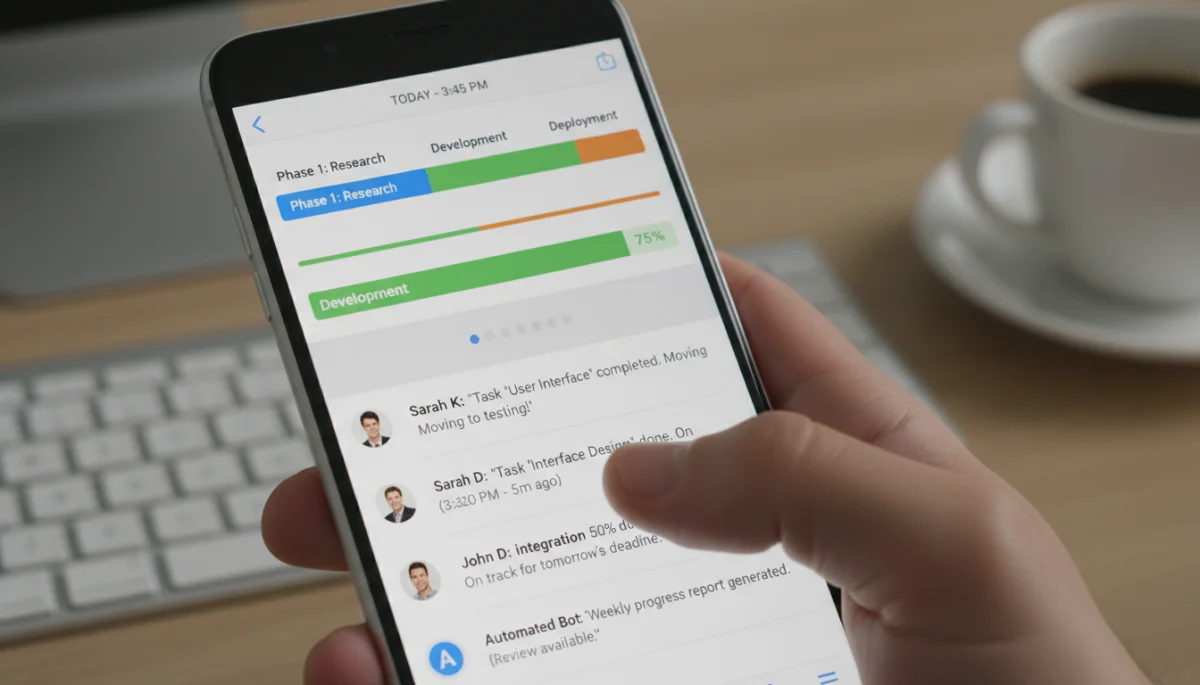
Communication apps have revolutionized how teams interact, offering powerful tools for real-time collaboration that are indispensable for reducing project delays. These platforms go beyond simple messaging, providing features that support task management, document sharing, and instant feedback loops. The ability to connect instantly with team members, regardless of their location, ensures that critical information is never far away.
For instance, integrated chat functions allow for quick discussions and clarifications, eliminating the need for lengthy email chains. Video conferencing capabilities enable face-to-face meetings, fostering better understanding and stronger team bonds. Many apps also offer shared workspaces where documents can be co-edited and reviewed in real-time, accelerating feedback cycles and reducing version control issues. This immediate access to information and colleagues is paramount for agile project execution.
key features for effective project communication
- Instant Messaging: Quick queries and immediate responses.
- Video Conferencing: Face-to-face discussions for complex issues.
- Shared Document Editing: Real-time collaboration on files and reports.
- Task Management Integration: Link communication directly to project tasks and deadlines.
By centralizing communication within a dedicated app, teams can create a single source of truth for project-related discussions and documents. This reduces the time spent searching for information and ensures that everyone is working with the most current data. The seamless integration of various communication tools within a single platform significantly enhances efficiency and responsiveness, directly contributing to the prevention of project delays.
choosing the right communication app for your team
With a plethora of communication apps available, selecting the right one for your team’s specific needs is a critical decision. The ideal app should not only facilitate seamless communication but also align with your project’s complexity, team size, and existing workflows. It’s not a one-size-fits-all solution; what works for a small, agile startup might not be suitable for a large enterprise project.
Consider factors such as ease of use, integration capabilities with other project management tools, security features, and scalability. A user-friendly interface encourages adoption, while robust integrations prevent data silos. Security is paramount, especially when handling sensitive project information, and scalability ensures the app can grow with your team and project demands. Evaluate the app’s features against your team’s communication habits and technical proficiency.
factors to consider when selecting an app
- User-Friendliness: Intuitive interface for quick adoption.
- Integration Capabilities: Compatibility with existing project management and productivity tools.
- Security & Compliance: Data protection and adherence to industry standards.
- Scalability: Ability to support growing teams and projects.
- Cost-Effectiveness: Balancing features with budget constraints.
Conducting trials with a few shortlisted apps can provide valuable insights into their practical application and team acceptance. Gather feedback from team members about their experience with different platforms. The goal is to find an app that enhances communication, streamlines workflows, and ultimately empowers your team to be more productive and less prone to delays. A well-chosen communication app becomes an invaluable asset in your project management toolkit.
best practices for maximizing communication app effectiveness
Simply adopting a communication app isn’t enough; maximizing its effectiveness requires establishing clear best practices and fostering a culture of disciplined usage. Without proper guidelines, even the most advanced tools can lead to information overload or become underutilized. The key is to integrate the app seamlessly into daily routines and ensure all team members understand its purpose and protocols.
Establish clear channels for different types of communication, such as dedicated channels for specific projects, urgent alerts, or general discussions. Define expectations for response times and availability. Encourage concise and clear messaging, avoiding jargon or ambiguity. Regularly review communication patterns to identify bottlenecks or areas for improvement. Training sessions can help onboard new team members and reinforce best practices, ensuring everyone is proficient in using the app’s features effectively.
strategies for optimal app usage
- Define Communication Channels: Assign specific channels for different topics or projects.
- Set Response Time Expectations: Establish clear guidelines for how quickly messages should be addressed.
- Encourage Concise Messaging: Promote clarity and brevity to avoid misunderstandings.
- Regular Training & Onboarding: Ensure all team members are proficient with the app’s features.
- Integrate with Workflow: Make the app a natural part of daily tasks and project updates.
By implementing these best practices, teams can transform their communication app from a mere tool into a strategic asset. It ensures that critical information is disseminated efficiently, decisions are made promptly, and potential issues are identified and resolved before they can derail project timelines. Consistent and thoughtful app usage is a cornerstone of proactive project management.
integrating communication apps with project management tools

The true power of communication apps in reducing project delays is fully unleashed when they are seamlessly integrated with broader project management tools. This integration creates a unified ecosystem where communication, tasks, deadlines, and resources are all interconnected. Instead of toggling between multiple platforms, team members can access all necessary information and collaborate from a central hub, significantly boosting efficiency.
For example, imagine a scenario where a discussion in a chat channel about a task automatically updates the task’s status in your project management software. Or, a file shared in a communication app is instantly linked to the relevant project milestone. This level of integration eliminates manual data entry, reduces the risk of errors, and ensures that all project data is consistent and up-to-date across platforms. It creates a holistic view of project progress and challenges, enabling more informed decision-making and quicker problem resolution.
benefits of seamless integration
- Centralized Information: All project data and communication in one place.
- Automated Updates: Reduce manual data entry and ensure data consistency.
- Enhanced Visibility: Clear overview of project status, tasks, and discussions.
- Streamlined Workflows: Eliminate context switching and improve productivity.
When communication and project management tools work in harmony, teams can react more swiftly to changes, anticipate potential roadblocks, and maintain a tighter grip on project timelines. This synergy is crucial for proactive project management, allowing teams to not only communicate effectively but also to act decisively based on real-time, integrated information. The result is a more resilient and efficient project delivery process, less prone to costly delays.
measuring the impact of proactive communication on project timelines
To truly understand the value of proactive communication app usage, it’s essential to measure its impact on project timelines and overall success. Quantifying these benefits helps justify investments in tools and training, and provides concrete evidence of improved efficiency. Without measurement, it’s difficult to identify what’s working well and where further adjustments might be needed.
Key performance indicators (KPIs) can include reduced project completion times, fewer missed deadlines, lower rates of rework, and improved stakeholder satisfaction. Tracking the number of communication exchanges, response times, and the speed at which issues are resolved can also offer valuable insights. Post-project reviews and surveys can gather qualitative data on team morale and perceived communication effectiveness. Analyzing these metrics over time helps organizations refine their communication strategies and optimize app usage.
key metrics to track
- Project Completion Rates: Compare actual vs. planned completion dates.
- Number of Delays: Track instances and duration of project setbacks.
- Issue Resolution Time: Measure how quickly problems are identified and solved.
- Team Productivity: Assess output and efficiency improvements.
- Stakeholder Satisfaction: Gather feedback on communication clarity and timeliness.
By systematically measuring the impact, organizations can demonstrate a clear return on investment for their proactive communication efforts. This data-driven approach not only proves the effectiveness of communication apps in reducing project delays but also informs continuous improvement, ensuring that future projects benefit from optimized communication strategies. Ultimately, it reinforces the strategic importance of communication in achieving project excellence.
| Key Aspect | Benefit for Delay Reduction |
|---|---|
| Real-time Communication | Instant issue resolution and immediate information sharing prevent bottlenecks. |
| Integrated Workflows | Connects communication with tasks and documents, reducing manual updates and errors. |
| Proactive Issue Detection | Identifies potential problems early, allowing for timely intervention and mitigation. |
| Enhanced Transparency | Keeps all stakeholders informed, fostering alignment and preventing misunderstandings. |
frequently asked questions about proactive communication apps
Communication apps reduce delays by enabling real-time information exchange, quick decision-making, and immediate problem-solving. They minimize miscommunication, centralize discussions, and allow teams to address issues proactively before they escalate into significant roadblocks, keeping projects on track.
Prioritize features like instant messaging, video conferencing, shared file storage, task integration, and robust search capabilities. These elements facilitate seamless collaboration, ensure all project-related discussions are easily accessible, and support efficient workflow management for timely project delivery.
Absolutely. For remote teams, communication apps are indispensable. They bridge geographical gaps, provide a virtual workspace for collaboration, and ensure everyone stays connected and informed. Real-time updates and virtual meetings prevent isolation and keep remote projects aligned, significantly reducing potential delays.
Avoid common mistakes like information overload, unclear channel usage, neglecting to set communication guidelines, and failing to integrate the app with other tools. These pitfalls can lead to confusion and diminish the app’s effectiveness. Proper training and clear protocols are essential for successful adoption.
Measure effectiveness by tracking KPIs such as project completion rates, frequency and duration of delays, issue resolution times, and team feedback on communication clarity. Comparing these metrics before and after implementing proactive communication strategies can demonstrate tangible improvements and justify app usage.
conclusion
In conclusion, the strategic implementation of proactive communication app usage is no longer a luxury but a fundamental requirement for successful project management in today’s dynamic business environment. By understanding the common causes of project delays and embracing the power of real-time collaboration, teams can transform their operational efficiency. Choosing the right tools, establishing clear best practices, and seamlessly integrating communication platforms with existing project management systems are critical steps towards fostering a culture of transparency and accountability. Measuring the impact of these strategies provides invaluable insights, allowing organizations to continuously refine their approach and ensure projects are delivered on time and within scope. Ultimately, a commitment to proactive communication empowers teams to anticipate challenges, make informed decisions swiftly, and achieve project excellence consistently.
