Renewable Energy Incentives for Homeowners: Your 2025 Guide

Renewable energy incentives for homeowners provide crucial financial support and regulatory advantages, significantly reducing the upfront costs and accelerating the return on investment for sustainable home improvements.
Are you a homeowner considering making the switch to cleaner, more sustainable energy sources? Understanding the myriad of
renewable energy incentives for homeowners
can transform your decision from a distant dream into a tangible, cost-saving reality. From solar panels to geothermal systems, these incentives are designed to make green living not only environmentally responsible but also financially astute.
Understanding Federal Renewable Energy Incentives
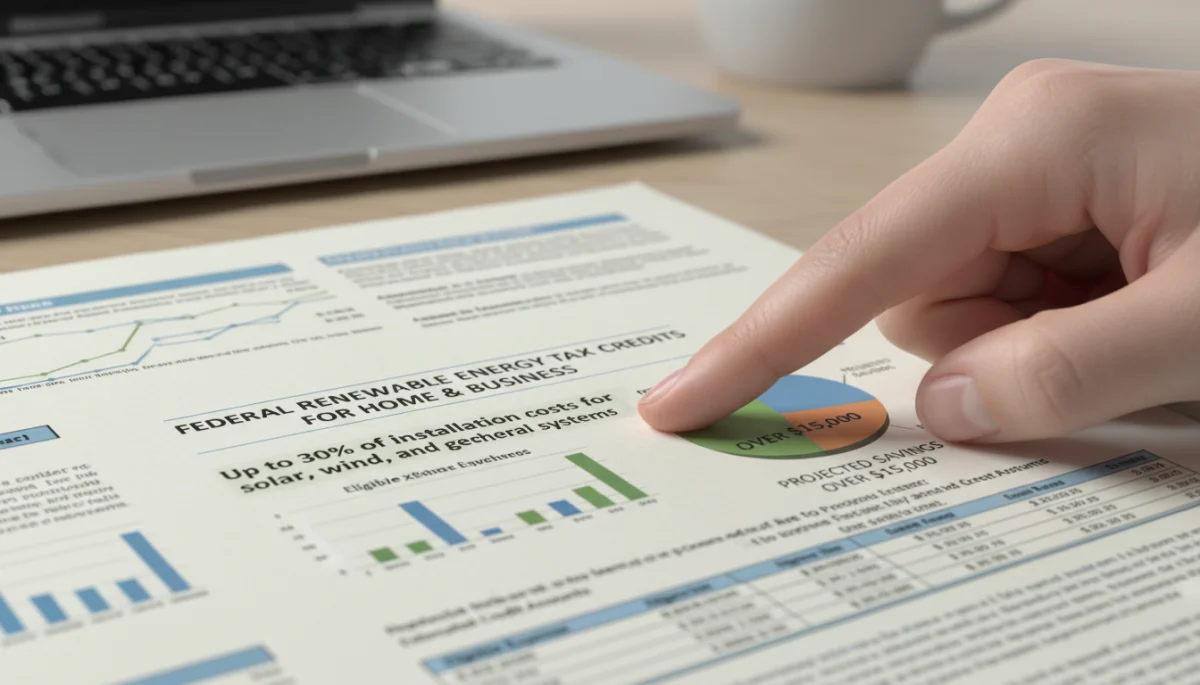
The federal government plays a pivotal role in encouraging homeowners across the United States to adopt renewable energy technologies. These incentives primarily come in the form of tax credits, which directly reduce the amount of income tax you owe, making them incredibly valuable.
The most significant federal incentive is the Residential Clean Energy Credit, often referred to as the Investment Tax Credit (ITC). This credit applies to a variety of renewable energy installations, providing a substantial percentage of the cost back to the homeowner. It’s a cornerstone of federal policy aimed at accelerating the transition to a clean energy economy.
The Residential Clean Energy Credit (ITC) Explained
The ITC allows homeowners to claim a credit for a percentage of the cost of new, qualified clean energy property for their home. This includes solar electric, solar water heating, wind energy, geothermal heat pump, and fuel cell property. The percentage has varied over time but has seen significant extensions and enhancements, particularly with recent legislation.
-
Solar Electric Property:
This covers photovoltaic (PV) systems that generate electricity for your home. -
Solar Water Heating Property:
Applies to systems that heat water for use in your home, provided they are certified by the Solar Rating Certification Corporation or a comparable entity. -
Wind Energy Property:
Small wind turbines installed on your property to generate electricity qualify. -
Geothermal Heat Pump Property:
These systems use the earth’s stable temperature to heat and cool your home, offering high efficiency. -
Fuel Cell Property:
While less common for residential use, fuel cell property that generates electricity also qualifies.
The ITC has been instrumental in the growth of residential solar and other renewable energy installations. It significantly lowers the net cost of these systems, making them affordable for a broader range of homeowners and accelerating payback periods. Understanding the specific percentages and eligibility requirements is crucial for maximizing this benefit.
Furthermore, it is important to note that the credit is non-refundable, meaning you can only use it to offset your tax liability. However, if the credit exceeds your tax liability, you can often carry forward the unused portion to future tax years, ensuring you eventually receive the full benefit.
Navigating State and Local Renewable Energy Programs
Beyond federal support, many states and local municipalities offer their own robust programs and incentives to encourage renewable energy adoption. These can range from additional tax credits and rebates to property tax exemptions and favorable net metering policies. These localized incentives are often tailored to regional energy goals and environmental priorities.
Exploring these state and local options is a critical step in maximizing your savings. Combining federal incentives with state and local programs can dramatically reduce the overall cost of a renewable energy system, making the investment even more attractive. Each state has a unique landscape of offerings, requiring careful research.
State-Specific Tax Credits and Rebates
Many states offer their own versions of tax credits that can be stacked on top of federal incentives. These state tax credits work similarly to federal ones, directly reducing your state income tax burden. Additionally, numerous states and utility companies provide direct rebates for installing specific renewable energy technologies. These rebates are often paid out as a lump sum after installation, further lowering your upfront costs.
-
California:
Known for its aggressive renewable energy goals, California offers various programs, including local rebates and property tax exclusions for solar installations. -
Massachusetts:
Provides incentives like the Massachusetts Clean Energy Center (MassCEC) programs, which support various renewable technologies. -
New York:
Features programs like NY-Sun, offering incentives that reduce the cost of solar electric systems for homes and businesses. -
Texas:
While known for oil and gas, many Texas utilities offer strong solar rebate programs to their customers.
These programs are often dynamic, with availability and amounts changing based on funding and policy updates. Homeowners should consult their state energy office or local utility provider for the most current information. The combination of state-specific incentives with federal benefits creates a powerful financial argument for investing in clean energy.
Understanding Net Metering and Its Benefits
Net metering is a billing mechanism that credits solar energy system owners for the electricity they add to the grid. When your solar panels produce more electricity than your home consumes, that excess energy is sent back to the utility grid. Under net metering, you receive a credit on your utility bill for this surplus power, effectively running your meter backward. This policy is a crucial financial incentive for homeowners.
Without net metering, the economic viability of residential solar would be significantly diminished. It allows homeowners to maximize the value of the electricity generated by their systems, ensuring they are compensated for their contribution to the grid. This arrangement helps offset electricity costs during periods when solar production is lower, such as at night or on cloudy days.
How Net Metering Works in Practice
When your solar panels generate more electricity than your home needs, the excess power flows into the grid, and your utility meter records this outflow. Conversely, when your home needs more electricity than your panels are producing (e.g., at night), you draw power from the grid as usual. At the end of the billing cycle, your utility company calculates your net consumption—the difference between the electricity you consumed from the grid and the electricity you sent back.
-
Credits for Excess Generation:
Homeowners receive credits for the excess electricity they send to the grid, which can be used to offset future electricity bills. -
Reduced or Zero Electricity Bills:
Depending on your system size and electricity consumption, net metering can lead to significantly reduced or even zero monthly electricity bills. -
Grid Stability:
Distributed generation from rooftop solar helps stabilize the grid by providing power closer to the point of consumption, reducing transmission losses.
The specific rules and compensation rates for net metering vary widely by state and even by utility company. Some states offer full retail rate compensation, while others provide a lower wholesale rate or other credit mechanisms. It’s essential for homeowners to research their local net metering policies to understand the full financial implications of installing a renewable energy system.
Despite variations, net metering remains a powerful incentive, allowing homeowners to effectively store excess solar energy on the grid for later use. This mechanism significantly enhances the financial returns on renewable energy investments by ensuring that every kilowatt-hour generated has value.
Exploring Property Tax Exemptions and Loan Programs
Beyond direct financial incentives, many jurisdictions offer property tax exemptions for the added value that a renewable energy system brings to a home. Typically, when you make significant improvements to your property, its assessed value increases, which can lead to higher property taxes. Renewable energy property tax exemptions prevent this from happening, ensuring that your investment in clean energy does not inadvertently increase your tax burden.
Additionally, various loan programs are available specifically for financing renewable energy installations. These programs often come with favorable terms, lower interest rates, or longer repayment periods compared to conventional loans, making the initial investment more manageable for homeowners.
Property Assessed Clean Energy (PACE) Programs
PACE programs are a unique financing mechanism that allows property owners to fund energy efficiency, renewable energy, and water conservation improvements. Instead of a traditional loan, the cost of the improvement is repaid through a special assessment on the property’s tax bill. This assessment is tied to the property, not the owner, meaning it can transfer with the property if it is sold.
-
No Upfront Costs:
PACE programs often cover 100% of the project costs, eliminating the need for a large initial investment. -
Long Repayment Terms:
Repayment periods can extend up to 20 or 30 years, leading to lower annual payments. -
Property-Attached Assessment:
The repayment obligation stays with the property, which can be advantageous if you plan to sell your home.
While PACE programs offer significant benefits, they also come with certain considerations. Homeowners should thoroughly understand the terms, interest rates, and potential impacts on property resale. Not all states or localities offer PACE programs, so checking local availability is crucial.
Beyond PACE, other loan options include green loans from banks, credit unions, and even specific utility-sponsored loan programs. These are designed to make renewable energy accessible by providing tailored financial solutions that address the specific needs of homeowners looking to invest in sustainable technologies. Researching these options can unlock significant financial flexibility.
The Long-Term Financial and Environmental Benefits
Investing in renewable energy for your home extends far beyond immediate savings and incentives. The long-term financial and environmental benefits are substantial, contributing to both your personal wealth and the health of the planet. These advantages make renewable energy a smart, forward-thinking choice for any homeowner.
From reduced utility bills and increased home value to a smaller carbon footprint and enhanced energy independence, the decision to go green yields dividends for years to come. Understanding these broader impacts can solidify the commitment to adopting sustainable energy solutions.
Increased Home Value and Energy Independence
Homes equipped with renewable energy systems, particularly solar panels, often command higher resale values. Studies consistently show that buyers are willing to pay a premium for homes with pre-installed solar, recognizing the immediate and long-term savings on electricity bills. This makes renewable energy an asset that appreciates with your property.

-
Higher Resale Value:
Solar-equipped homes sell faster and for more money than comparable homes without solar. -
Reduced Utility Bills:
The most immediate and tangible financial benefit is the significant reduction, or even elimination, of monthly electricity costs. -
Protection Against Rising Energy Prices:
By generating your own electricity, you become less vulnerable to fluctuations and increases in utility rates. -
Energy Independence:
Relying less on the grid increases your energy security and resilience, especially during outages.
The environmental benefits are equally compelling. By generating clean electricity, you significantly reduce your home’s carbon footprint, contributing to cleaner air and a healthier environment. This move aligns with global efforts to combat climate change and promotes a more sustainable future for everyone. The peace of mind that comes from knowing you are making a positive impact is invaluable.
Moreover, the technological advancements in renewable energy continue to improve efficiency and reduce costs, making these systems more accessible and effective than ever before. The long-term financial stability and environmental stewardship offered by renewable energy make it an investment that truly pays off in multiple dimensions.
Future Trends and Emerging Incentives
The landscape of renewable energy is constantly evolving, with new technologies emerging and incentive programs being updated or introduced. Staying informed about future trends and emerging incentives is crucial for homeowners looking to make the most of their renewable energy investments. Policy changes, technological breakthroughs, and shifts in market dynamics will continue to shape the opportunities available.
For instance, advancements in battery storage technology are making solar-plus-storage systems increasingly attractive, offering greater energy independence and resilience. As these technologies become more mainstream, new incentives may emerge to support their adoption, further enhancing the appeal of renewable energy for homeowners.
Focus on Energy Storage and
Grid Modernization
One of the most significant trends is the integration of home battery storage with solar PV systems. Batteries allow homeowners to store excess solar energy generated during the day and use it during peak demand hours or at night, further reducing reliance on the grid and providing backup power during outages. Governments and utilities are beginning to offer incentives specifically for energy storage solutions.
-
Battery Storage Incentives:
Some states and utilities are offering rebates or tax credits for installing residential battery storage systems. -
Virtual Power Plants (VPPs):
Homeowners with solar and storage can participate in VPPs, where their aggregated energy resources can be dispatched by utilities to support grid stability, potentially earning them additional income. -
Electrification of Homes:
There’s a growing push for electrifying homes, replacing fossil fuel-powered appliances with electric alternatives like heat pumps and induction stoves, often accompanied by incentives.
The push for grid modernization also means that
smart home
energy management systems are gaining traction. These systems optimize energy consumption and production, allowing homeowners to more effectively manage their renewable energy assets. As the grid becomes smarter, the value of distributed renewable energy resources will only increase, potentially leading to new revenue streams for homeowners.
Keeping an eye on legislative developments at both federal and state levels is paramount. New bills and policy initiatives can significantly alter the incentive landscape, either by introducing new programs or extending existing ones. Subscribing to newsletters from energy organizations or regularly checking government energy websites can help homeowners stay ahead of these changes and capitalize on the best available opportunities.
| Key Incentive | Brief Description |
|---|---|
| Federal Tax Credit (ITC) | A significant credit reducing income tax for qualified renewable energy installations like solar and geothermal. |
| State & Local Programs | Additional tax credits, rebates, and grants offered by states and municipalities. |
| Net Metering | Credits homeowners for excess electricity sent back to the utility grid, reducing monthly bills. |
| PACE Programs | Property-attached financing for energy improvements repaid via property tax bills. |
Frequently Asked Questions About Renewable Energy Incentives
Federal incentives, primarily the Residential Clean Energy Credit, apply to solar electric, solar water heating, small wind energy, geothermal heat pump, and fuel cell property. These systems must meet specific efficiency and certification standards to be eligible for the credit.
State and local incentives often complement federal programs. They can include additional tax credits, direct rebates, property tax exemptions, or specific loan programs tailored to regional energy goals. These vary significantly by location, so local research is key.
While net metering is widespread, its specific rules and compensation rates vary by state and utility. Some regions offer full retail rate credits, while others provide lower wholesale rates or other credit structures. Homeowners should check with their local utility for details.
Yes, in many cases, you can combine federal, state, and local incentives, significantly maximizing your overall savings. It’s crucial to understand the specific stacking rules for each program, as some may have limitations or require specific application processes.
Long-term benefits include significantly reduced or eliminated electricity bills, increased home value, protection against rising energy prices, and enhanced energy independence. These financial advantages often lead to substantial returns on investment over the system’s lifespan.
Conclusion
The landscape of renewable energy incentives for homeowners in the United States is rich with opportunities, designed to make the transition to sustainable living both accessible and financially rewarding. By strategically combining federal tax credits, state and local rebates, favorable net metering policies, and innovative financing options, homeowners can significantly reduce the upfront costs and accelerate the payback period of their renewable energy investments. Beyond the immediate financial gains, embracing clean energy contributes to a healthier environment, increases energy independence, and enhances property value, making it a truly forward-thinking decision for any modern home. Staying informed about these evolving incentives is key to unlocking the full potential of renewable energy for your home.
