Expert Review: Signal’s Encrypted Calling Features
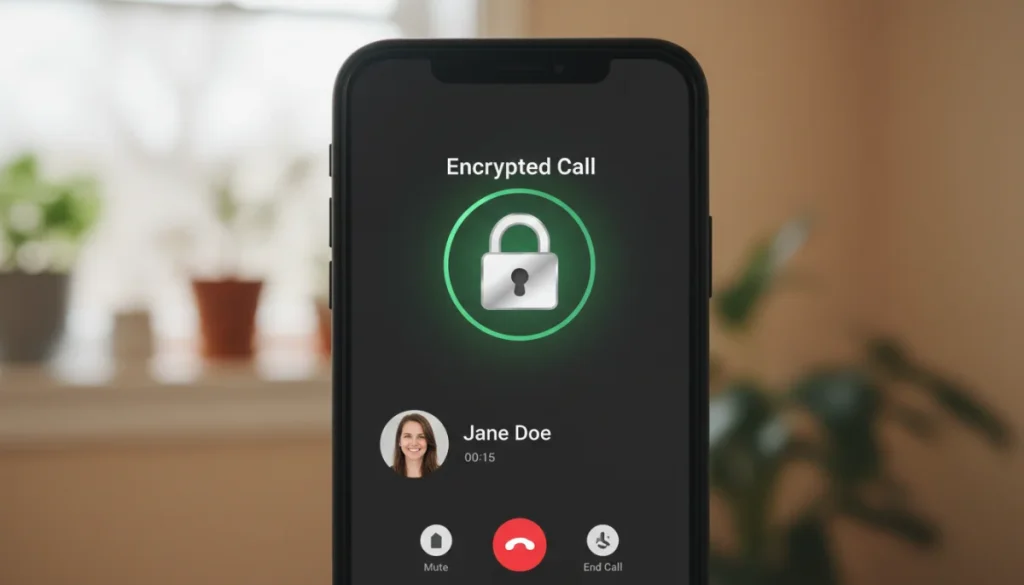
Signal’s encrypted calling features provide robust end-to-end encryption, ensuring private and secure voice and video communications, making it a top choice for privacy-conscious users seeking reliable and high-quality secure conversations.
In an era where digital privacy is increasingly scrutinized, finding communication tools that genuinely protect your conversations is paramount. This expert review: Signal’s encrypted calling features delves into what makes Signal a leading choice for secure voice and video communications, examining its technology, performance, and overall user experience.
The foundation of Signal’s encryption
Signal has long been celebrated for its unwavering commitment to user privacy and security, and its encrypted calling features are a cornerstone of this reputation. At its core, Signal utilizes the open-source Signal Protocol, widely regarded by cryptographers as the strongest and most secure end-to-end encryption protocol available today. This protocol ensures that only the sender and intended recipient can read or hear the messages and calls, making it impossible for Signal itself or any third party to access the content of your communications.
The implementation of this protocol is meticulous, covering not just the content of calls but also metadata to a significant extent. Unlike many other platforms that might encrypt messages but leave call metadata exposed, Signal strives to minimize data collection, offering a more comprehensive privacy shield. This approach is critical in an age where even seemingly innocuous metadata can reveal sensitive patterns about an individual’s life.
Understanding end-to-end encryption
End-to-end encryption (E2EE) is not merely a feature; it’s a fundamental architectural choice that dictates how communication happens. For Signal calls, E2EE means:
- Confidentiality: Your conversations are private, shielded from eavesdropping.
- Integrity: Messages and calls cannot be tampered with in transit.
- Authentication: You can verify the identity of the person you’re communicating with.
The protocol’s forward secrecy and future secrecy properties further enhance security. Forward secrecy ensures that even if a long-term key is compromised, past communications remain secure. Future secrecy, similarly, protects future communications if a current session key is compromised. This layered approach to security sets Signal apart from many competitors who offer weaker encryption or only encrypt data in transit.
In essence, Signal’s encryption isn’t just a marketing buzzword; it’s a robust, auditable, and peer-reviewed system that provides a high degree of confidence in the privacy of your calls. This commitment to cryptographic excellence underpins every aspect of its calling features, offering users peace of mind in their digital interactions.
Voice call quality and reliability
Beyond its robust security, Signal’s encrypted voice calling features are also recognized for their impressive quality and reliability. In the realm of secure communication, it’s often a challenge to balance strong encryption with high-fidelity audio, but Signal manages to achieve this balance remarkably well. Users frequently report clear, crisp audio quality, comparable to traditional phone calls, even when conversing across different continents.
The application employs adaptive audio codecs that adjust to varying network conditions. This adaptability is crucial for maintaining call stability and clarity, especially in areas with fluctuating internet speeds or limited bandwidth. Whether you’re on a stable Wi-Fi connection or relying on mobile data, Signal endeavors to provide a consistent and uninterrupted calling experience. This technical optimization is a testament to Signal’s dedication to making secure communication accessible and practical for everyday use.
The reliability of Signal calls is another significant factor that contributes to its widespread adoption. Dropped calls and connection issues are minimal, which is a critical consideration for both personal and professional use. The infrastructure supporting Signal’s calling features is designed to be resilient, ensuring that calls connect quickly and remain stable throughout their duration. This focus on operational excellence complements its security features, creating a comprehensive communication solution.
Factors influencing call performance
- Network conditions: A stable internet connection (Wi-Fi or mobile data) is paramount for optimal call quality.
- Device hardware: Modern smartphones with good microphones and speakers naturally enhance the experience.
- Server proximity: While Signal’s architecture is decentralized in many ways, routing through optimal servers can impact latency.
Despite the inherent overhead of encryption, Signal’s engineering team has optimized the application to minimize any noticeable delay or degradation in audio quality. This optimization is a continuous process, with regular updates aimed at improving performance and addressing any potential issues. For users prioritizing both security and clear communication, Signal’s voice calling capabilities present a compelling package, proving that strong encryption does not have to come at the expense of usability.
Video calling capabilities and user experience
Signal’s encrypted calling features extend beyond voice to include robust video calling capabilities, offering a secure alternative for face-to-face digital interactions. The platform’s video calls also benefit from the same end-to-end encryption protocol, ensuring that your visual and auditory communications remain entirely private. This level of security is particularly vital for sensitive discussions, whether personal or professional, where visual cues are as important as spoken words.
From a user experience standpoint, Signal’s video calls are designed to be intuitive and straightforward. Initiating a video call is as simple as making a voice call, with a clear interface that allows users to switch between front and rear cameras, mute their microphone, and disable their video feed as needed. The layout is clean and uncluttered, minimizing distractions and allowing users to focus on their conversation. This simplicity of design belies the complex security mechanisms operating beneath the surface, making advanced privacy accessible to everyone.
The quality of video calls on Signal is generally high, with clear picture and synchronized audio. While performance can, as with any video calling service, be influenced by network conditions, Signal’s adaptive streaming technology works to maintain the best possible quality under various circumstances. This means that even if your internet connection fluctuates, the app attempts to adjust the video resolution to prevent dropped calls or excessive buffering, prioritizing continuity of communication.
Group video calls and screen sharing
Signal has also expanded its capabilities to include group video calls, allowing multiple participants to engage in secure, encrypted video conferences. This feature is particularly useful for small teams, families, or groups of friends who need to communicate securely without relying on less private alternatives. The experience of group video calls mirrors that of one-on-one calls, with a focus on ease of use and stable performance.
- Participant limit: Signal supports group video calls with a reasonable number of participants, making it suitable for many common scenarios.
- Seamless integration: Group video calls are initiated directly from existing group chats, streamlining the process.
- No screen sharing: While robust for video and audio, Signal currently does not offer screen sharing directly within its video calls, a feature common in some enterprise solutions. Users needing this might seek alternative, less secure platforms or use workarounds.
The absence of screen sharing might be a deliberate choice to simplify the interface and reduce potential attack vectors, aligning with Signal’s philosophy of minimalist functionality focused on core privacy. Despite this, the overall video calling experience, both individual and group, solidifies Signal’s position as a top-tier secure communication tool, balancing strong encryption with practical, high-quality performance.
Privacy and security features beyond encryption
While end-to-end encryption is the cornerstone of Signal’s security posture, the application integrates several other privacy-enhancing features that collectively create a robust shield for user communications. These features go beyond merely encrypting the content of calls, addressing various aspects of digital privacy that are often overlooked by other platforms. This comprehensive approach reinforces Signal’s commitment to protecting its users’ sensitive information from surveillance and data exploitation.
One notable feature is the minimal collection of user data. Signal is designed to collect as little information about its users as possible. Unlike many commercial messaging apps that harvest extensive metadata—such as who you communicate with, when, and for how long—Signal’s architecture ensures that such data is not stored. This “zero-knowledge” approach means that even if compelled by legal requests, Signal would have very little information to provide, significantly enhancing user anonymity and privacy.
Furthermore, Signal offers disappearing messages, allowing users to set a timer for messages to automatically delete themselves from both sender and recipient devices after a specified period. While primarily a messaging feature, the philosophy behind it extends to the broader privacy mindset of Signal, encouraging ephemeral communication when desired. This control over message retention is a powerful tool for managing digital footprints and ensuring that sensitive information does not persist indefinitely.
Advanced privacy controls
Signal also includes several advanced privacy controls that empower users to fine-tune their security settings:
- Screen lock: Users can enable a screen lock for the app, requiring a PIN, passphrase, or biometric authentication to access messages and calls.
- Incognito keyboard: On Android, users can enable an incognito keyboard, which prevents their keyboard from learning and storing typed words, further protecting sensitive input.
- Relay calls: For enhanced privacy, users can choose to relay all calls through a Signal server to hide their IP address from their contact. While this might slightly reduce call quality, it adds an extra layer of anonymity.

These features, combined with the core encryption, demonstrate Signal’s holistic approach to privacy. It’s not just about securing the data in transit, but also about minimizing data collection, offering granular control over data retention, and providing tools to enhance anonymity. This layered security strategy makes Signal an exceptionally secure platform for all forms of communication, including its encrypted calling features, providing users with a robust and trustworthy environment for their private conversations.
Comparison with other secure messaging apps
When evaluating Signal’s encrypted calling features, it’s essential to place them in context by comparing them with other secure messaging applications available in the market. While many apps claim to offer “encryption,” the depth and implementation of these security measures vary significantly. Signal consistently emerges as a leader due to its transparent, open-source protocol and its commitment to privacy by design.
Many popular messaging apps, such as WhatsApp, also employ end-to-end encryption for calls and messages. However, key differences exist. WhatsApp, owned by Meta (Facebook), collects a substantial amount of metadata, including contact information, location data, and usage patterns, which Signal explicitly avoids. This distinction is critical for users who prioritize comprehensive privacy, as metadata can be almost as revealing as content itself. While WhatsApp’s encryption is technically sound, its business model and data collection practices raise concerns for the most privacy-conscious users.
Telegram, another widely used messaging app, offers “secret chats” with end-to-end encryption, but its default chats and group chats are cloud-based and only use client-server encryption, meaning Telegram can potentially access content. Furthermore, Telegram’s encryption protocol is proprietary, making it less transparent and auditable than Signal’s open-source Signal Protocol. For calls, Telegram offers end-to-end encryption, but its overall privacy stance is less stringent than Signal’s, particularly regarding metadata and default settings.
Key differentiators for Signal
Signal’s advantages in the secure calling landscape include:
- Open-source protocol: The Signal Protocol is publicly auditable, allowing security experts to verify its strength and identify vulnerabilities.
- Minimal metadata collection: Signal’s design philosophy minimizes data retention, offering unparalleled privacy even from the service provider itself.
- Non-profit foundation: Operated by a non-profit foundation, Signal’s primary motivation is privacy, not profit or data monetization.
Other niche secure messengers might offer similar levels of encryption, but they often struggle with user adoption, interface usability, or cross-platform compatibility. Signal, on the other hand, has managed to combine top-tier security with a user-friendly experience and broad availability, making it a practical choice for a wide audience. This balance of security, usability, and ethical operation firmly establishes Signal’s encrypted calling features as a benchmark in the secure communication space, offering a truly private alternative to mainstream options.
Potential limitations and considerations
While Signal’s encrypted calling features offer an unparalleled level of security and privacy, it’s also important to acknowledge potential limitations and considerations that users might encounter. No technology is without its caveats, and understanding these can help users make informed decisions about their communication tools. These points are not necessarily drawbacks but rather aspects to be aware of, especially when comparing Signal to other communication platforms.
One common consideration is the reliance on internet connectivity. Signal calls, both voice and video, require a stable internet connection, whether Wi-Fi or mobile data. In areas with poor network coverage or limited data plans, call quality and reliability can suffer, potentially leading to dropped calls or degraded audio/video. While Signal’s adaptive codecs help mitigate this, a fundamental dependency on internet infrastructure remains, unlike traditional cellular calls which might function in low-signal areas.
Another point to consider is user adoption. For secure communication to be truly effective, both parties must be using the same secure platform. If your contacts are not on Signal, you cannot leverage its encrypted calling features with them. This can sometimes be a barrier to widespread adoption, as convincing friends, family, or colleagues to switch platforms can be challenging. However, Signal’s growing popularity and ease of use are gradually reducing this friction.
Specific technical and feature limitations
- No screen sharing: As mentioned, Signal currently lacks a built-in screen sharing feature during video calls, which might be a limitation for business or collaborative use cases.
- Group call capacity: While supporting group calls, the maximum number of participants might be lower than some dedicated conferencing solutions, limiting its utility for very large meetings.
- File size limits: While not directly related to calling, Signal does have file size limits for attachments, which might impact overall communication workflow for some users.
Furthermore, while Signal’s commitment to minimal data collection is a privacy strength, it also means that features relying on cloud backups or extensive synchronization across devices might be less robust compared to apps that store more user data. Users must actively manage their backups for messages, and call logs are primarily local to the device. These aspects highlight Signal’s philosophy: prioritizing privacy and local control over convenience features that might compromise security. Despite these considerations, for users whose primary concern is secure, private communication, Signal’s encrypted calling features remain an exceptionally strong and reliable choice.
Future developments and outlook for Signal
Signal’s commitment to continuous improvement and adaptation in the rapidly evolving digital landscape is a key factor in its sustained relevance and leadership in secure communication. The Signal Foundation, being a non-profit entity, is driven by its mission to provide private communication tools, rather than commercial interests. This allows them to focus purely on enhancing security, privacy, and user experience, which bodes well for the future development of Signal’s encrypted calling features and the platform as a whole.
One area of ongoing development is the refinement of call quality and stability, particularly under challenging network conditions. As global internet infrastructure varies widely, Signal continually works on optimizing its adaptive codecs and network routing to ensure that users worldwide can experience clear and reliable encrypted calls. This involves leveraging new technologies and algorithmic improvements to maintain high fidelity even with limited bandwidth or increased latency.
Another crucial aspect of future development involves expanding the reach and accessibility of Signal. This includes ensuring compatibility across a broader range of devices and operating systems, as well as improving localization to serve diverse linguistic communities. The easier it is for people to access and use Signal, the more widespread its secure communication benefits become, thereby strengthening the network effect of privacy.
Anticipated enhancements and strategic direction
- Enhanced group communication: While already robust, expect further improvements in group calling, potentially increasing participant limits or introducing new moderation tools.
- Privacy-preserving features: Signal consistently explores new ways to protect user data, and future updates may include novel privacy features that further minimize metadata or enhance anonymity.
- Platform integration: Continued efforts to ensure seamless integration and performance across desktop, mobile, and potentially other platforms, providing a unified and consistent user experience.
The open-source nature of the Signal Protocol also means that the broader cryptographic community contributes to its review and improvement, fostering a collaborative environment for security innovation. This transparency is a powerful asset, allowing for rigorous scrutiny and rapid identification of potential vulnerabilities, which is then swiftly addressed by the Signal team. The long-term outlook for Signal’s encrypted calling features is one of sustained excellence in security, coupled with continuous efforts to enhance usability and performance. For users seeking the gold standard in private digital communication, Signal remains a forward-thinking and dependable choice, consistently pushing the boundaries of what secure messaging can offer.
| Feature | Description |
|---|---|
| End-to-End Encryption | Utilizes the Signal Protocol for robust, open-source encryption on all calls. |
| Voice Call Quality | Clear and reliable audio, adapting to network conditions for consistent performance. |
| Video Call Features | Secure one-on-one and group video calls with high-quality visual and audio. |
| Privacy Beyond Encryption | Minimal metadata collection, disappearing messages, and IP address relay options. |
Frequently Asked Questions about Signal’s Encrypted Calling
Signal’s encrypted calls are highly secure, utilizing the open-source Signal Protocol for end-to-end encryption. This protocol is widely respected by cryptographers and ensures that only the participants in a call can access its content, protecting against eavesdropping by Signal or third parties.
Signal is designed to collect minimal user data. Unlike many other apps, it does not store extensive metadata about your calls, such as who you called, when, or for how long. This “zero-knowledge” architecture significantly enhances user privacy and anonymity.
Signal generally offers clear and reliable audio and video quality for its calls. It employs adaptive codecs that adjust to network conditions, striving to maintain a stable and high-fidelity experience even with varying internet speeds. Performance is comparable to leading communication apps.
Yes, Signal supports encrypted group video calls. You can initiate these directly from existing group chats, allowing multiple participants to engage in secure, face-to-face conversations. This feature is ideal for small teams or private family gatherings.
While robust, Signal’s calls rely on internet connectivity, so quality can be affected by poor network conditions. It also currently lacks a screen-sharing feature during video calls and may have lower participant limits for group calls compared to dedicated conferencing solutions.
Conclusion
In conclusion, Signal’s encrypted calling features stand out as a gold standard in secure digital communication. Its unwavering commitment to end-to-end encryption, powered by the Signal Protocol, ensures that both voice and video calls remain private and protected from any third-party access. Beyond the core encryption, Signal’s minimalist approach to data collection, coupled with advanced privacy controls like IP address relay and disappearing messages, reinforces its position as the premier choice for privacy-conscious individuals and organizations. While some minor limitations exist, such as the absence of screen sharing and reliance on internet connectivity, these are outweighed by the profound security benefits and consistent efforts to improve call quality and user experience. For anyone seeking truly private and reliable communication in an increasingly interconnected world, Signal’s encrypted calling features offer an unparalleled solution, setting a benchmark for what secure messaging should be.
