User Feedback on Entertainment Apps: Driving Innovation

User feedback on entertainment apps is crucial for developers to understand user preferences, identify areas for improvement, and continuously innovate, ensuring a dynamic and engaging experience that retains and attracts users.
In today’s fast-paced digital world, understanding how users interact with and perceive their favorite applications is paramount. User feedback on entertainment apps isn’t just a suggestion box; it’s a vital compass guiding developers toward innovation and sustained engagement.
The Pivotal Role of User Feedback in Entertainment Apps
User feedback serves as the bedrock for successful entertainment app development. It provides direct insights into user satisfaction, pain points, and desires, transforming abstract ideas into actionable improvements. Without a robust feedback mechanism, even the most innovative apps risk falling short of user expectations, leading to churn and missed opportunities.
Collecting and analyzing feedback allows developers to move beyond assumptions, grounding their decisions in real-world user experiences. This data-driven approach is critical in a market saturated with options, where user loyalty is fleeting and dictated by the quality of the experience. From streaming services to gaming platforms, the voice of the user shapes the future.
Understanding User Behavior Through Feedback
Effective feedback collection goes beyond simple ratings. It delves into the ‘why’ behind user actions, revealing patterns and preferences that might not be evident through analytics alone. This deeper understanding enables developers to tailor features and content more precisely.
- Feature Adoption: Feedback highlights which new features resonate and which fall flat.
- Usability Issues: Users often pinpoint navigation difficulties or confusing interfaces.
- Content Preferences: Direct input on content types helps curate a more appealing library.
- Performance Gaps: Reports on bugs or slow loading times are invaluable for technical teams.
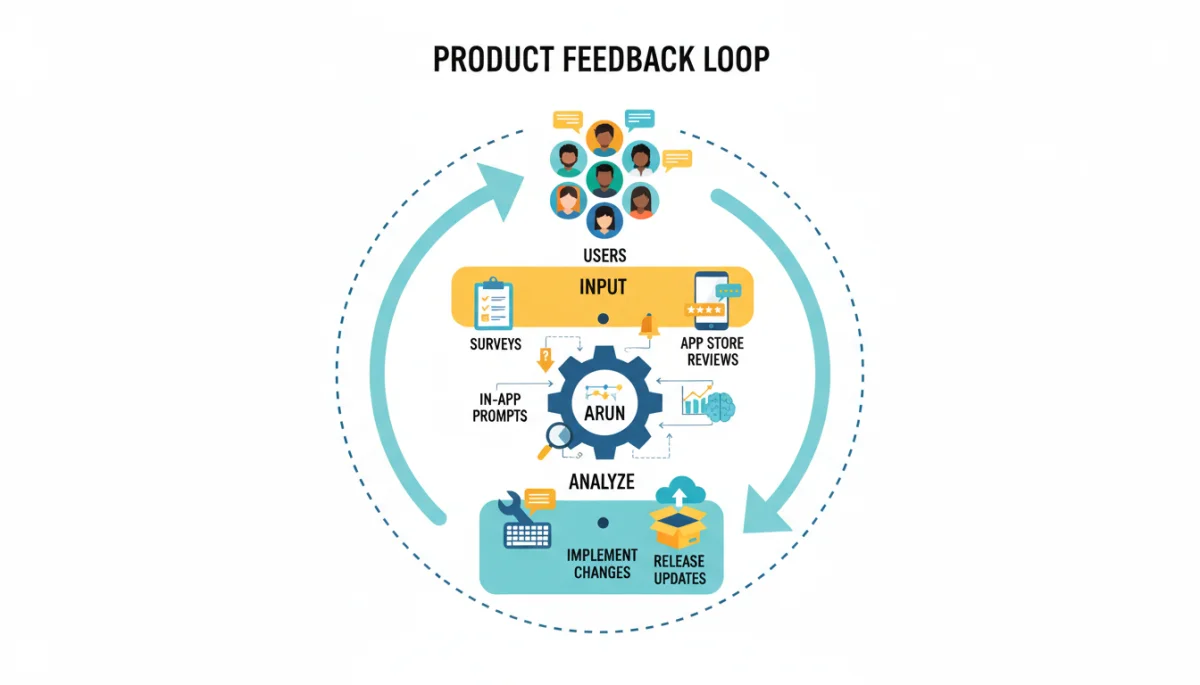
Ultimately, the continuous cycle of gathering, analyzing, and acting on user feedback creates a dynamic relationship between the app and its audience. This fosters a sense of ownership and community among users, making them feel heard and valued, which in turn enhances their overall engagement and loyalty to the platform.
Strategies for Effective Feedback Collection
To truly harness the power of user feedback on entertainment apps, developers must employ a variety of strategic collection methods. A multi-faceted approach ensures a comprehensive understanding of the user base, capturing both quantitative data and qualitative insights. Relying on a single channel can lead to a skewed perception and limit the depth of understanding.
The goal is to make the feedback process as seamless and unintrusive as possible for the user, while still yielding rich, actionable data for the development team. Balancing user experience with data collection is a delicate but crucial act.
In-App Feedback Mechanisms
Integrating feedback tools directly within the app experience is one of the most effective ways to gather immediate and context-specific insights. These can range from subtle prompts to dedicated feedback sections.
- Surveys and Polls: Short, targeted questions can be presented after specific interactions or at key moments in the user journey.
- Rating Prompts: Strategically timed requests for app store ratings can improve visibility and provide a quick sentiment check.
- Bug Reporting Tools: Allowing users to easily report issues directly from within the app streamlines problem identification and resolution.
- Suggestion Boxes: A dedicated section where users can freely submit ideas or comments encourages proactive engagement.
Beyond in-app tools, external channels play a significant role. App store reviews, social media monitoring, and dedicated user forums offer valuable public sentiment and direct communication avenues. Analyzing these diverse sources provides a holistic view of user perception, allowing developers to identify emerging trends and address widespread concerns efficiently.
Analyzing and Interpreting User Feedback Data
Collecting feedback is only half the battle; the true value lies in how that data is analyzed and interpreted. Without proper analysis, raw feedback remains a collection of disparate comments, failing to inform strategic decisions. Transforming qualitative and quantitative data into actionable insights requires sophisticated tools and a methodical approach.
The process involves identifying patterns, prioritizing issues, and understanding the underlying sentiment. This analytical rigor ensures that development efforts are focused on the areas that will yield the greatest impact on user satisfaction and app performance.
Leveraging AI and Machine Learning for Sentiment Analysis
Modern tools, powered by artificial intelligence and machine learning, have revolutionized feedback analysis. These technologies can process vast amounts of unstructured data, such as written reviews and comments, to extract sentiment and identify recurring themes.
- Sentiment Scoring: Automatically categorizing feedback as positive, negative, or neutral, and even identifying specific emotions.
- Topic Modeling: Grouping similar comments together to reveal common complaints or popular feature requests.
- Trend Identification: Detecting shifts in user sentiment or emerging issues over time, allowing for proactive responses.
- Automated Tagging: Assigning relevant tags to feedback entries for easier categorization and searchability.
Beyond AI, manual review by dedicated teams remains crucial for nuanced understanding. Human analysts can grasp subtleties, sarcasm, and complex contextual information that AI might miss. Combining automated efficiency with human insight provides the most comprehensive and accurate interpretation of user feedback.
Implementing Feedback: From Insight to Innovation
The ultimate purpose of gathering user feedback on entertainment apps is to drive meaningful change and innovation. Insights derived from feedback must be systematically integrated into the development roadmap, influencing everything from minor bug fixes to major feature overhauls. This requires a structured approach to prioritizing and implementing user-driven improvements.
A well-defined process ensures that valuable feedback doesn’t get lost in the shuffle but actively contributes to the app’s evolution. It’s about closing the feedback loop, showing users that their contributions directly lead to a better product.
Prioritization and Development Cycles
Not all feedback can be acted upon immediately, or even at all. Development teams must establish clear criteria for prioritizing feedback, weighing factors such as impact on user experience, technical feasibility, and alignment with business goals.
- Impact vs. Effort Matrix: Visualizing feedback items based on how much value they add versus how difficult they are to implement.
- User Story Creation: Translating feedback into user stories that guide development tasks, ensuring a user-centric approach.
- Agile Sprints: Incorporating feedback into agile development cycles, allowing for iterative improvements and rapid deployment of solutions.
- A/B Testing: Experimenting with different solutions based on feedback to determine the most effective approach before full-scale implementation.
Transparent communication with users about implemented changes is also vital. Announcing updates that directly address user-reported issues or suggestions reinforces the value of their feedback and strengthens their connection to the app. This transparency builds trust and encourages continued participation in the feedback process.
The Impact of Feedback on User Engagement and Retention
The direct correlation between responsive development, fueled by user feedback on entertainment apps, and enhanced user engagement and retention is undeniable. When users see their suggestions implemented or their issues resolved, it validates their experience and fosters a sense of loyalty. This positive reinforcement is a powerful driver in the competitive entertainment app landscape.
Apps that consistently demonstrate responsiveness to user needs tend to cultivate a more dedicated and vocal user base. These users become advocates, spreading positive word-of-mouth and contributing to organic growth. Neglecting feedback, conversely, can lead to frustration, disengagement, and ultimately, user churn.
Building a Loyal Community Through Responsiveness
Beyond feature improvements, actively listening to and responding to feedback helps build a strong community around the app. Users feel part of the development journey, transforming them from passive consumers into active participants.
- Personalized Experiences: Feedback allows for tailoring content and features to individual preferences, increasing relevance.
- Reduced Churn: Addressing pain points proactively prevents users from seeking alternative apps.
- Increased Session Times: A more satisfying and intuitive experience encourages longer and more frequent use.
- Positive Reviews: Satisfied users are more likely to leave high ratings and positive comments, boosting app store visibility.
Ultimately, a feedback-driven development strategy creates a virtuous cycle: engaged users provide valuable feedback, which leads to app improvements, which in turn further enhances engagement and retention. This continuous loop is essential for long-term success in the dynamic entertainment app market.
Future Trends in User Feedback for Entertainment Apps
The landscape of user feedback on entertainment apps is continuously evolving, driven by technological advancements and changing user expectations. Looking ahead, we can anticipate more sophisticated, integrated, and proactive approaches to understanding user sentiment. These emerging trends will further empower developers to create highly personalized and adaptive entertainment experiences.
The future of feedback will likely involve less explicit prompting and more seamless, context-aware data collection, making the process even less intrusive for users while providing richer insights for developers. This shift will enable a more predictive and personalized approach to app development.

Predictive Analytics and AI-Driven Insights
The integration of predictive analytics and advanced AI will play an even greater role in future feedback mechanisms. Instead of merely reacting to feedback, apps will be able to anticipate user needs and potential issues before they even arise.
- Proactive Problem Solving: AI models analyzing usage patterns can flag potential bugs or areas of frustration before users report them.
- Personalized Recommendations: Feedback combined with behavioral data will lead to hyper-personalized content and feature suggestions.
- Voice and Emotion Recognition: Emerging technologies could allow for subtle, non-intrusive feedback collection through voice commands or emotional cues.
- Virtual Assistants for Feedback: In-app AI assistants could engage users in conversational feedback, making the process more natural.
The move towards more immersive and interactive entertainment experiences, such as augmented and virtual reality, will also open new frontiers for feedback collection. Capturing user reactions and interactions within these environments will provide unprecedented depth of insight, allowing for truly groundbreaking app development.
| Key Aspect | Brief Description |
|---|---|
| Importance of Feedback | Drives innovation, enhances user satisfaction, and ensures app relevance in a competitive market. |
| Collection Methods | Utilizes in-app surveys, app store reviews, social media, and dedicated forums for comprehensive data. |
| Analysis Techniques | Employs AI/ML for sentiment analysis and topic modeling, combined with human insight for nuanced understanding. |
| Impact & Future | Boosts engagement, retention, and will evolve with predictive analytics and AI-driven insights. |
Frequently Asked Questions About User Feedback on Entertainment Apps
User feedback is critical because it provides direct insights into user preferences, pain points, and desires. This information guides developers in making informed decisions, improving app features, fixing bugs, and ensuring the app remains relevant and engaging in a highly competitive market, ultimately driving user satisfaction and retention.
Effective methods include in-app surveys, polls, and bug reporting tools for immediate context. Additionally, monitoring app store reviews, social media discussions, and dedicated user forums provides broader sentiment. A multi-channel approach ensures a comprehensive understanding of user experiences, capturing both quantitative and qualitative data efficiently.
AI and machine learning can significantly enhance feedback analysis by automating sentiment scoring, identifying recurring topics, and detecting trends from vast amounts of unstructured data. This allows developers to quickly pinpoint critical issues, prioritize improvements, and gain deeper, data-driven insights that would be impractical to uncover manually, leading to faster and more effective responses.
When developers actively listen and respond to user feedback, it builds trust and fosters a sense of community. Users feel valued when their suggestions are implemented or issues resolved, leading to increased satisfaction, longer session times, and higher retention rates. This positive reinforcement transforms users into loyal advocates, driving organic growth and sustained engagement.
Future trends include more predictive analytics, where AI anticipates user needs and issues proactively. We can also expect personalized feedback mechanisms, potentially through in-app AI assistants and even non-intrusive methods like emotion recognition. These advancements will enable highly adaptive and personalized entertainment experiences, moving beyond reactive feedback to proactive innovation.
Conclusion
The journey of an entertainment app from conception to enduring success is inextricably linked to the continuous integration of user feedback on entertainment apps. Far from being a mere afterthought, user input is the lifeblood that fuels innovation, refines user experience, and builds lasting loyalty in a fiercely competitive digital arena. By embracing a strategic, multi-faceted approach to collecting, analyzing, and acting upon feedback, developers can transform raw data into actionable insights that not only meet but anticipate user expectations. This commitment to the user’s voice ensures that entertainment apps remain dynamic, engaging, and ultimately, indispensable to their audience, solidifying their place in the ever-evolving mobile landscape.
