Review: WhatsApp Privacy Update – What You Need to Know
The latest WhatsApp Privacy Update has sparked widespread discussion regarding user data and security. This review explores the key changes, their impact on user privacy, and what users need to understand to navigate the updated terms.
The digital landscape is constantly evolving, and with it, the terms and conditions governing our online interactions. The recent WhatsApp Privacy Update has brought privacy concerns to the forefront, prompting millions of users to re-evaluate their relationship with the popular messaging platform. Understanding these changes is crucial for anyone who values their digital privacy.
Understanding the Core Changes in the WhatsApp Privacy Update
The recent WhatsApp Privacy Update instigated a global conversation about data sharing and user consent. This section delves into the fundamental alterations introduced by the update, distinguishing between what remains private and what aspects of user data might be shared with its parent company, Meta (formerly Facebook).
At its heart, the update aimed to clarify how WhatsApp processes user data, particularly concerning interactions with business accounts. While end-to-end encryption for personal chats remains intact, the focus shifted to how business messages and associated metadata are handled, leading to significant user apprehension.
End-to-End Encryption: Still Sacred?
One of the most persistent concerns among users revolved around the integrity of end-to-end encryption. WhatsApp has consistently affirmed that personal conversations between individuals remain encrypted, meaning neither WhatsApp nor Meta can read their content. This cornerstone of security has been a primary reason for WhatsApp’s widespread adoption.
- Personal Chats: All one-on-one and group chats between individuals are protected by end-to-end encryption.
- Media Sharing: Photos, videos, and documents shared in personal chats are also encrypted.
- Voice and Video Calls: These communication methods are similarly secured, preventing eavesdropping.
This reassurance is vital, as it confirms that the core communication aspect of the platform retains its privacy safeguards. However, the nuances of the update lie beyond these direct personal interactions.
Business Interactions and Data Sharing
The crux of the privacy update primarily affects how users interact with business accounts on WhatsApp. When communicating with a business, the data handling practices can differ significantly, especially if the business uses Meta’s hosting services for its WhatsApp communications.
If a business utilizes Meta’s secure hosting services to manage its WhatsApp chats, the data exchanged in those conversations might be used by Meta to personalize ads and offers. This is a critical distinction, as it introduces a layer of data sharing that is not present in personal communications.
The update sought to make this practice more transparent, although many users found the language ambiguous, leading to confusion and distrust. This particular aspect highlighted the increasing integration of WhatsApp into Meta’s broader ecosystem, raising questions about data consolidation.
In summary, while personal chats maintain their end-to-end encryption, the data generated from interactions with business accounts, particularly those hosted by Meta, represents the primary area where new data sharing practices are introduced, necessitating careful consideration from users.
Navigating User Concerns and Public Reaction
The announcement of the WhatsApp Privacy Update was met with a significant backlash from users worldwide. This section explores the reasons behind the widespread concern, the public’s immediate reactions, and how these sentiments shaped the ongoing discourse surrounding digital privacy.
Many users felt blindsided by the update, perceiving it as a forced acceptance of new terms that could compromise their privacy. The timing and communication strategy employed by WhatsApp were widely criticized, leading to a surge in downloads for alternative messaging apps and a general erosion of trust in the platform.
The Exodus to Alternative Messaging Apps
Following the update announcement, competing messaging services like Signal and Telegram experienced unprecedented growth. Users, wary of WhatsApp’s new terms, actively sought platforms that offered stronger, more explicit privacy guarantees. This mass migration underscored the importance users place on data privacy and their willingness to switch platforms when these concerns are not adequately addressed.
- Signal: Gained millions of new users, lauded for its robust encryption protocols and non-profit status.
- Telegram: Also saw a substantial increase in its user base, appealing to those seeking more control over their chat experience and broader functionality.
- User Empowerment: The shift demonstrated that users are increasingly discerning about their digital choices and are prepared to act when privacy is perceived to be at risk.
This competitive pressure ultimately prompted WhatsApp to re-evaluate its approach and communication, highlighting the power of collective user action in influencing corporate policy.
WhatsApp’s Response and Clarifications
Faced with intense scrutiny and user defections, WhatsApp issued multiple clarifications and delayed the implementation of the update. They launched extensive campaigns to reassure users that personal messages remained private and that the changes primarily pertained to optional business features. However, for many, the damage to trust had already been done.
The company emphasized that the update did not expand its ability to share personal chat data with Facebook for advertising purposes. Instead, it focused on enabling businesses to communicate more effectively with customers and utilize Meta’s infrastructure to host those conversations, with clear disclosures to users.
In essence, the public reaction to the WhatsApp Privacy Update served as a stark reminder to technology companies about the paramount importance of clear communication, transparency, and respecting user privacy in an increasingly data-conscious world. The episode highlighted the delicate balance between business innovation and user trust.
Implications for User Data and Security
Beyond the immediate public reaction, the WhatsApp Privacy Update carries significant implications for how user data is managed and secured within the broader Meta ecosystem. This section analyzes the long-term effects on personal data, security protocols, and the potential for data misuse or breaches.
While WhatsApp maintains its strong stance on end-to-end encryption for personal communications, the integration with Meta’s business tools opens up new avenues for data processing. Understanding these nuances is key to assessing the overall security posture and potential vulnerabilities.
Metadata and Business Interactions
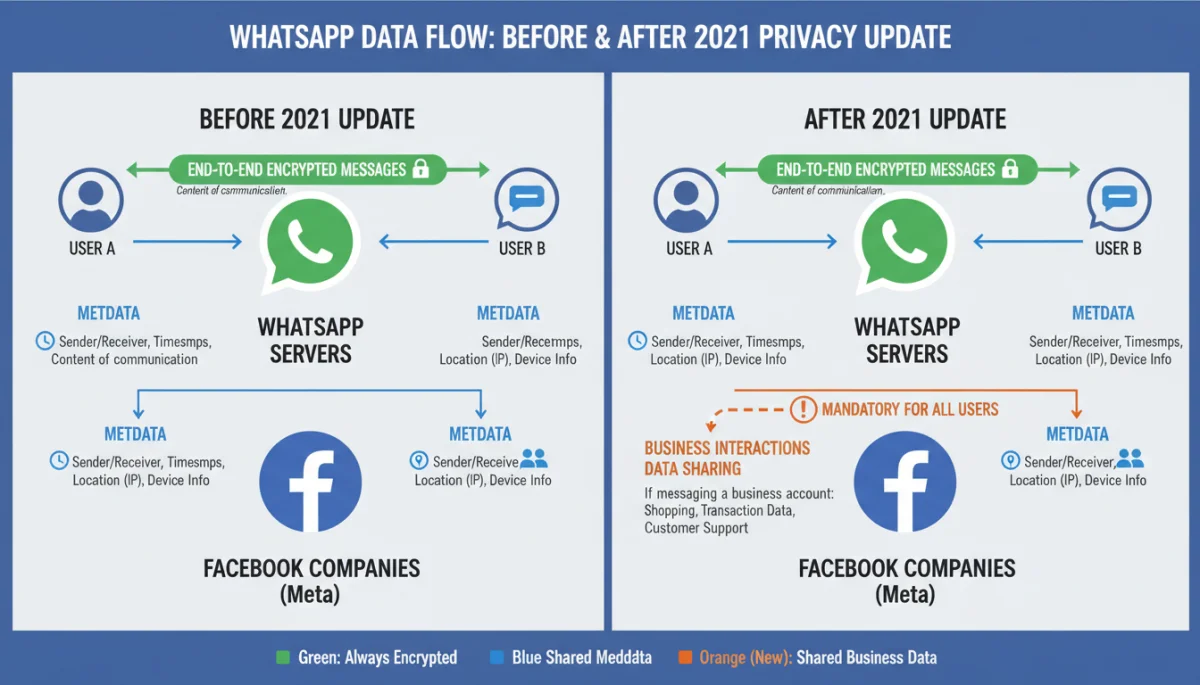
Even with end-to-end encryption for message content, metadata – data about data – can still be collected. This includes information like who you communicate with, when, and how frequently. While not revealing message content, metadata can paint a surprisingly detailed picture of an individual’s social network and communication habits.
The update clarified that when interacting with business accounts, especially those utilizing Meta’s hosting services, certain business interaction data might be shared. This could include:
- Transaction Data: Details about purchases or services acquired through WhatsApp Business.
- Interaction Metrics: Information on how often a user engages with a business account.
- Customer Service Logs: Records of communications with businesses for support or inquiries.
This data, while not revealing personal chat content, can be valuable for businesses and Meta alike for targeted advertising, service improvement, and analytics. Users must be aware that their engagement with business accounts on WhatsApp is subject to these different data handling policies.
Security Protocols and Risk Mitigation
WhatsApp continues to invest heavily in security infrastructure to protect user data from external threats. End-to-end encryption is a robust defense against interception, and the company employs various measures to safeguard its servers and user information.
However, the expanded data sharing framework, particularly with Meta’s business tools, introduces new considerations. While Meta has its own stringent security protocols, any increase in data flow between platforms inherently broadens the attack surface. Users rely on both WhatsApp and Meta to maintain the highest standards of cybersecurity to prevent breaches that could expose sensitive information.
Ultimately, the WhatsApp Privacy Update underscores the ongoing challenge of balancing convenience and functionality with robust data protection. Users are encouraged to actively review the privacy policies of any service they use, especially when it involves interactions with third-party businesses or integrated platforms, to make informed decisions about their digital footprint.
The Role of User Consent and Transparency
The controversy surrounding the WhatsApp Privacy Update highlighted the critical importance of user consent and transparency in digital services. This section examines how WhatsApp communicated the changes, the effectiveness of its consent mechanisms, and the broader implications for user autonomy in data sharing.
Many users felt that the update was presented as a ‘take it or leave it’ proposition, which undermined the principle of informed consent. This perception fueled distrust and raised questions about how technology companies should ethically introduce significant policy changes.
Clarity in Communication
One of the primary criticisms of the update was the lack of clear and concise communication. The initial notifications were often perceived as vague or overly technical, leading to widespread confusion about what exactly was changing and how it would affect individual users. This lack of clarity contributed significantly to the public’s alarm.
Effective communication is paramount when dealing with privacy policies. Users need to understand:
- What Data is Collected: A precise list of data points gathered by the platform.
- How Data is Used: Specific examples of how collected data will be processed and utilized.
- Who Data is Shared With: Clear identification of third parties or affiliated companies receiving data.
- User Control: Explicit instructions on how users can manage or limit data sharing.
WhatsApp eventually launched more detailed explanations and FAQs to address these concerns, but the initial rollout demonstrated the challenges of conveying complex policy changes to a global user base.
Empowering User Choice
The concept of user consent implies an informed choice. For many, the mandatory nature of accepting the new terms or losing access to the service felt like a coercion rather than a choice. This experience sparked debates about the ethical boundaries of platform dominance and user agency.
While WhatsApp clarified that the core functionality of personal messaging would not be impacted, the perception of limited choice persisted. This incident serves as a crucial case study for other platforms on the importance of offering meaningful options and respecting user autonomy when implementing policy updates.
In essence, the WhatsApp Privacy Update underscored the need for technology companies to prioritize transparency and user-centric consent mechanisms. Building and maintaining user trust requires not only robust privacy protections but also clear, accessible communication that empowers users to make informed decisions about their data.
Comparing WhatsApp’s Privacy with Competitors
The WhatsApp Privacy Update inevitably led to comparisons with other messaging platforms. This section provides a comparative analysis of WhatsApp’s privacy posture against its main rivals, Signal and Telegram, highlighting their distinct approaches to user data and security.
Understanding these differences is crucial for users seeking alternatives or simply wanting to grasp where WhatsApp stands in the broader privacy landscape of messaging applications.
Signal: The Privacy Gold Standard?
Signal is often cited as the benchmark for privacy-focused messaging. Its commitment to end-to-end encryption for all communications, coupled with a minimal collection of metadata, makes it a strong contender for privacy-conscious users. Signal is developed by a non-profit foundation, which further reinforces its privacy-first mission.
Key privacy features of Signal include:
- Default End-to-End Encryption: All messages, calls, and media are encrypted by default.
- Minimal Metadata Collection: Signal collects very little information about its users.
- Open-Source Protocol: Its encryption protocol is open-source and regularly audited, enhancing transparency and trust.
- No Ties to Ad-Based Business Models: Signal’s funding model is based on donations, eliminating incentives for data monetization.
For users prioritizing absolute privacy and data minimization, Signal often emerges as the preferred choice, offering a clear contrast to WhatsApp’s data handling practices, especially concerning business interactions.
Telegram: Features vs. Encryption Depth
Telegram, another popular alternative, offers a rich set of features, including large group chats, channels, and extensive customization options. While Telegram provides strong encryption for its ‘secret chats,’ its default cloud chats are not end-to-end encrypted by default, a key difference from WhatsApp and Signal.
Telegram’s approach:
- Secret Chats: Offer end-to-end encryption, self-destructing messages, and screenshot prevention.
- Cloud Chats: Server-side encrypted, meaning Telegram has access to the data, though it claims not to share it.
- Focus on Features: Prioritizes functionality and user experience, often introducing new features rapidly.
- Data Storage: Encrypted cloud storage allows users to access their messages across multiple devices seamlessly.
Telegram positions itself as a secure and feature-rich platform, but its default encryption method for regular chats means that, unlike WhatsApp (for personal chats) and Signal, it retains access to message content on its servers. This distinction is crucial for users making informed choices about their messaging app.
In conclusion, while WhatsApp maintains robust encryption for personal chats, its integration with Meta’s business ecosystem differentiates its overall privacy profile from more privacy-centric apps like Signal. Telegram offers a balance of features and security but with a different default encryption model. Users must weigh these factors based on their individual privacy needs and preferences.
Best Practices for Protecting Your Privacy on WhatsApp
Given the ongoing discussions surrounding the WhatsApp Privacy Update, it’s more important than ever for users to adopt best practices to safeguard their privacy on the platform. This section provides actionable advice and tips to maximize security settings and manage data sharing effectively.
While WhatsApp has clarified its policies, proactive measures from users can significantly enhance their digital privacy and control over personal information. These steps go beyond simply understanding the terms; they involve actively configuring your app settings.
Configuring Your Privacy Settings
WhatsApp offers a range of privacy settings that users can customize to limit the visibility of their personal information to others. Regularly reviewing and adjusting these settings is a fundamental step in protecting your privacy.
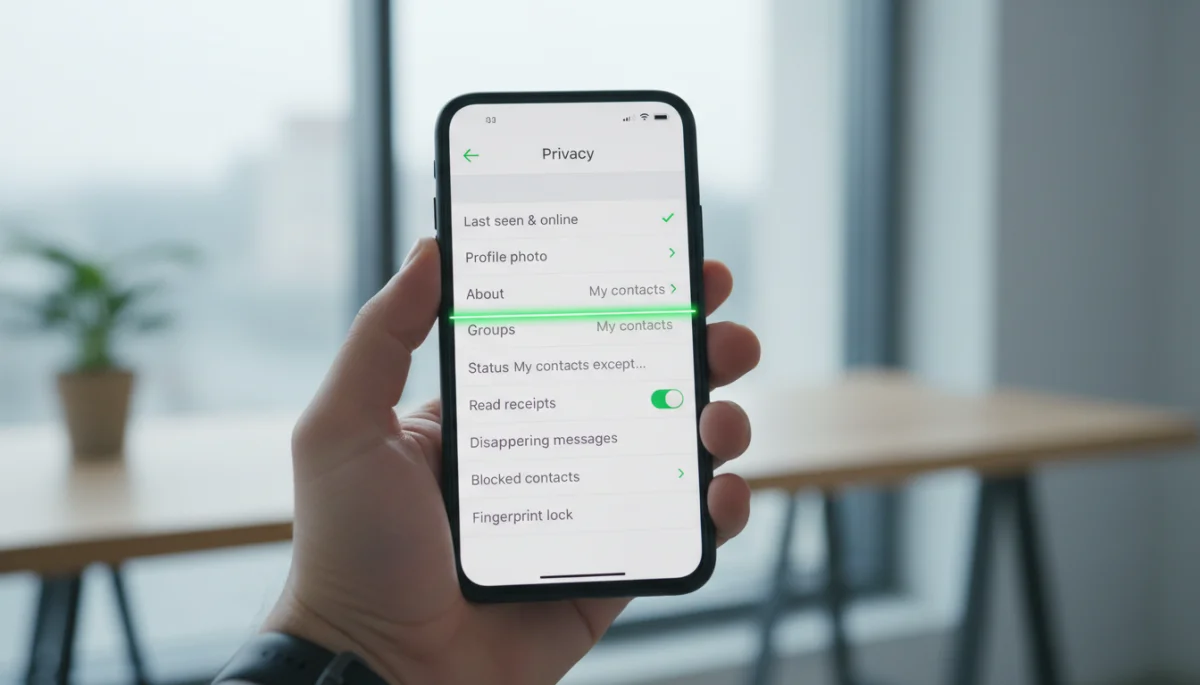
- Last Seen & Online Status: You can choose who sees when you were last online or if you are currently online. Options include ‘Everyone,’ ‘My Contacts,’ ‘My Contacts Except…’, and ‘Nobody.’
- Profile Photo: Control who can view your profile picture with similar options. Setting this to ‘My Contacts’ or ‘Nobody’ can prevent strangers from accessing your image.
- About: Limit who can see your ‘About’ information, which often contains personal details or status updates.
- Read Receipts: Disable read receipts if you prefer not to show others when you’ve read their messages. Note that disabling this also means you won’t see theirs.
- Groups: Control who can add you to groups, preventing unwanted additions to group chats.
These settings allow for a granular level of control over what information is shared with whom, empowering users to tailor their WhatsApp experience to their privacy preferences.
Managing Business Interactions and Data
As the privacy update primarily affects interactions with business accounts, being mindful of these communications is essential. Users should be aware that when they engage with a business, particularly one using Meta’s hosting services, certain data might be processed differently.
Consider the following when interacting with businesses on WhatsApp:
- Review Business Profiles: Before engaging, check the business’s profile for any privacy statements or disclaimers about data handling.
- Limit Sensitive Information: Avoid sharing highly sensitive personal or financial information with businesses through WhatsApp, unless absolutely necessary and you trust the entity.
- Opt-Out Options: Be aware of any options provided by businesses to opt out of marketing communications or data sharing.
- Alternative Channels: For highly sensitive transactions or inquiries, consider using traditional, more secure channels rather than a messaging app.
By actively managing privacy settings and being judicious about business interactions, users can significantly enhance their control over personal data on WhatsApp, mitigating potential privacy risks and ensuring a more secure messaging experience.
The Future of WhatsApp and Digital Privacy
The WhatsApp Privacy Update is not an isolated incident but rather a significant marker in the ongoing evolution of digital privacy and the regulatory landscape. This section explores the broader implications for the future of messaging apps, data governance, and the continuous push for greater user control over personal information.
The episode served as a powerful reminder that privacy is a dynamic concept, constantly being redefined by technological advancements, business models, and public expectations. The future will likely see increased scrutiny and regulation.
Regulatory Scrutiny and Data Governance
The widespread public reaction to WhatsApp’s update caught the attention of regulators globally. Governments and privacy advocates are increasingly pushing for stricter data protection laws, similar to GDPR in Europe, to ensure that user rights are upheld and that companies are held accountable for their data practices.
Key trends in data governance include:
- Enhanced Transparency: Mandates for clearer, more accessible privacy policies.
- Stronger Consent Requirements: Moving towards opt-in models for data sharing, rather than opt-out.
- Data Portability: Empowering users to easily transfer their data between services.
- Accountability: Increased penalties for companies that violate privacy regulations.
This regulatory environment will undoubtedly influence how WhatsApp and other platforms design their services and communicate with users, potentially leading to more user-friendly privacy controls and clearer data policies.
Evolving User Expectations and Trust
The WhatsApp Privacy Update also highlighted a shift in user expectations. Digital citizens are becoming more aware of the value of their data and are less willing to cede control without clear benefits or robust protections. Trust is now a critical currency for technology companies.
Users are increasingly demanding:
- Privacy by Design: Services built with privacy as a foundational principle, not an afterthought.
- Control Over Data: Easy-to-understand and implement tools for managing personal information.
- Ethical Data Use: Assurance that their data will not be exploited or used in ways that harm them.
- Platform Accountability: Companies taking responsibility for data breaches and privacy violations.
The future of WhatsApp, and indeed all messaging platforms, will hinge on their ability to adapt to these evolving expectations. Companies that prioritize user trust through transparent practices and strong privacy protections are more likely to thrive in an increasingly privacy-conscious digital world.
Ultimately, the WhatsApp Privacy Update has served as a catalyst for a broader conversation about digital rights and responsibilities. It compels both users and platforms to critically examine their roles in safeguarding personal data in an interconnected world, shaping a more privacy-aware future.
| Key Point | Brief Description |
|---|---|
| End-to-End Encryption | Personal chats remain fully encrypted, meaning message content is private. |
| Business Data Sharing | Interactions with business accounts, especially those hosted by Meta, may involve data sharing for advertising. |
| User Reaction & Alternatives | Widespread user concern led to migrations to Signal and Telegram, prompting WhatsApp clarifications. |
| Privacy Controls | Users can customize privacy settings for ‘Last Seen,’ ‘Profile Photo,’ and ‘About’ information. |
Frequently Asked Questions About WhatsApp Privacy
No, the WhatsApp Privacy Update did not affect the end-to-end encryption of personal chats. All one-on-one and group conversations between individuals remain fully encrypted, ensuring that neither WhatsApp nor Meta can read their content.
The update clarified how data from interactions with business accounts, especially those hosted by Meta, might be used. This can include business interaction data for personalized ads and offers, but not the content of personal messages.
Users were initially required to accept the updated terms to continue using the service. However, WhatsApp clarified that the core personal messaging functionality would not be affected, and users retain control over many privacy settings.
Signal offers superior privacy with default end-to-end encryption for all communications and minimal metadata collection. Telegram provides end-to-end encryption only for ‘secret chats,’ while its regular cloud chats are server-side encrypted, differing from WhatsApp’s personal chat encryption.
You can enhance your privacy by adjusting settings for ‘Last Seen,’ ‘Profile Photo,’ and ‘About’ to ‘My Contacts’ or ‘Nobody.’ Be mindful when interacting with business accounts, and consider limiting sensitive information shared via those channels.
Conclusion
The WhatsApp Privacy Update has undoubtedly been a pivotal moment in the ongoing discourse surrounding digital privacy and user trust. While WhatsApp has consistently reaffirmed its commitment to end-to-end encryption for personal communications, the changes related to business interactions and data sharing with Meta have sparked crucial conversations. This review has highlighted that understanding these nuances is paramount for users to make informed decisions about their digital footprint. Ultimately, the episode underscores the growing demand for transparency, user control, and robust privacy protections across all digital platforms, shaping a future where user autonomy in data management will be increasingly prioritized by both consumers and regulators alike.
